The Problem Every Crafter Faces. You’re mid-project. Paint’s crusted on your palette, glue’s hardened on your cutting mat, and your brushes look like they’ve seen better days. You reach for the baking soda because it’s “natural” and everyone swears by it—but then you pause. Is this actually safe for my craft supplies? Will it scratch my polymer clay? What about the dust getting in my lungs?
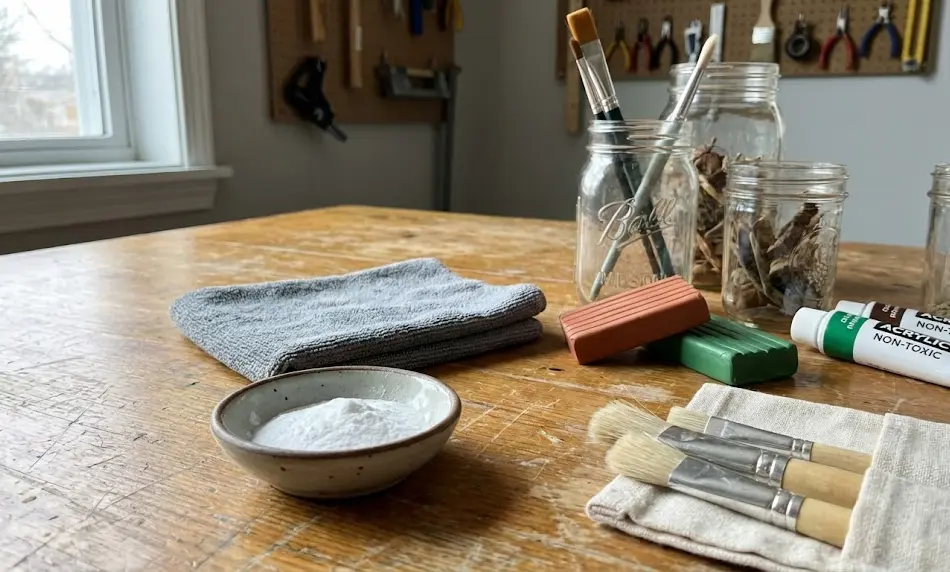
Here’s what you’ll learn: exactly when baking soda works as a craft cleaner, which surfaces to avoid, and the three simple rules that keep you (and your projects) safe.
Quick Reality Check: What Baking Soda Actually Does
It’s Not Magic Powder. Baking soda (sodium bicarbonate, NaHCO₃) is a mildly alkaline salt with a pH around 8–8.3. Think of it as very fine sand mixed with saltwater: gentle enough for most surfaces, but it still carries friction and can irritate if mishandled.
The Science Behind the Clean. Baking soda works through two mechanisms:
- Mild Abrasion: The crystalline powder physically scrubs away grime, similar to using ultra-fine sandpaper on your kitchen counter.
- Odor Neutralization: It chemically binds with acidic odor molecules (like old paint smells), which is why it’s popular for deodorizing craft rooms.
What It Can’t Do. Baking soda does not neutralize VOC fumes from resins, spray paints, or strong solvents—it only tackles surface grime and smells. If you’re dealing with chemical odors, open a window instead.
The Real Risks (Debunking the Scary Stuff)
Myth: “Baking Soda Is 100% Harmless, No Precautions Needed”
Reality: Dust Is the Main Concern. While baking soda is non-toxic and food-grade, the powder can irritate your eyes and respiratory tract if you create a dust cloud. Safety Data Sheets (SDS) classify it as non-hazardous, but still recommend basic hygiene: avoid breathing concentrated dust, and rinse skin or eyes immediately if contact occurs. It’s like flour—safe to eat, annoying to inhale.
For Sensitive Crafters. If you have asthma, allergies, or very dry skin, treat baking soda like you would fine sawdust: use a damp cloth to minimize airborne particles, and consider wearing a simple dust mask during heavy scrubbing sessions.
Myth: “Baking Soda Removes Any Chemical Residue”
Reality: It’s a Scrubber, Not a Solvent. Baking soda excels at lifting dried paint, adhesive smudges, and surface grime from non-porous materials. It does not break down chemical residues from epoxy resin, acrylic medium, or spray fixatives. For those, you’ll need isopropyl alcohol or a dedicated solvent cleaner.
Myth: “Mix Baking Soda with Anything for Extra Power”
Reality: Chemistry Can Backfire. Combining baking soda with white vinegar creates a fun fizz (carbon dioxide release), but the reaction mostly neutralizes both cleaners, leaving you with salty water. Worse, mixing it with chlorine bleach or hydrogen peroxide-based products can alter pH unpredictably and reduce effectiveness. Stick to one cleaner at a time, or follow tested recipes only.
3 Rules for Safe Craft Cleaning with Baking Soda
Rule 1: Match the Surface to the Abrasive Level
For Durable Surfaces (Glass, Metal, Ceramic). Baking soda shines here. Sprinkle it directly on dried paint splatters, add a few drops of water to form a paste, and scrub gently with a soft cloth. The mild abrasion won’t scratch glass palettes, metal rulers, or ceramic tile work surfaces.
For Delicate Finishes (Painted, Varnished, or Polymer Clay). Treat baking soda like ultra-fine sandpaper: its abrasiveness can microscratch glossy coatings or soft polymer surfaces over time. If you’re cleaning a painted wooden tray or a finished polymer clay piece, use a barely-damp cloth with minimal pressure—or switch to liquid Castile soap instead.
For Fabric and Paper. Skip baking soda entirely. The powder can embed in fibers or leave chalky residue on porous materials. Use a lint roller or fabric-safe stain remover instead.
Rule 2: Control the Dust
Wet Application Wins. Always dampen your cloth or mix baking soda into a paste before scrubbing. This keeps particles grounded and prevents you from inhaling a cloud of powder mid-project.
Ventilation Matters. If you’re doing a deep clean of multiple brushes or tools, open a window or turn on a fan. Baking soda doesn’t release VOCs (it’s inorganic), but airborne dust can still irritate your throat during extended sessions.
Storage Safety. Keep baking soda in a sealed container, away from children’s unsupervised reach. While it’s non-toxic, ingesting large amounts can cause stomach upset, and the powder can make floors slippery if spilled.
Rule 3: Rinse Thoroughly After Cleaning
Residue Ruins Projects. Baking soda leaves a white, slightly gritty film if not rinsed completely. This can interfere with paint adhesion, resin curing, or glue bonds on your next project. After scrubbing, wipe surfaces with a clean, damp cloth, then dry immediately.
Tool Maintenance. For paintbrushes or palette knives, rinse under running water until the water runs clear. Any remaining alkaline residue can react with acidic paints or mediums later, causing unexpected color shifts or texture issues.
When to Choose Something Else
White Vinegar (Diluted). Best for mineral deposits, dried glue, and soap scum on non-porous surfaces. Mix 1 part vinegar to 3 parts water, apply with a cloth, and rinse. It’s a mild acid, so it cuts through alkaline grime that baking soda can’t touch.
Castile Soap (Fragrance-Free). Ideal for frequent cleaning of brushes, stamps, or hands. It’s a surfactant-based cleaner (lifts and carries away dirt) without abrasives, making it safer for delicate finishes and gentler on skin during long crafting sessions.
Isopropyl Alcohol (70% or Higher). Use this for chemical residues like resin, acrylic medium, or spray adhesive. It dissolves rather than scrubs, so it won’t scratch surfaces—but always test on a hidden spot first.
| Cleaner | Best For | Avoid On | Key Advantage |
|---|---|---|---|
| Baking Soda | Glass, metal, ceramic; dried paint | Varnished/painted surfaces | Mild abrasive + odor control |
| White Vinegar | Mineral deposits, glue residue, soap scum | Natural stone, grout | Dissolves alkaline grime |
| Castile Soap | Brushes, stamps, hands; daily maintenance | Heavily soiled tools | Gentle surfactant, skin-safe |
| Isopropyl Alcohol | Resin, acrylic medium, spray adhesive | Plastics (test first), fabrics | Dissolves chemical residues |
The Bottom Line
Baking soda is safe and effective as a craft cleaner when used as a mild abrasive on durable, non-porous surfaces. It won’t emit fumes, it’s biodegradable, and it costs pennies per use. But it’s not a universal solution: avoid it on delicate finishes, control dust to protect your lungs, and rinse thoroughly to prevent residue buildup.
Think of it this way: Strong commercial cleaners are like using a blowtorch to remove a sticker—fast but risky. Baking soda is your soft scrub pad: slower, but far safer for your workspace, your health, and your finished projects.
Ready to tackle more eco-friendly craft challenges? Check out our Upcycled Crafts category for practical projects that turn everyday materials (yes, even those baking soda-cleaned jars) into something beautiful.