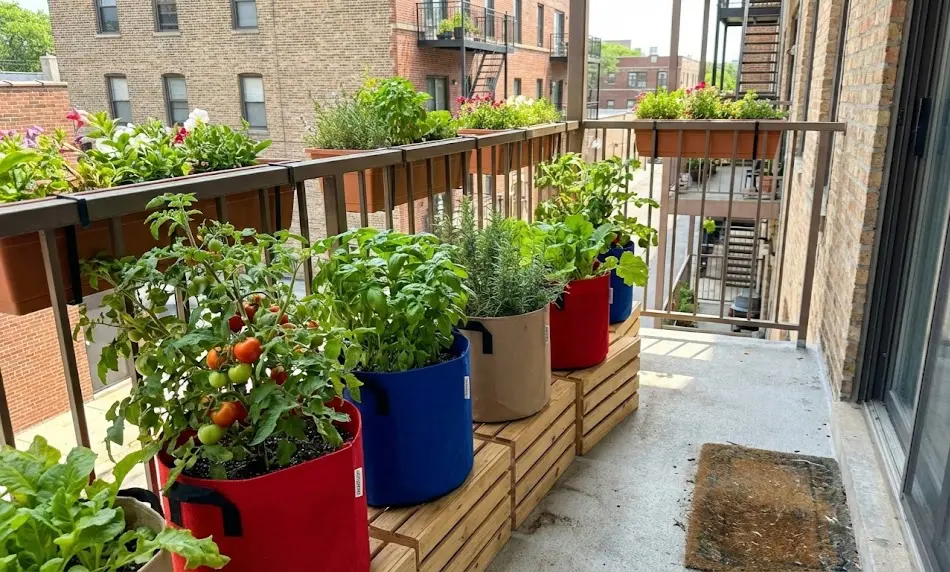
Container gardening basics start with one simple truth: you don’t need a yard to grow your own food. Over 21 million US households already use pots, planters, and grow bags to turn balconies, patios, and porches into productive gardens. Whether you’re in a city apartment or a suburban rental, container gardening basics give you total control over your growing space.
Why Container Gardening Works for You
Container gardening basics solve the #1 barrier most Americans face: lack of ground space. You can grow tomatoes on a fire escape, herbs on a windowsill, or peppers on a 4×6-foot balcony. This method surged 29% among urban US households after 2014 because it delivers fresh produce without needing a traditional garden plot.
Containers are portable, so you move plants to chase sunlight or bring tender herbs indoors before frost. You also skip tilling, weeding rows, and battling ground pests like voles. The average US food garden using containers ranges from 96 to 600 square feet, and 46% of all home food gardens now include at least some container plants.
Top Benefits That Hook New Growers
Space-Saving Power
You grow vertically or cluster pots in corners, maximizing every inch of a balcony or patio. A single 5-gallon grow bag produces the same yield as several feet of garden row for crops like peppers or cherry tomatoes.
Fresh Produce at Your Door
Step outside and snip basil for dinner or grab a handful of salad greens. No grocery runs, no wilted store herbs. You harvest at peak ripeness, which means better flavor and zero food miles.
Beginner-Friendly Control
You choose the exact soil mix, water only what each plant needs, and swap out underperformers without disturbing neighbors. Container gardening basics let you experiment with one pot of lettuce before committing to a dozen.
Budget and Eco Wins
Grow bags cost $3 to $8 each and last multiple seasons. You skip expensive raised-bed lumber and reduce plastic waste by reusing containers. Homegrown lettuce replaces plastic clamshells from the store.
When to Start Your First Container
Spring is prime time once overnight temps stay above 50°F (typically late March to May across most US zones). You can also start cool-season greens like spinach and kale in early fall (August to September) for a second harvest before frost.
If you’re indoors, you start anytime with a sunny south-facing window or a small grow light. Herbs like basil and parsley thrive year-round on kitchen counters, giving you the confidence to scale up to outdoor containers when weather permits.
Quick Wins to Expect in Your First Season
Herbs in 4 to 6 Weeks
Basil, cilantro, and parsley grow fast. You’ll snip fresh leaves within a month of planting seedlings, and they keep producing until frost.
Salad Greens in 3 to 5 Weeks
Lettuce, arugula, and spinach mature quickly in shallow containers. Plant new seeds every two weeks for a continuous supply.
Cherry Tomatoes in 60 to 80 Days
Compact determinate varieties like ‘Patio’ or ‘Tumbling Tom’ fit in 5-gallon pots and deliver handfuls of fruit by midsummer. You’ll taste the difference between homegrown and store-bought within your first harvest.
What You Need to Know Before Planting
Soil Matters More Than You Think
Never use garden soil in containers. It compacts, blocks drainage, and traps too much moisture, leading to root rot. Reddit users in communities like r/containergardening report losing entire crops to overwatering when they reused heavy backyard dirt.
Container Type Affects Plant Health
Grow bags offer breathability and prevent roots from circling, while plastic pots retain moisture longer but can leach chemicals in hot sun. Terracotta looks classic but dries out fast, forcing you to water twice daily in summer heat. DIYers in r/DIY share regrets about picking the wrong material for their climate.
Watering Frequency Changes
Container plants dry out faster than in-ground gardens because roots can’t spread deep for moisture. You’ll water daily during hot spells, sometimes twice if you’re using small pots or terracotta. Checking soil moisture with your finger (stick it 2 inches down) becomes part of your morning routine.
Common Beginner Questions Answered
Do I Need Special Fertilizer?
Yes, because containers have limited nutrients. You’ll feed plants every 2 to 4 weeks with diluted liquid fertilizer once they start flowering or fruiting.
Can I Reuse Last Year’s Soil?
Sort of. You refresh it by mixing in fresh compost and checking for pests, but starting with new potting mix gives better results for heavy feeders like tomatoes.
What If My Balcony Gets Afternoon Shade?
You focus on greens, herbs, and root crops (lettuce, parsley, radishes) that tolerate 4 to 6 hours of sunlight. Fruiting plants like tomatoes and peppers need 6 to 8 hours of direct sun.
Safety Considerations for Urban Growers
Weight Limits on Balconies
A 5-gallon container with wet soil weighs 40 to 50 pounds. Check your balcony’s load capacity (usually 50 to 100 pounds per square foot for modern apartments) before lining railings with heavy pots.
Drainage and Neighbor Relations
Pots must have drainage holes, but runoff can drip onto lower balconies or patios. Use saucers under every container, or elevate pots on grids that catch excess water.
Pesticide Restrictions
Many US apartment leases ban chemical sprays near shared air intakes or play areas. Stick to organic methods like neem oil or hand-picking pests.
Your First-Season Action Plan
Start small with three containers: one for herbs, one for greens, and one for a single tomato or pepper plant. This trio teaches you watering rhythms, light needs, and harvest timing without overwhelming your schedule.
Pick a sunny spot that gets at least 6 hours of direct sun. Morning light is best because it’s gentler and dries dew quickly, reducing fungal issues.
Commit to checking soil moisture daily until you learn each plant’s thirst level. Most beginners kill plants by overwatering, not underwatering, because wet container soil looks deceptively healthy on top while roots drown below.
Why This Method Sticks
Container gardening basics work because they meet you where you are: limited space, tight budget, zero landscaping experience. You grow what you actually eat, skip the learning curve of soil testing and crop rotation, and see results in weeks instead of months.
The portability means you take your garden with you if you move, and the low entry cost (under $50 for three quality grow bags, soil, and seeds) removes financial risk. Once you taste your first homegrown tomato or snip basil that’s been growing 10 feet from your kitchen, you’ll understand why 21 million US households choose containers over traditional garden beds.