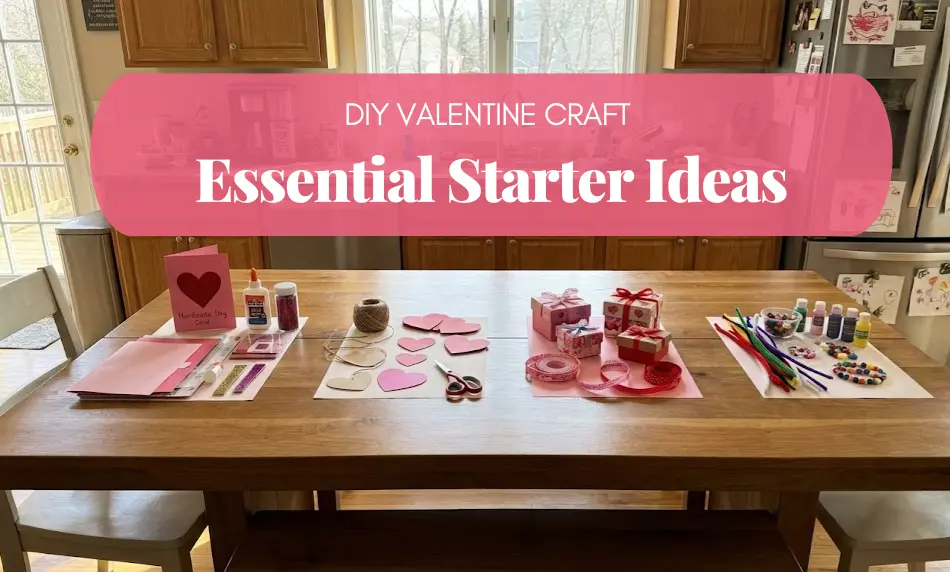
If you’re new to DIY Valentine crafts for beginners, you’re joining over 70% of US consumers who prefer handmade Valentine’s gifts over store-bought options. This guide maps out the four main categories of Valentine projects (cards, decor, gifts, and kids’ crafts) so you can pick the right type based on your time, budget, and skill level. Think of this as your starting point before diving into specific tutorials.
Why Start with DIY Valentine Crafts
Handmade Valentine’s projects top search trends every January because they let you customize gifts without breaking the bank. Dollar Tree and Walmart report a 40% spike in craft supply sales during Valentine’s season, proving budget-conscious makers are stocking up on cardstock, glue sticks, and tissue paper. You don’t need fancy tools or prior experience to get started.
Most beginner crafters (85%) use household recyclables to keep projects under $10 per item. That means you can create meaningful Valentine’s pieces using paper towel rolls, scrap fabric, or leftover ribbon you already own. The key is knowing which project type fits your situation.
Picking Your Project Type
Match Your Time Budget
Different Valentine crafts demand different time commitments, and mismatched expectations cause the most frustration for new makers. Cards typically take 15 to 30 minutes per piece, making them ideal for quick weeknight sessions. Decor projects like garlands or wreaths need 1 to 2 hours but create reusable pieces you can display year after year.
Gifts (like treat boxes or photo frames) sit in the middle at 30 to 60 minutes, depending on complexity. Kids’ crafts vary wildly (10 minutes for toddler fingerprint hearts, 45 minutes for elementary foam ornaments), so always check the age range before starting.
Consider Your Skill Level
Beginner-friendly Valentine crafts fall into three tiers: no tools required, basic cutting/gluing, and light assembly. If you want to ensure your finished pieces look clean and polished rather than messy, mastering a few essential Valentine crafting techniques for beginners—like scoring crisp folds or safely layering materials—is highly recommended. No-tool projects (like paper chains or folded cards) work if you’ve never crafted before or you’re working with young kids.
Light assembly means you’ll use a stapler, hole punch, or tape to connect multiple pieces. If you’re not sure where you fall, start with no-tool projects and move up once you feel comfortable.
Factor in Group Size
Solo crafters can focus on detailed, personalized pieces without worrying about multiples. Classroom or party batches (12+ items) need streamlined designs you can replicate quickly using the same supplies. Reddit users in r/upcycling and r/DIY consistently warn that most online tutorials don’t specify whether a project scales well for groups.
If you’re making Valentine’s for a class, choose projects with 5 or fewer steps and minimal drying time. Solo projects can include hand lettering, intricate cutting, or layered embellishments.
The Four Main Valentine Craft Categories
Handmade Valentine Cards
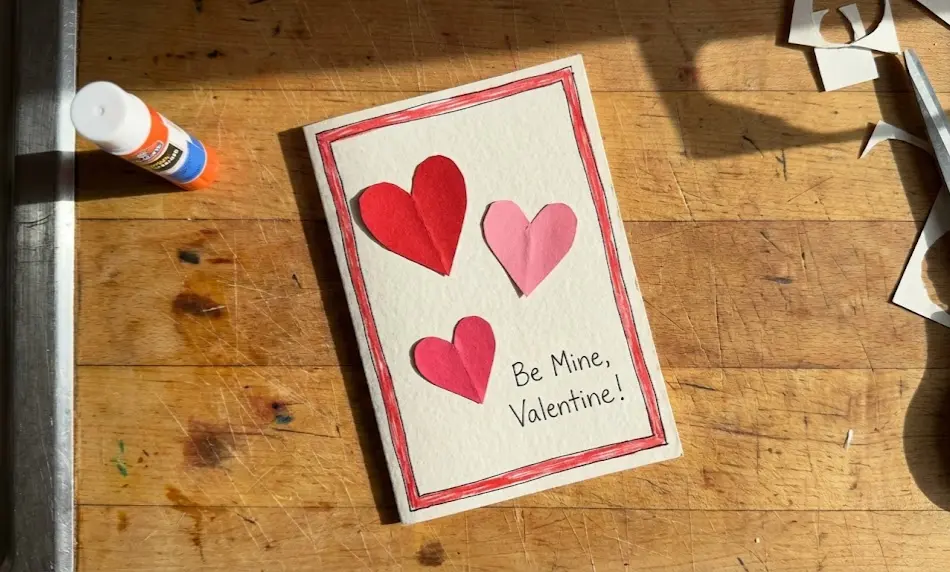
Cards are the most popular entry point for DIY Valentine crafts because they require minimal supplies (cardstock, markers, glue). You can finish a basic folded card in 15 minutes using paper scraps and a few heart stickers. Pre-folded blank cards from Dollar Tree cost about $1 for 8, or you can fold standard printer paper in half.
Beginner card techniques include paper punching, sticker layering, and simple stamping with household items (potato halves, sponges). Avoid intricate die-cutting or calligraphy until you’ve practiced basic layouts.
Cards work for any recipient (kids’ classmates, coworkers, family) and you can batch-produce identical designs in under an hour. They’re also the easiest category to personalize with names or inside jokes.
Valentine Decor
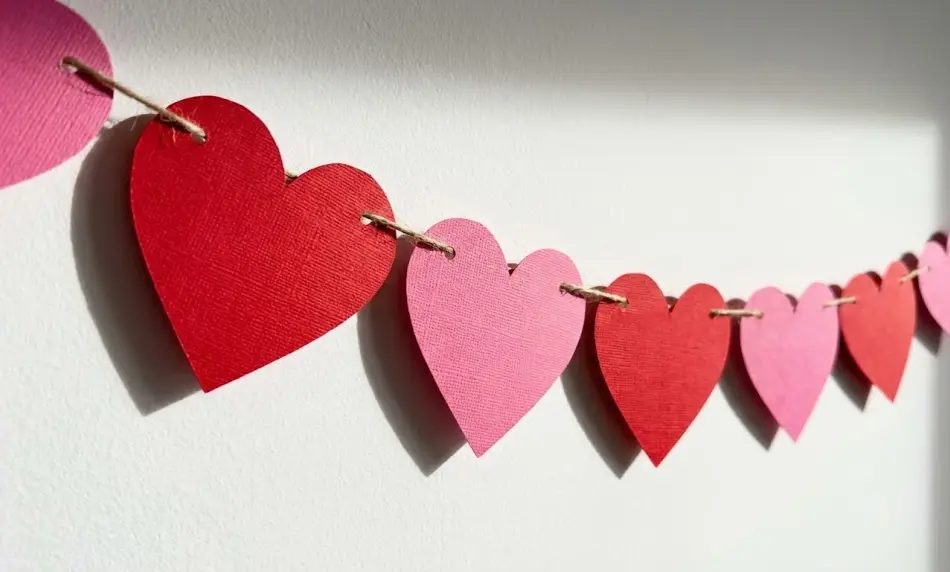
Decor projects transform your space for the holiday and include garlands, wreaths, banners, and centerpieces. These take longer than cards (1 to 2 hours) but you can reuse them every February. Paper garlands are the simplest decor option, requiring only cardstock hearts, string, and a hole punch or glue dots.
Wreaths need a base (foam ring, grapevine hoop, or bent wire hanger) plus embellishments like tissue paper flowers or felt hearts. Banners follow the same logic as garlands but use triangle or pennant shapes instead of hearts. Centerpieces can be as basic as filling a jar with conversation hearts or as involved as a tiered display with candles and paper roses.
Start with flat decor (garlands, banners) before moving to three-dimensional pieces (wreaths, centerpieces).
Homemade Valentine Gifts
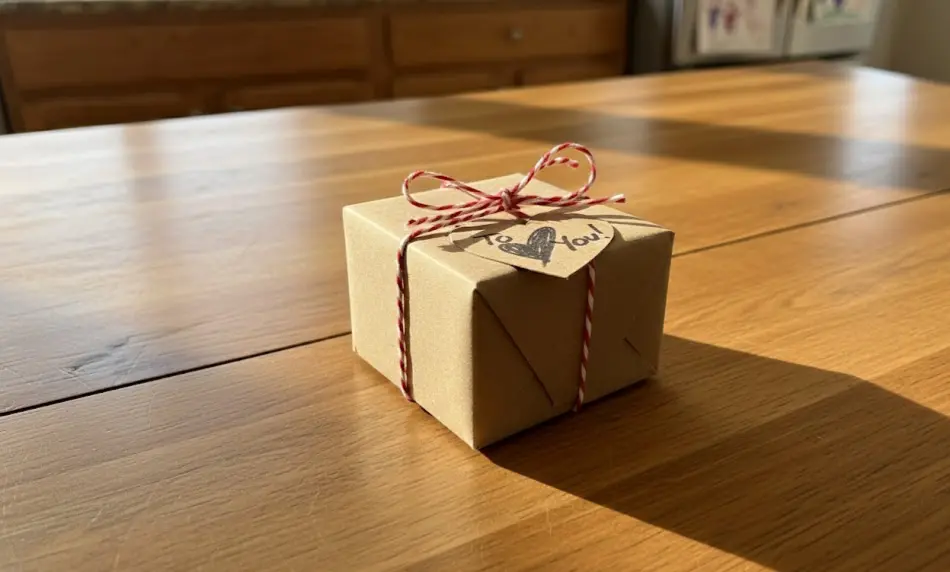
Gifts blend practicality with sentimentality and work for partners, friends, or teachers. Treat boxes, photo frames, and “open when” envelopes are top beginner choices. Treat boxes (30 to 45 minutes) involve decorating a small cardboard container and filling it with candy or baked goods.
Photo frames can be store-bought frames embellished with paint, washi tape, or glued-on buttons. “Open when” envelopes are packets of handwritten notes labeled for specific moods (“Open when you need a laugh”). All three options use supplies you likely have at home.
Avoid complex gifts like sewn pouches or woodworking projects until you’ve mastered simpler categories.
Kids’ Valentine Crafts
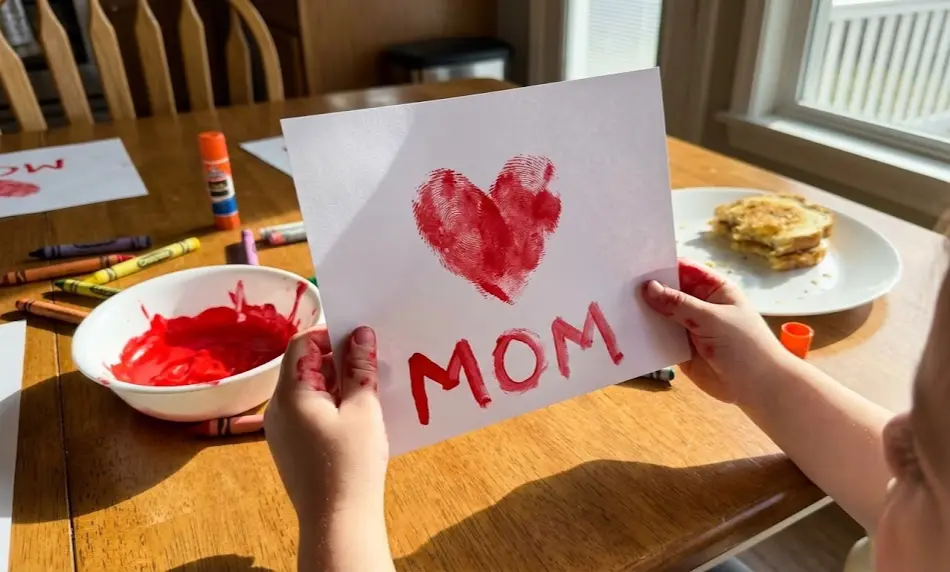
Kids’ crafts prioritize safety, speed, and mess control over perfection. Toddler projects (ages 2 to 4) should take 10 minutes max and use non-toxic, washable supplies like dot markers or finger paint. Elementary projects (ages 5 to 10) can handle scissors, glue sticks, and pre-cut templates for 30 to 45 minutes.
Popular kids’ Valentine crafts include fingerprint heart art, tissue paper collages, pom-pom stamping, and foam sticker cards. Always pre-cut intricate shapes for younger kids and test your project with scrap materials first.
Kids’ crafts often double as classroom Valentines, so design for batch production (same materials, simple assembly). Avoid glitter, tiny beads, or anything requiring adult-only tools.
How to Choose Your First Project
Answer these three questions: How much time do I have (15 min, 1 hr, or 2+ hrs)? Who is this for (kids, adults, groups)? What supplies do I already own? If you have 30 minutes and basic school supplies, start with handmade cards. If you have 2 hours and want something reusable, try a paper garland.
Budget crafters should focus on recycled materials (cereal boxes for card bases, old magazines for paper hearts). Eco-conscious makers can skip plastic embellishments in favor of natural twine, kraft paper, and dried flowers.
Never buy specialized tools (die-cut machines, heat guns) for your first few projects. Household scissors, a glue stick, and markers cover 90% of beginner Valentine crafts.
Common Beginner Mistakes to Avoid
New crafters often pick projects that are too complex for their skill level or don’t match their time constraints. If the tutorial lists more than 8 supplies or references techniques you’ve never heard of, save it for later. Start with projects labeled “5 minutes,” “no special tools,” or “kid-friendly.”
Another mistake is buying full-price supplies in January when Valentine’s materials go on clearance by mid-February. Stock up after the holiday for next year if you’re on a tight budget. Dollar stores carry the same cardstock and foam sheets as craft chains for a fraction of the cost.