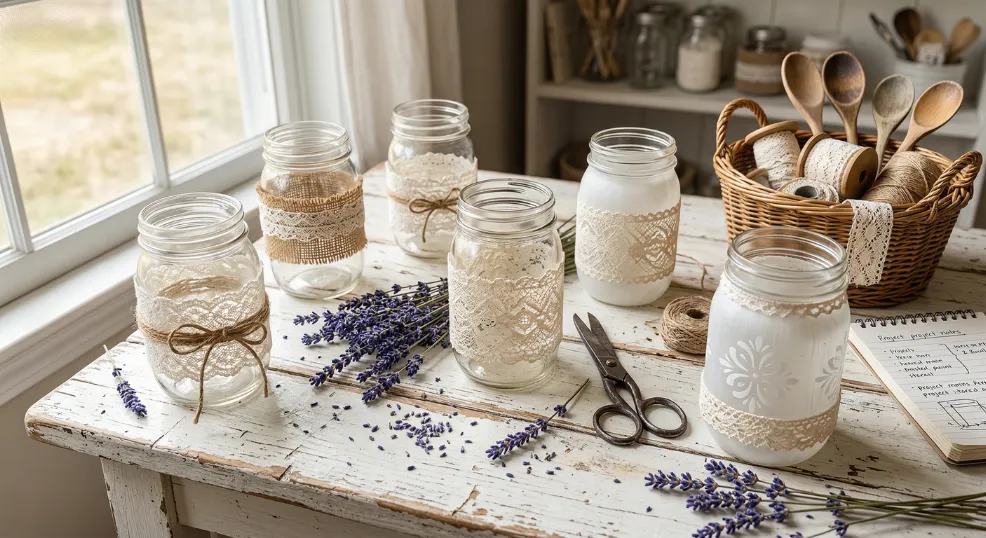
Your pantry deserves more than plastic bins and boring labels. These lace mason jar ideas prove that a $12 pack of jars and a few yards of trim can completely change how your kitchen looks and feels. Whether you are organizing spices or storing 5 lbs of flour, there is a style here for every shelf.
1. The Victorian Spice Uniform
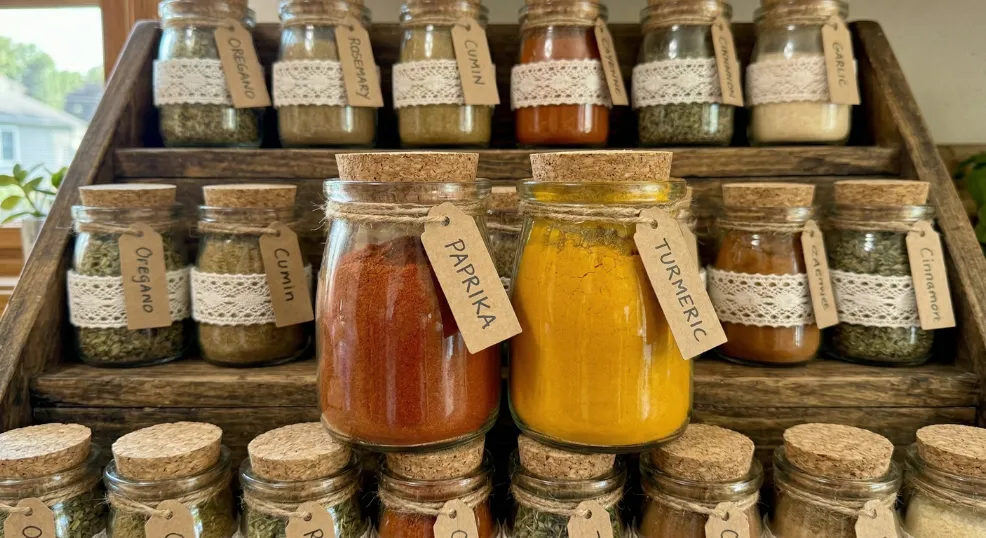
A cohesive spice rack is one of the easiest wins in any pantry refresh. Small 4 oz jars wrapped in delicate lace create a soft, unified look without hiding the colorful spices inside.
Why It Works
Thin cotton lace softens the industrial feel of a metal or wooden spice rack while keeping everything visible. The delicate texture contrasts beautifully with glass and adds an old-world charm that feels intentional, not cluttered.
How to Do It
Secure a single 1/2-inch strip of cotton lace around the center of each 4 oz Quilted Crystal jar. Use just one small dot of hot glue at the seam so the lace sits flat and does not wrap around the lid or base.
Pro tip from the r/DIY community: avoid stretchy synthetic lace for jars near the stove. Kitchen heat makes elastic brittle over time, and it will eventually snap right off the jar.
Materials: 4 oz Quilted Crystal jars (about $12 per dozen), 1/2-inch cotton lace trim (approximately $0.15 per jar).
2. The Belted Flour and Grain Bin
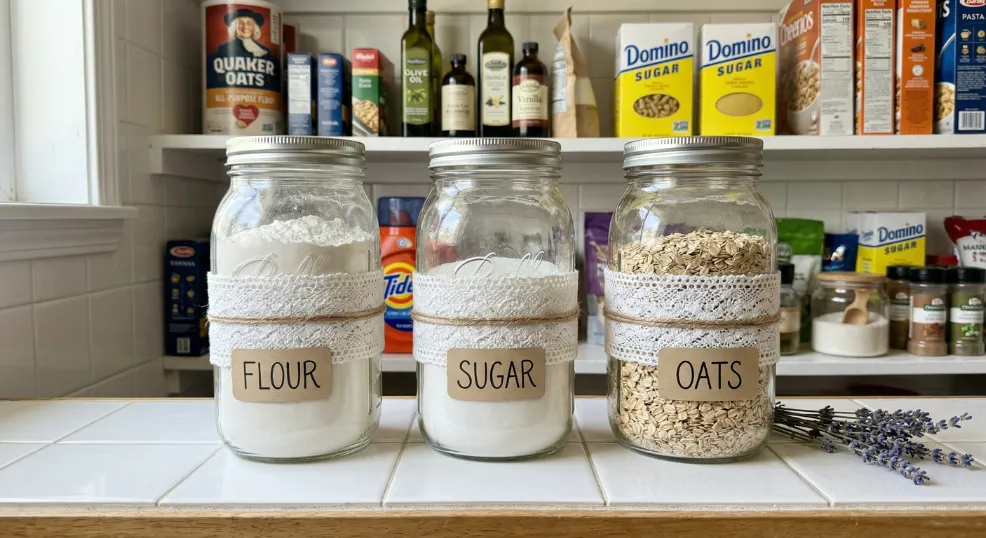
Large half-gallon jars hold roughly 5 lbs of flour and can look visually heavy on a pantry shelf. A wide lace “belt” breaks up that visual weight and gives you a natural grip point when lifting.
Why It Works
Wide Guipure lace adds a decorative centerpiece to an otherwise plain jar. It draws the eye to the middle of the jar, making even a utilitarian flour bin look like a styled prop from a farmhouse kitchen feature.
How to Do It
Cut a 3-inch wide strip of Guipure lace to fit snugly around the jar. Skip the glue and use double-sided garment tape instead so the lace can be removed completely when the jar needs a deep scrub.
A tip from the PantryOrg Forums: flour dust settles into lace holes over time. Run a vacuum brush attachment over the lace about once a month to keep it looking fresh.
Materials: Wide cotton Guipure lace at about $2.50 per yard.
3. Layered Lace Over Burlap
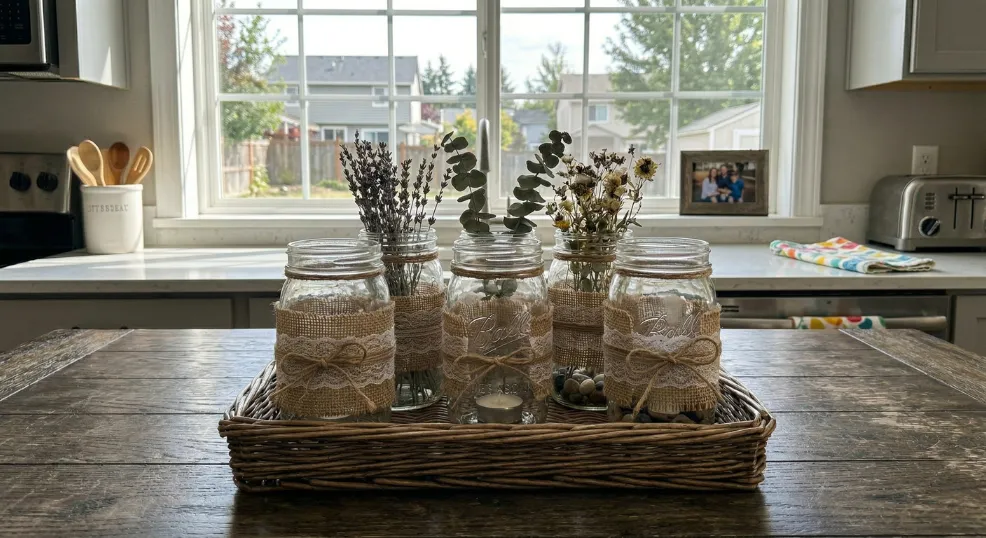
This combination is the definition of the classic American farmhouse pantry aesthetic. Layering a delicate lace ribbon over a rough burlap wrap creates depth and texture that hides messier-looking ingredients like chocolate chips or mixed nuts.
Why It Works
The contrast between rough burlap and fine lace gives each jar a tactile, handcrafted quality. It also works practically by concealing ingredients that look visually chaotic inside clear glass.
How to Do It
Wrap a 2-inch burlap strip around the jar first, then overlay a slightly narrower lace ribbon on top. Tie both layers together with a piece of jute twine for a completely no-glue, eco-friendly finish.
One important note flagged by the r/ZeroWaste community: burlap sheds fibers. Keep your burlap wrap well below the jar rim at all times so no fibers can get near the opening or the food inside.
Materials: Burlap ribbon, white lace trim, and jute twine. Time: under 5 minutes per jar.
4. The Stenciled Faux Lace Look
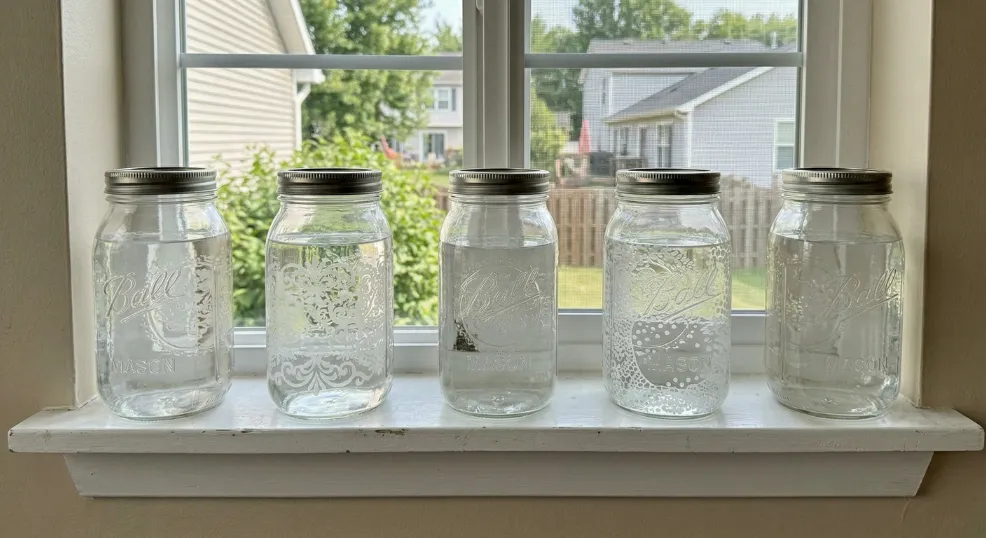
If you want the visual elegance of lace without ever worrying about dust buildup, this technique is your answer. A frosted glass spray applied through real lace creates a permanent, washable pattern that looks like etched glass.
Why It Works
The frosted pattern is smooth, seamless, and food-safe when applied only to the exterior of the jar. These are the most practical jars in any pantry because they can be wiped clean without any fabric to trap crumbs or moisture.
How to Do It
Lay a piece of lace flat against the jar and hold it taut. Spray frosted glass paint over the lace, wait 10 minutes for it to dry, then peel the lace away to reveal the pattern.
If the pattern does not come out clean, do not worry. Use a razor blade or acetone to wipe the glass clean and start over before the paint fully cures.
Safety note: apply frosted spray to the exterior only.
5. Color-Coded Lace Tags for Dietary Needs
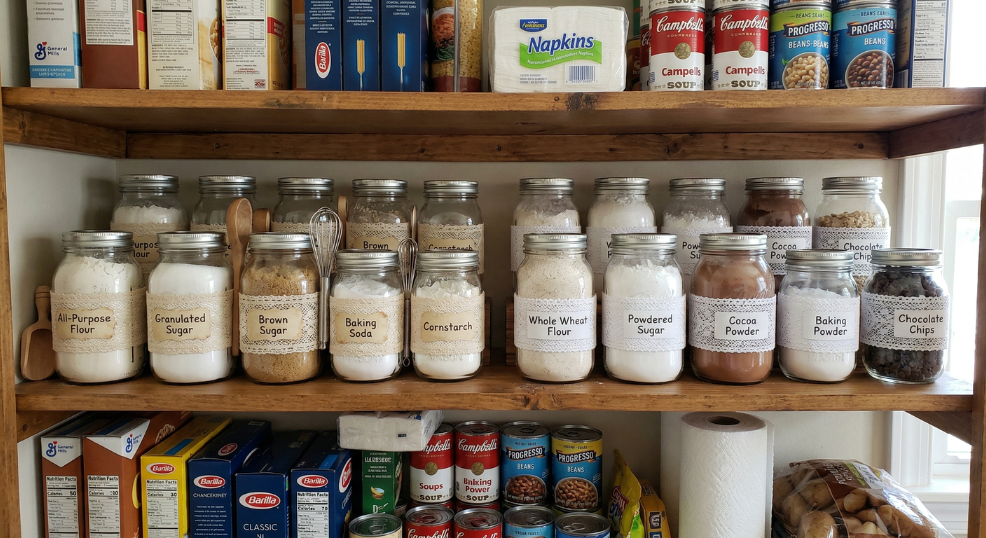
For households managing gluten-free, organic, or allergen-specific foods, this idea replaces plastic stickers with an elegant visual sorting system. Different shades of lace instantly tell family members which jar is which.
Why It Works
Off-white tea-stained lace versus bright bleached white lace creates an immediate visual distinction that is subtle enough to look intentional on the shelf. No labels, no stickers, and no confusion.
How to Do It
Assign off-white (tea-stained) lace to wheat-based products and bright white lace to gluten-free alternatives. Tea-staining takes about 15 minutes using just one black tea bag, and it costs almost nothing.
A bonus from the Pinterest community: the tea-stain tone actually hides kitchen grease buildup better than pure white lace, so your high-traffic jars will stay looking clean longer.
6. The Peek-a-Boo Lace Window
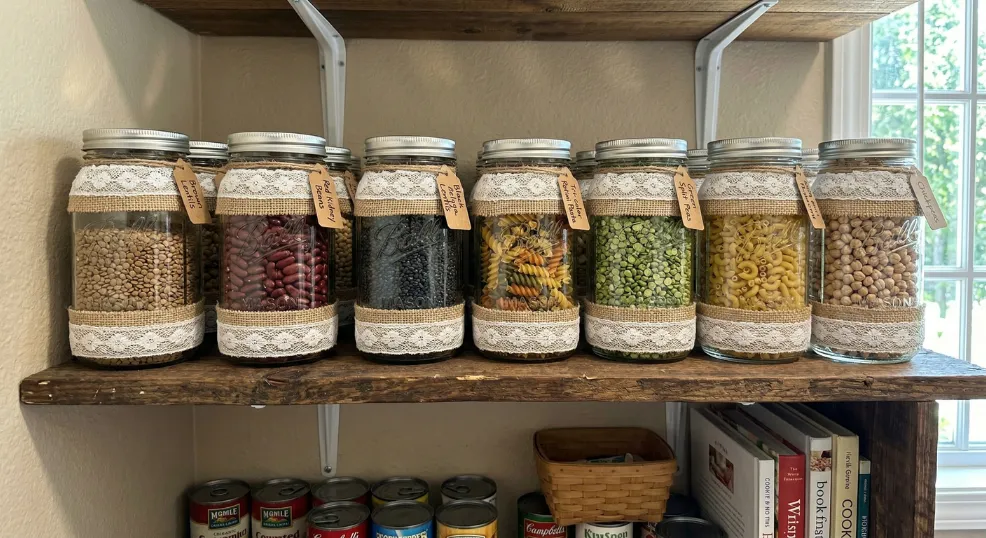
This idea is the smartest combination of beauty and practicality on this list. Wrapping lace around only the top and bottom of each jar leaves a clear “window” in the middle so you can see exactly how much of an ingredient you have left.
Why It Works
Clear glass jars already allow for 100% visibility, but covering the whole jar defeats the purpose. Leaving a 2-inch open window in the center means you never accidentally buy more rice when a full jar is already sitting on your shelf.
How to Do It
Measure and apply one lace band around the top third of the jar and one around the bottom third. Keep the center 2 inches completely clear.
One r/Cooking community member put it perfectly: they used to cover the whole jar and would buy duplicate ingredients because the contents were hidden under the lace. The gap changed everything for their weekly grocery routine.
7. The Boho Knotted Lace Collar
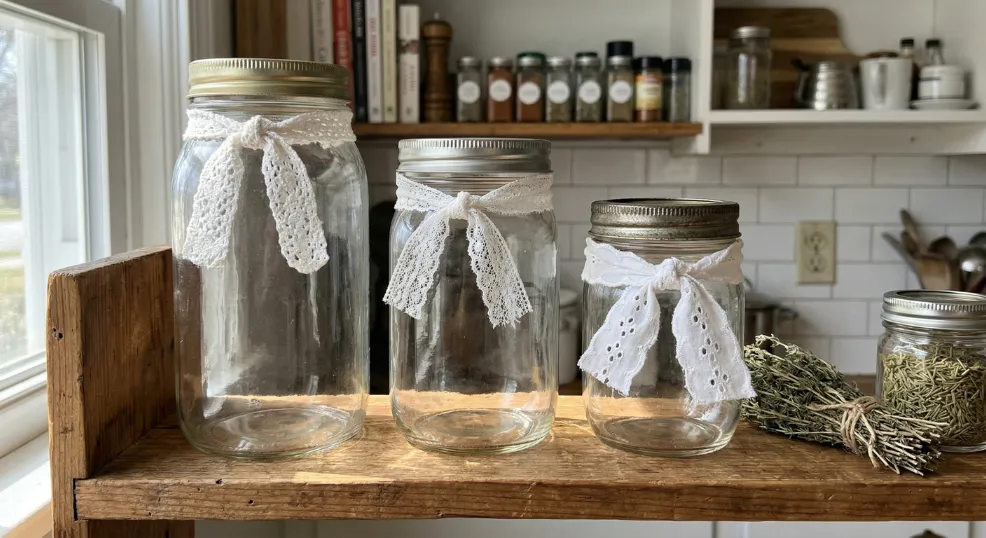
Loose, knotted lace around the neck of a jar gives an effortless, undone look that works perfectly in a boho-styled kitchen. This is the fastest technique on this list and requires zero tools.
Why It Works
The loosely knotted collar adds softness and texture at eye level without committing to a full wrap. It also works beautifully on mismatched jar shapes and sizes, which is ideal if you are repurposing old pasta sauce jars or pasta jars of different heights.
How to Do It
Cut about 12 inches of wide lace ribbon. Wrap it once loosely around the neck of the jar just below the lid ring and tie it in a simple knot or bow. Trim the ends at an angle for a finished look.
8. Vintage Apothecary Style With Narrow Lace Bands
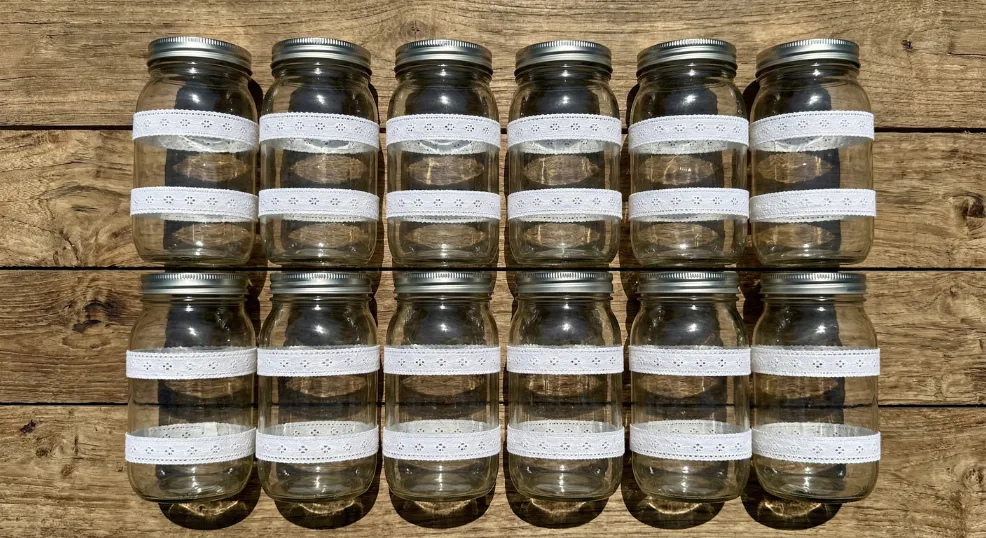
Stacking multiple narrow lace bands at measured intervals gives a jar an apothecary-inspired look that feels collected and intentional. This style works especially well for tall quart-size jars.
Why It Works
Evenly spaced bands create a vertical rhythm that makes tall jars look styled rather than plain. The repetition gives a high-end, boutique feel at a very low cost per jar.
How to Do It
Use three separate 1/4-inch lace trims spaced evenly down the height of a quart jar. Secure each band with a single dot of hot glue at the back seam so the front of each jar looks perfectly clean.
9. Seasonal Lace Swaps for Holiday Pantry Styling
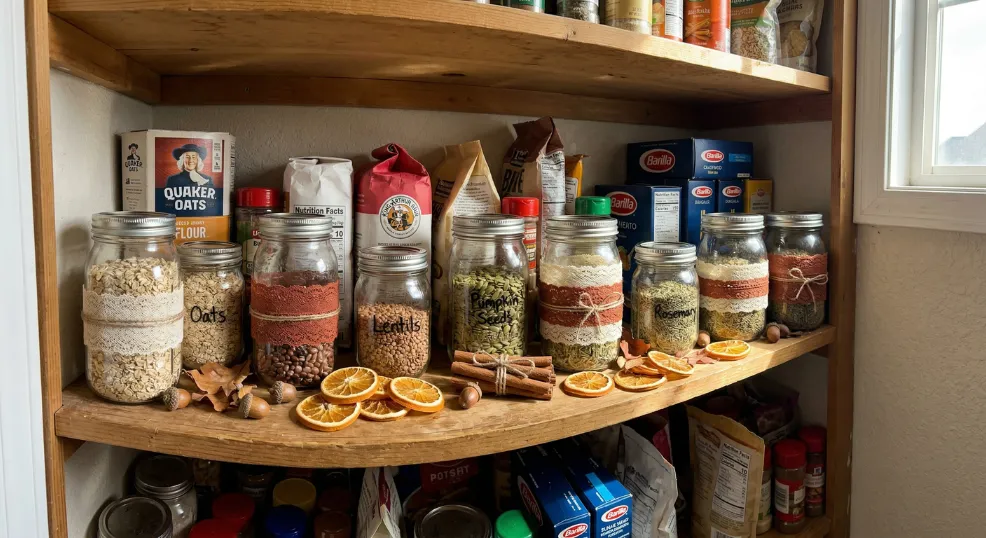
Your pantry decor does not have to stay static all year. Using removable lace trims lets you swap in seasonal colors and patterns, like cream lace for fall or white eyelet for winter, without replacing your jars.
Why It Works
Removable lace wraps (secured with garment tape or a simple knot) mean a single set of jars can be restyled for Thanksgiving, Christmas, or a spring reset in minutes. It is an eco-friendly alternative to buying seasonal decorative containers.
How to Do It
Keep a small collection of seasonal lace trims in a labeled resealable bag. Swap the trim out at the start of each season and store the off-season lace folded flat to prevent creasing.
10. The Shabby Chic Label and Lace Combo
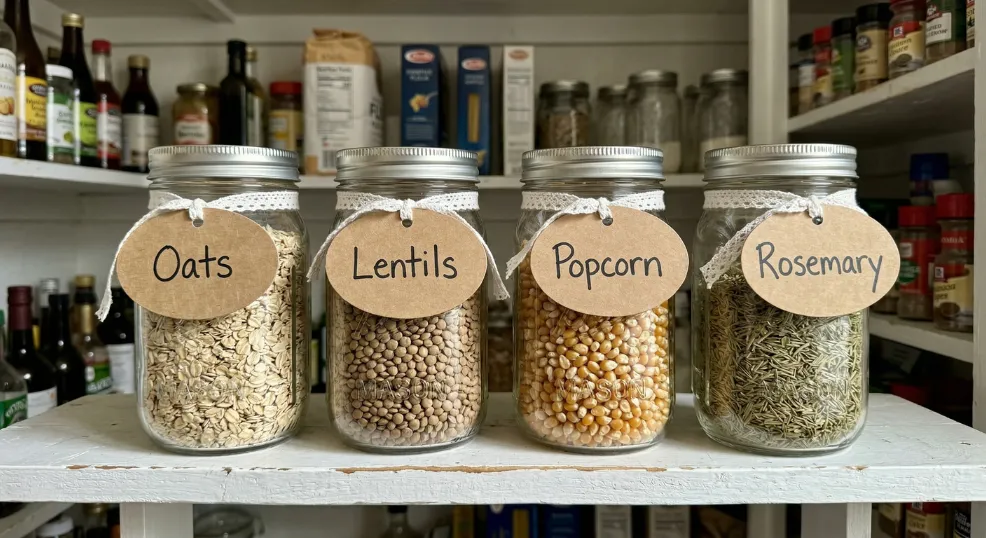
Pairing a handwritten kraft paper label with a lace frame or lace-edged tag turns each jar into a finished, gift-ready object. This is the most “complete” look on the list and the easiest to replicate across a full pantry.
Why It Works
The lace softens the kraft paper texture and gives the label a framed, intentional appearance. Together, they signal a curated pantry rather than a functional storage shelf, which is a small but meaningful visual upgrade.
How to Do It
Cut a small oval or rectangle from kraft paper and write the ingredient name in a simple script. Punch a hole at the top, thread a 6-inch piece of narrow lace ribbon through it, and tie it around the jar neck.
Your Next Step
Pick one idea from this list and start with just three jars from your pantry. You do not need to redo everything at once. A single styled shelf section is enough to see whether a look works for your space before committing to the whole pantry.
When you are ready to go deeper, the guides linked throughout this post will walk you through labeling, upcycling, and seasonal styling in full detail.