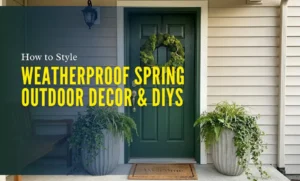
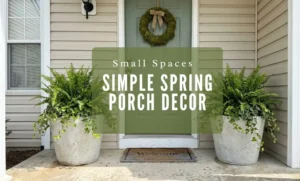
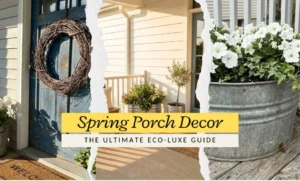
Every year, I’d hose pollen off my fluffy outdoor cushions by week two and wonder why I even bothered.
That’s when I stopped shopping for “spring decor” and started thinking like a curator. This guide is about building a porch that looks expensive, weathers the season gracefully, and never traps a single grain of yellow pollen.
The Pollen Problem Nobody Talks About
Here’s the ugly truth most spring decor guides completely skip: your porch is about to become a pollen trap.
Tufted cushions, heavily textured faux-floral wreaths, and intricate knick-knacks act like magnets for that thick spring pollen cloud. You’ll be scrubbing them every few days.
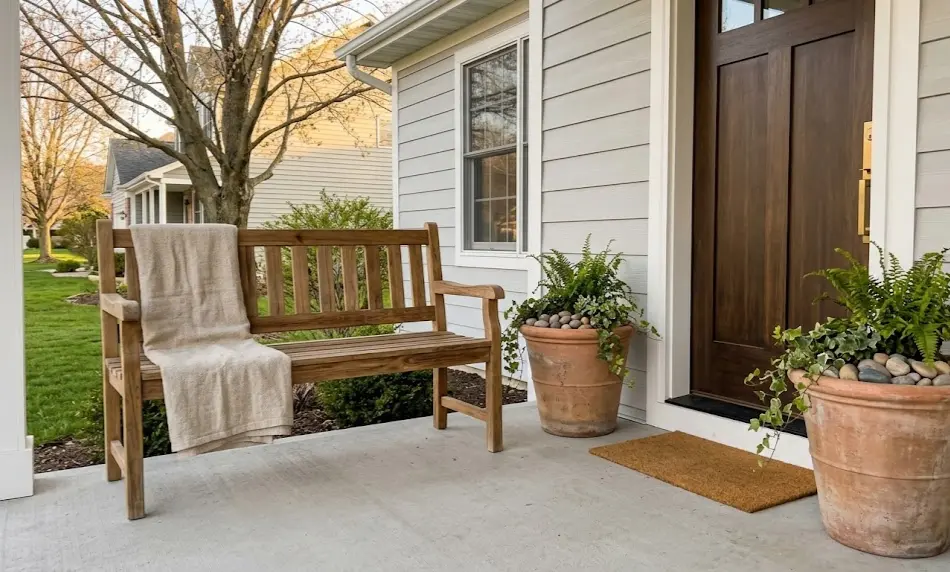
The Organic Modern fix is elegant in its logic: smooth, sealed natural surfaces — teak wood, unglazed ceramics, real live plants — either repel pollen or wash clean in the first spring rain. No scrubbing required.
Pro Tip: Thermally modified or reclaimed teak develops a silver-gray patina that’s actually enhanced by spring weather, not destroyed by it. The more it weathers, the better it looks.
When Should You Start Decorating Your Porch for Spring?
The short answer: late February to early March, and here’s why that works so well with this aesthetic.
Because Organic Modern relies on transitional elements — wood, stone, living greenery — rather than hyper-seasonal holiday items, your porch won’t look “out of place” before the calendar officially flips. A terracotta pot of fresh moss doesn’t scream “Easter.” It just looks beautiful and alive.
That extended lifespan means you get two to three extra months of enjoyment from every piece you invest in.
The 5 Pieces Worth Investing In
1. The “Barely-There” Asymmetrical Wreath
Forget the perfectly round, faux-floral explosion. That look peaked in 2019, and the pollen situation alone makes it a nightmare.
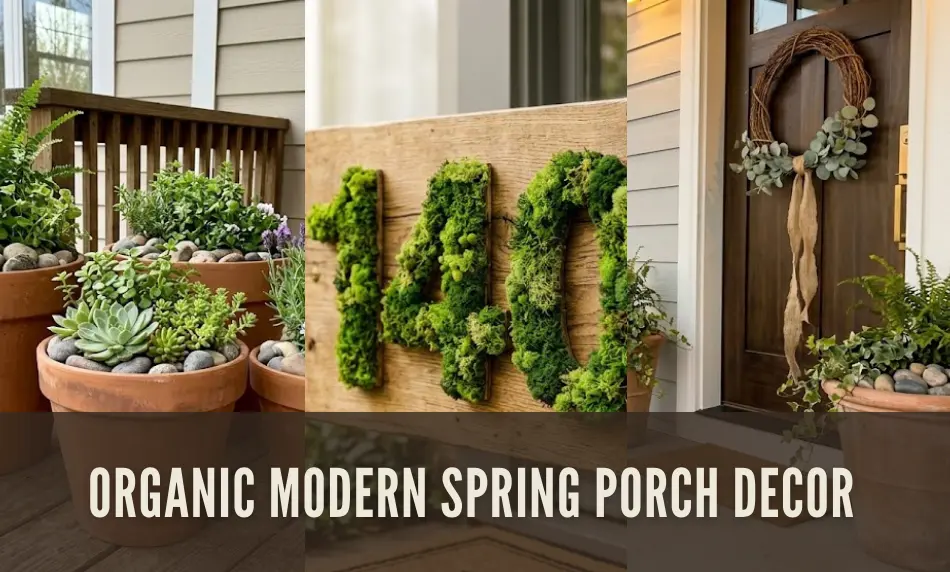
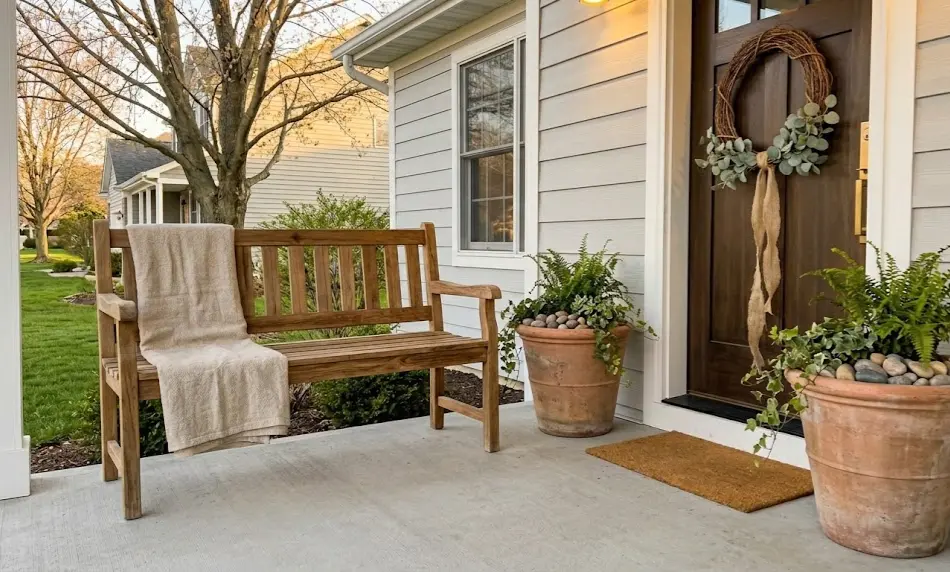
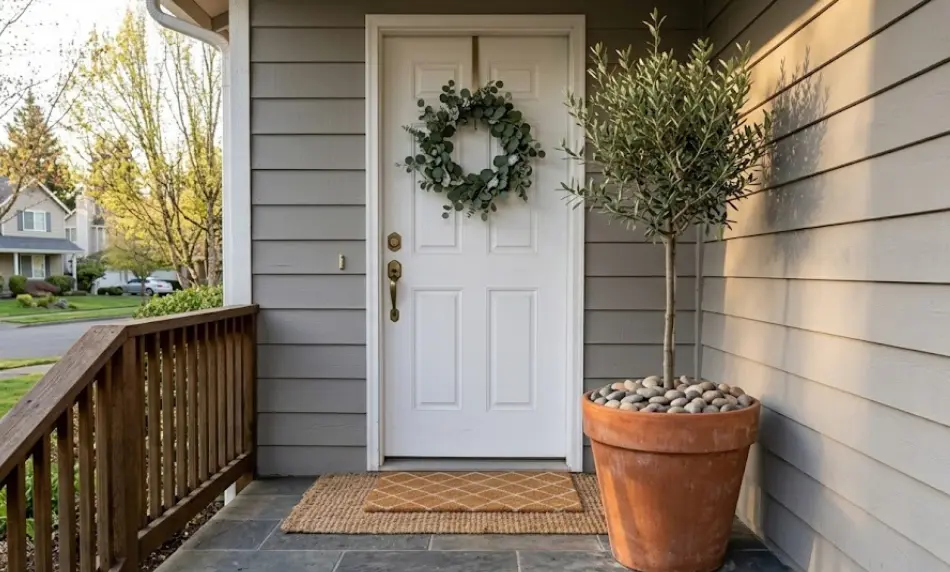
Start with an exposed grapevine wreath base — the kind where you can see the structure. Add just a few stems of high-quality, real-touch eucalyptus and let a raw jute ribbon trail down one side. That’s it. The restraint is the whole point.
The asymmetry photographs beautifully and feels curated, not crafted.
2. Living Moss House Numbers
This is one of those projects that makes guests stop and lean in for a closer look.
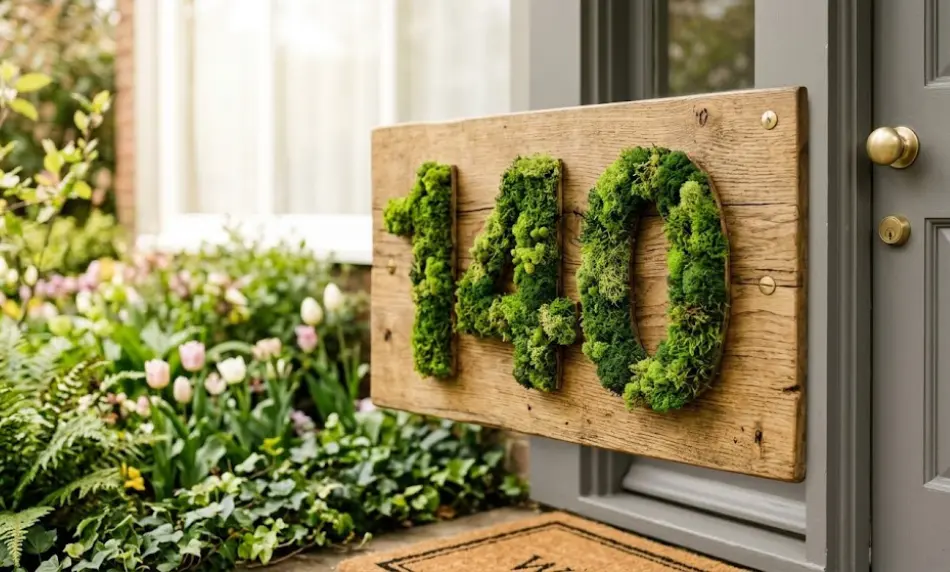
A living moss address sign replaces standard metal plaques and thrives in spring humidity. You’re essentially growing a biophilic art piece on your exterior wall. It bridges green home crafting and modern curb appeal in a way no plastic sign ever could.
Did You Know? Searches for “moss decor” and “organic materials” have seen consistent year-over-year growth, reflecting a deep shift in how homeowners want to feel connected to nature outdoors.
3. Unglazed Terracotta & River Rock Layering
Glossy, brightly painted ceramic pots have one season of charm before they start looking cheap and chalky.
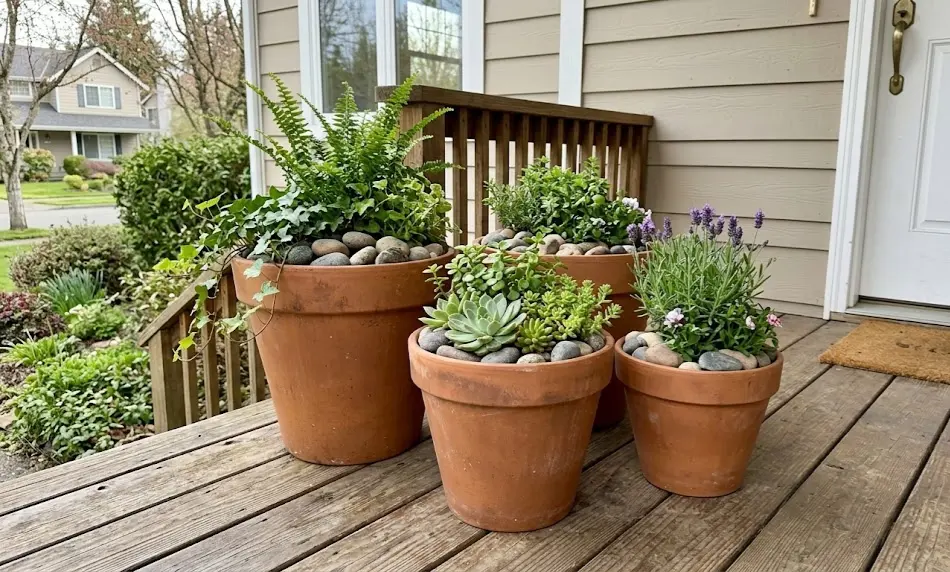
Unglazed, weathered terracotta gets better with age — that’s the wabi-sabi philosophy in action. Top-dress the soil with smooth river rocks to retain moisture, suppress weeds, and add a grounded, heavy texture that looks intentional and editorial.
A cluster of three pots in varying heights, all unglazed, all river-rocked, costs almost nothing and reads as high design.
4. The Reclaimed Teak “Breathing” Bench
One quality piece of seating does more for your porch aesthetic than an entire cart of seasonal accessories.
Thermally modified or reclaimed teak patinas gracefully over time — it’s not fighting the weather, it’s aging with it. Pair it with a single heavy linen throw instead of a pile of synthetic seasonal pillows. The throw washes easily, stores easily, and looks far more considered.
Pro Tip: Real estate staging data shows homes styled with warm, nature-inspired palettes can sell up to 20% faster. Your porch is the first impression — make it count.
5. Grounded in Jute
The doormat is the most underestimated design element on any porch.
Move past the cheeky text-heavy mats and layer thick natural fiber rugs — woven jute or sisal — to ground the whole space. A larger base layer with a smaller textured mat on top creates depth and signals that someone intentional lives here. It’s a designer trick that costs less than a dinner out.
Natural fiber rugs also don’t trap pollen the way tufted synthetic options do. Win-win.
What’s the Difference Between Spring and Summer Porch Decor?
Spring decor is about soft, transitional textures and fresh greenery. Summer is when you earn the right to go bolder.
Spring calls for that just-woke-up-from-winter energy — quiet, cool, layered. By summer, you can introduce heavier tropical elements and sun-soaked vibrancy. But start here, with restraint, and the seasonal shift feels like a natural evolution rather than a complete teardown and re-start.
How Do You Decorate a Small Front Porch for Spring?
One word: vertical.
A single, high-quality potted tree — a slim olive or a slender Japanese maple in an oversized terracotta pot — makes a stronger statement than five small, cluttered decorative pieces. Intentional minimalism reads as luxury on a small porch. Clutter just reads as small.
Stick to your asymmetrical wreath, one statement planter, and a jute doormat. That’s genuinely all you need.
Did You Know? “Sustainable Luxury” as a design category has seen a 187% increase in popularity as homeowners actively move away from disposable seasonal goods toward investment pieces that last.
The Curation Mindset
The shift from “decorating” to “curating” is small in theory but everything in practice.
You’re not filling a porch. You’re choosing four or five materials — teak, terracotta, jute, living green — and letting them do all the talking. Each element earns its place because it ages well, cleans easily, and looks better in February than it does in a box at the craft store.
That’s the whole secret.
FAQ
When should you start decorating your porch for spring?
Late February to early March. Organic Modern elements like wood, stone, and greenery are transitional by nature, so you can put them out early and leave them up well into summer without anything looking out of place.
What is the difference between spring and summer porch decor?
Spring decor leans into soft textures, fresh greenery, and cool transitional tones. Summer decor shifts toward bolder, sun-soaked vibrancy with heavier tropical elements.
How do you decorate a small front porch for spring?
Focus on vertical height and intentional minimalism. One statement planter, a quality wreath, and a layered jute mat will always outperform a crowded collection of small decorative pieces.