Your prized potted perennials can survive brutal winters if you match your strategy to your USDA zone. Container roots freeze faster than in-ground plants because pot walls expose them to cold air from every angle. This guide breaks down zone-specific protection methods using garage storage or insulating wraps from Ace Hardware.
Understanding Container Plant Hardiness Zones
Plants in containers need different zone ratings than the same varieties planted in the ground. Most experts recommend choosing plants rated one to two USDA zones hardier than your local climate when growing them in pots.
Container roots face more freeze-thaw stress because they lack the earth’s insulating buffer. A perennial hardy to zone 5 in the ground might only survive to zone 6 or 7 in a pot without protection.
Zone 1–3: Indoor Storage Required
Outdoor overwintering in zones 1–3 rarely works for most container plants. The extreme cold and freeze-drying winds kill root systems even with heavy insulation.
Move your containers into unheated garages, basements, or cellars before the first hard freeze. These spaces stay cool enough to keep plants dormant but warm enough to prevent total root death.
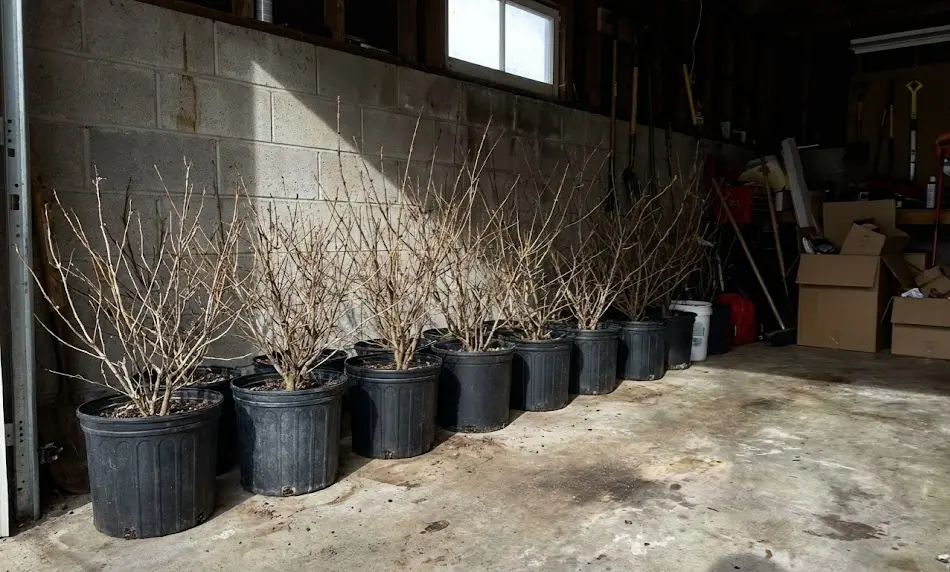
Check soil moisture monthly. Water sparingly only when the top two inches feel bone dry. Overwatering dormant plants in dark storage causes root rot faster than cold damage.
Zone 4–5: Garage Storage or Heavy Insulation
You have two paths in zones 4–5. Move tender plants indoors like colder zones, or protect hardier specimens outdoors with aggressive insulation.
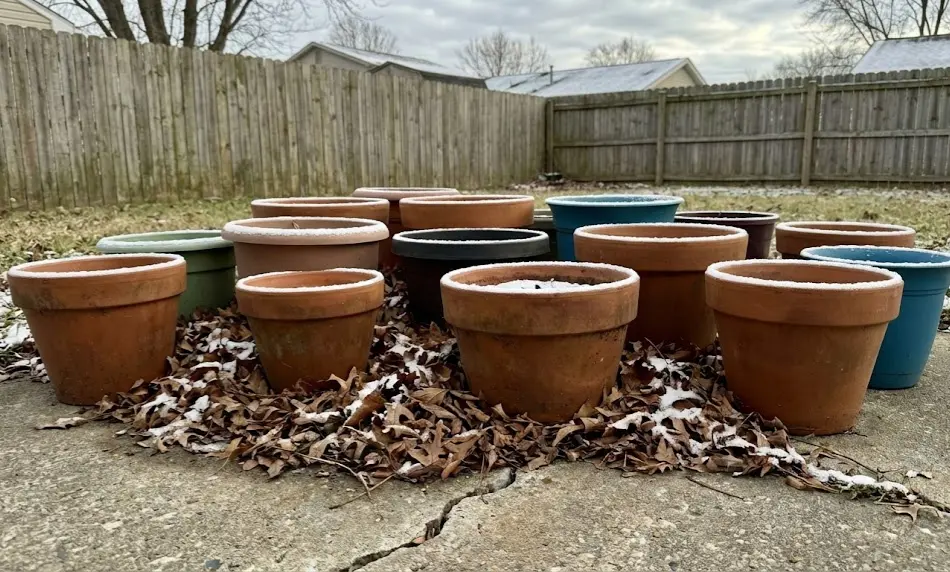
For outdoor protection, cluster pots together in a wind-sheltered corner between fences or beside sheds. This positioning blocks desiccating winds that freeze-dry exposed root balls.
Clustering Method
Group containers tightly so their sides touch. Fill gaps between pots with loose leaves, straw, or shredded bark. This mulch layer traps heat radiating from the pot walls and keeps root zones several degrees warmer.
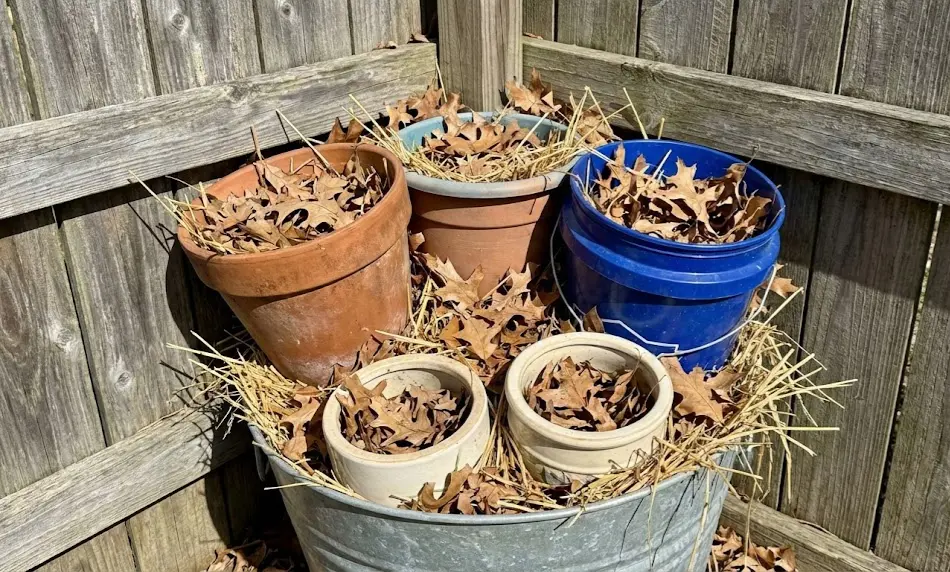
Top each pot with three to four inches of additional mulch covering the soil surface. This prevents freeze-thaw cycling in the root crown.
Wrapping Individual Pots
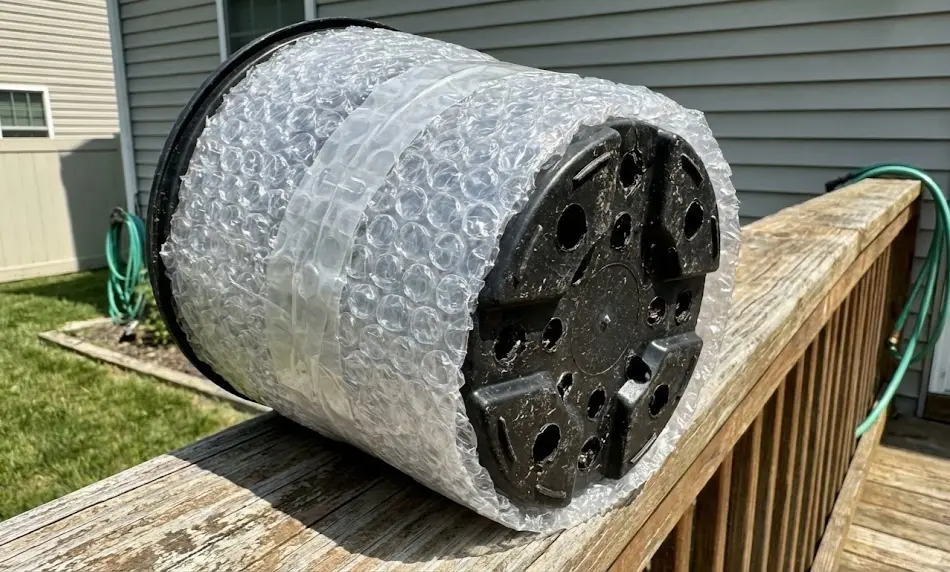
For extra protection or isolated containers, wrap pot exteriors with burlap or bubble wrap from Ace Hardware. Start at the base and spiral upward, securing with twine or zip ties.
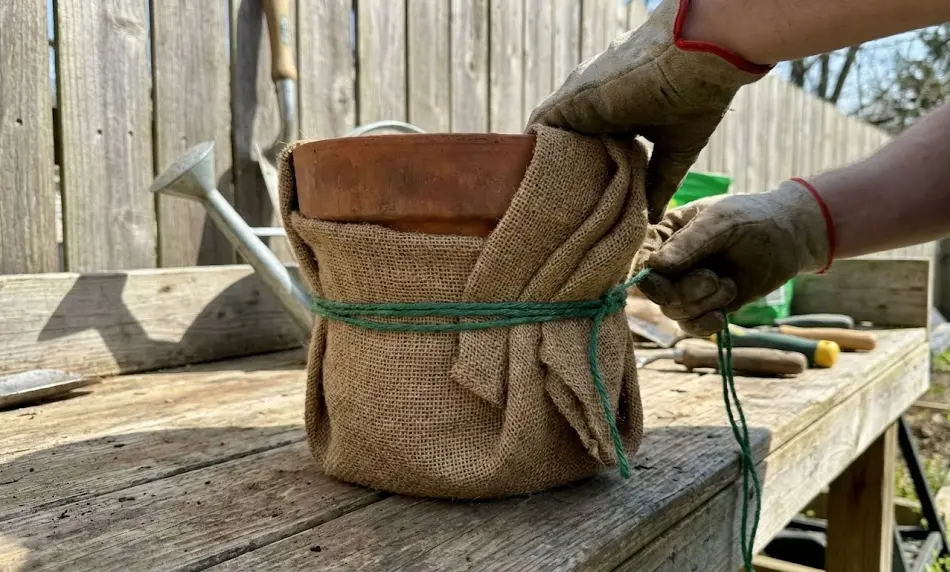
Leave drainage holes uncovered. Trapped water that freezes will crack ceramic, clay, and concrete pots when ice expands.
Zone 6–7: Insulation Plus Strategic Placement
Most hardy perennials and shrubs survive zone 6–7 winters in containers with moderate protection. Skip indoor storage unless you are growing plants rated for zones 8 or warmer.
Position pots against south-facing walls or under roof overhangs. These microclimates stay five to ten degrees warmer than open yard spaces.
Cluster and mulch pots using the same method described for zones 4–5. Add wrapping only for marginal plants or during extreme cold snaps forecast below zero Fahrenheit.
Zone 8+: Minimal Intervention
Container plants in zone 8 and warmer rarely need special winter protection. Focus on elevating pots off frozen surfaces and ensuring good drainage.
Place containers on pot feet, bricks, or wood blocks. This prevents freeze-bonding to concrete patios and allows drainage holes to stay clear.
Preventing Freeze-Drying Damage
Wind exposure kills more overwintering container plants than cold temperatures alone. Frozen root balls cannot absorb water while dormant plants continue losing moisture through bark and dormant buds.
Move containers to sheltered spots between buildings, fences, or dense evergreen shrubs. If relocation is impossible, create windbreaks using burlap screens staked around exposed pots.
Reduce watering to near zero once plants go dormant. Check monthly by pressing fingers two inches into soil. Water lightly only if completely dry.
Managing Pot Material and Drainage
Ceramic, clay, and concrete containers crack when wet soil freezes and expands. Plastic and resin pots flex better but still need drainage management.
Elevate all containers before winter to keep drainage holes clear. Tilt pots slightly if needed to prevent water pooling inside.
Some gardeners cover soil surfaces with plastic sheeting before adding mulch. This limits water absorption during winter rains and thaws, reducing freeze expansion pressure inside pots.