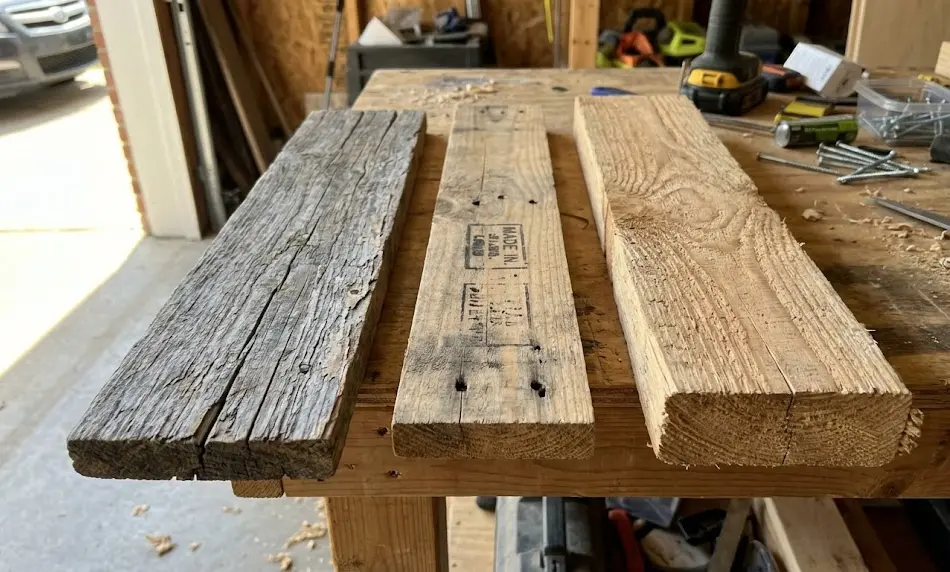
You’re staring at a Pinterest board full of stunning rustic shelves and wall art, but the term “recycled wood decor types” keeps popping up without clear definitions. Understanding the three main categories (reclaimed, pallet, and scrap wood) transforms your next thrift store run into a goldmine for budget-conscious, eco-friendly projects. This guide clarifies what makes each type unique so you can choose materials that match your vision and avoid common DIY headaches.
What Makes Recycled Wood Different From New Lumber?
Recycled wood comes from demolished barns, factories, shipping crates, or construction offcuts instead of freshly cut trees. The EPA reports US landfills divert roughly 30 million tons of wood waste yearly, and using reclaimed materials reduces this burden while saving the equivalent of 1 billion trees historically.
New lumber comes from modern fast-growth forests with looser grain and less character. Recycled wood offers budget savings (often free or under $2 per board foot), unique patina you can’t buy at big-box stores, and guilt-free decorating that keeps usable timber out of dumps.
Old-growth recycled wood has 2 to 3 times tighter grain and natural rot resistance compared to new lumber. This density means your DIY coat rack or floating shelf lasts decades without warping, giving you both beauty and durability.
The 3 Core Recycled Wood Decor Types
Reclaimed Wood (Barn & Industrial Salvage)
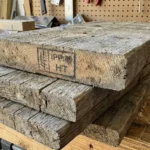
Reclaimed wood comes from structures built 50 to 150 years ago, like barns, warehouses, or old homes. Common US species include Eastern white pine and oak from Northeast barns, heart pine and cypress from the Southeast, and Douglas fir from the Pacific Northwest. These old-growth timbers offer denser, more stable material than anything available today.
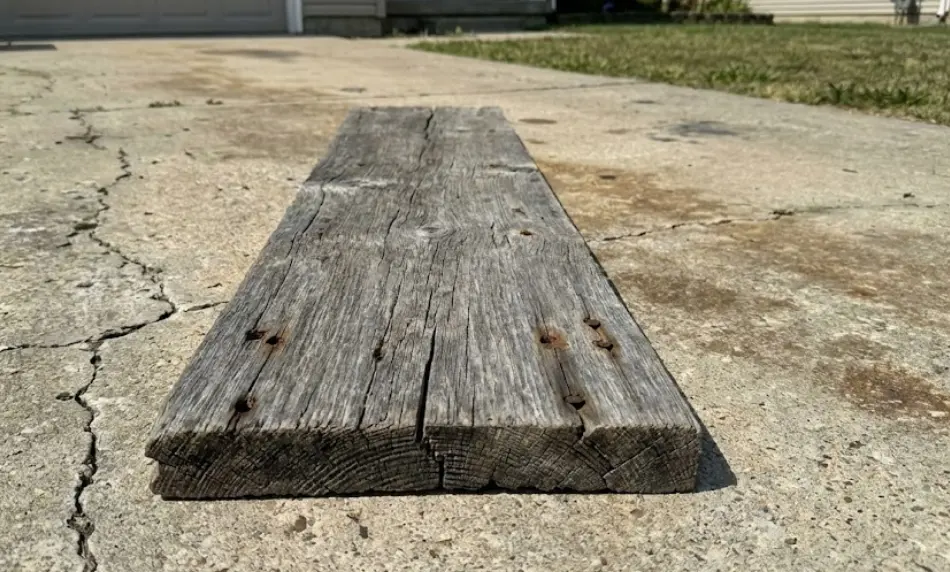
The signature feature is patina (that silvered or honey-toned surface aged by decades of weather). You’ll see nail holes, saw marks, and color variations that create instant rustic charm in picture frames, headboards, or accent walls. Wormy chestnut from the Northeast shows distinctive insect tunnels, while Southern heart pine displays rich amber tones.
Reclaimed wood costs more effort to source but delivers premium aesthetics. You’re working with hickory that tops oak on the Janka hardness scale or heart pine with grain so tight it resists scratches better than modern pine.
Pallet Wood (Shipping Crate Lumber)
Pallet wood comes from wooden shipping platforms stamped with logos and handling marks. It’s typically pine or mixed softwoods, offering zero-cost material if you grab discarded pallets from stores or warehouses. The faded brand stamps and rough texture give projects an industrial vibe perfect for coffee tables or garden planters.
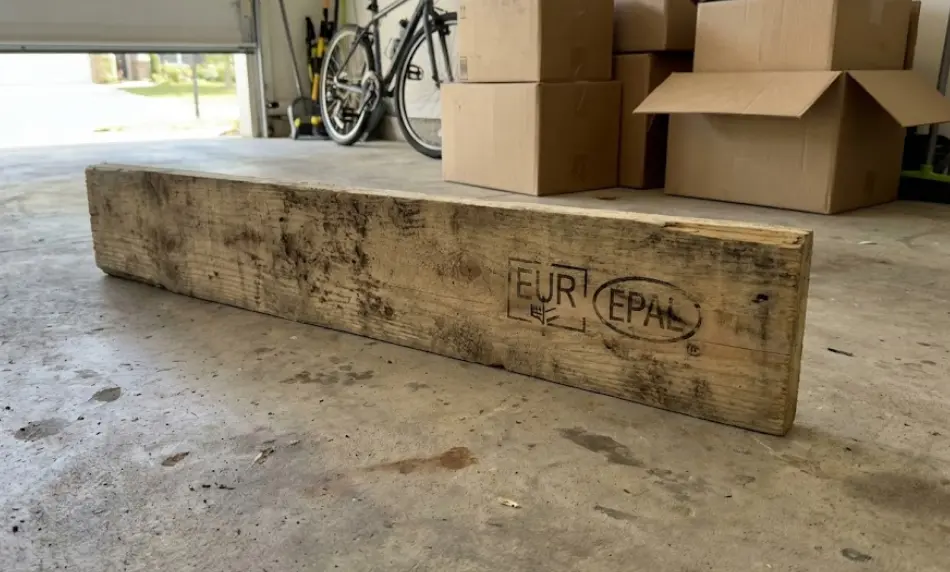
The downside? Quality varies wildly. DIY communities on Reddit’s r/DIY note that 50% or more of pallets end up in firepits due to warping, splitting, or poor grain structure. Blotchy stains from moisture exposure and thinner dimensions (often just ⅝ inch thick) limit structural uses.
Pallet wood works best for low-stress decorative projects where character matters more than strength. Think vertical wall art, small shelving accents, or outdoor signs where imperfections add to the charm.
Scrap Wood (Construction Offcuts & Leftovers)
Scrap wood includes construction site cutoffs, woodworking shop remnants, or lumber from dismantled furniture. You’ll find random species and dimensions, from 2×4 pine scraps to exotic hardwood pieces leftover from cabinet builds. This category offers the most variety and often comes free from neighbors doing renovations or woodshop cleanout sales.
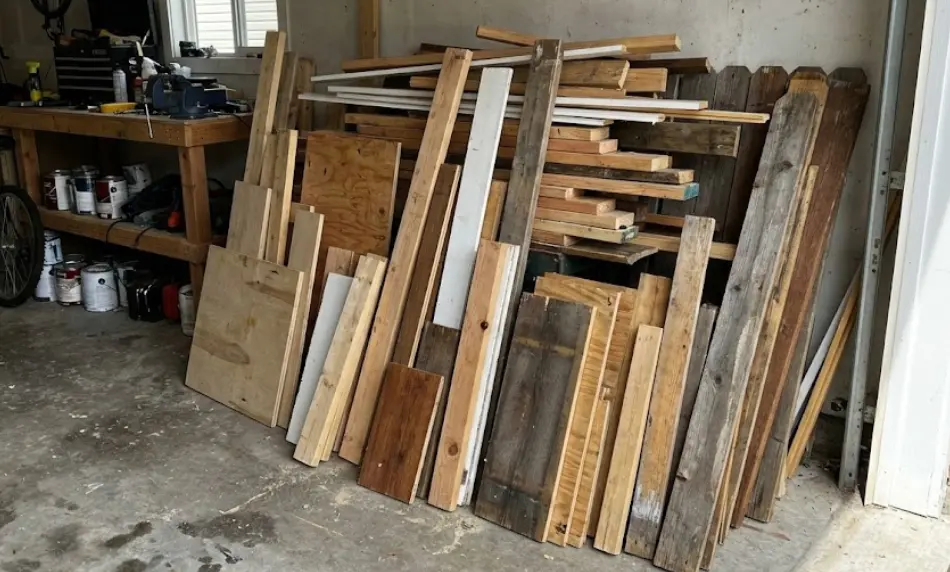
The unpredictability is both a challenge and opportunity. You might score a 12-inch piece of walnut perfect for a serving board or end up with mismatched pine strips ideal for mosaic wall art. If you’re wondering how to turn these odds and ends into high-end decor, there are several stunning scrap wood decor projects that’ll make your home look expensive without requiring a full workshop
Scrap wood suits experimental projects where you can adapt designs to whatever dimensions you find. Coasters, small frames, and test pieces let you practice techniques without investing in full boards.
Regional Differences in US Recycled Wood
Northeast sources like Vermont or Pennsylvania offer wormy chestnut with distinctive patina and white pine from colonial-era barns. These species sand easily and absorb stain predictably, making them beginner-friendly for indoor decor. The worm tunnels create conversation-starting texture in wall shelves or mirror frames.
Southern states provide heart pine (longleaf pine from old mills) with rich amber color and exceptional density. Cypress from Louisiana brings natural rot resistance perfect for bathroom accents or kitchen backsplashes. Both species cost more but deliver museum-quality grain patterns.
Pacific Northwest Douglas fir offers industrial character from old factories and docks. This species machines cleanly and holds hardware securely, ideal for heavy-duty floating shelves or bed frames. The reddish tone adds warmth without staining.
Why Recycled Wood Types Matter for Your Projects
Choosing reclaimed barn wood over pallet scraps changes everything from finish absorption to structural integrity. Heart pine’s Janka rating (870 to 1,225 depending on growth) handles daily wear on tabletops while standard pallet pine (around 380) dents from dropped keys. You’re not just picking “old wood”—you’re selecting performance characteristics that determine if your DIY shelf sags in six months or lasts 20 years.
The aesthetic payoff justifies the extra effort. Gray-weathered barn siding creates farmhouse-chic mantels that new lumber painted gray can’t replicate. That authenticity comes from UV exposure and seasonal temperature swings no artificial technique replicates.
Budget matters, too. Free pallet wood makes sense for learning projects where mistakes happen. Investing $40 in reclaimed oak for a statement headboard beats $200 in new hardwood while delivering better grain and story.