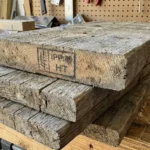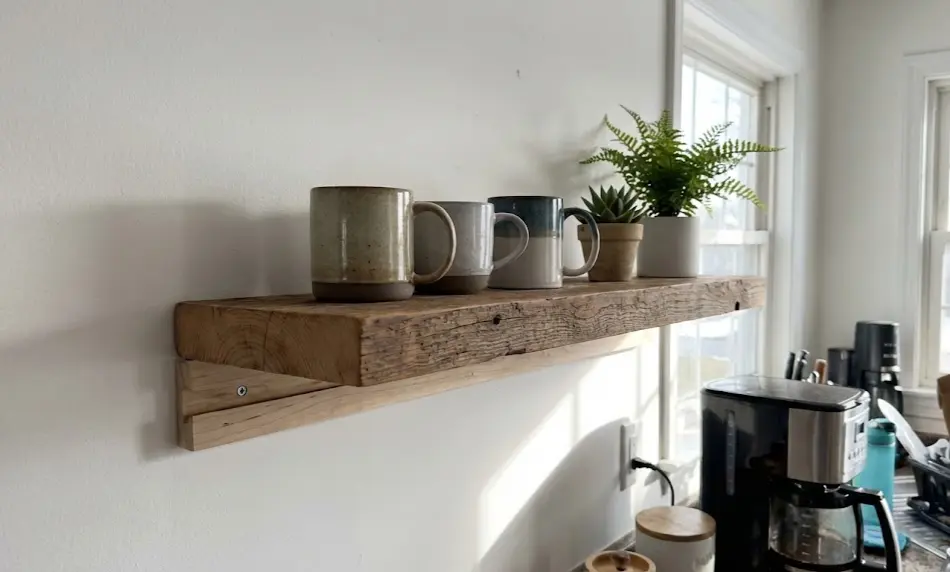
You can build sturdy recycled wood shelves DIY in 30 minutes using hidden French cleat brackets. This project transforms pallet planks or barn wood into floating wall storage for kitchens, offices, or living rooms. You’ll cut costs 80% compared to retail shelves while keeping functional lumber out of landfills.
Why Choose Recycled Wood for DIY Shelves
Pallet wood and reclaimed planks cost nearly nothing but deliver the rustic look of $100+ store-bought shelves. US DIYers complete over 15 million pallet projects yearly because the savings add up fast. Kiln-dried recycled wood with moisture content below 12% resists warping better than fresh lumber’s 20% moisture risk.
French cleat mounting systems hide all hardware while supporting 100-200 pounds per shelf on drywall anchors. When you hit wall studs, weight capacity jumps to 400+ pounds per UL-tested heavy-duty cleats. This makes recycled wood shelves safe for dish storage, book collections, or plant displays.
Materials You’ll Need
French Cleat Brackets Heavy-duty cleats like Everbilt from Home Depot meet IRC R301 building codes for recycled wood loads. The two-piece design splits into a wall-mounted rail and shelf-mounted strip that lock together at 45-degree angles.
Stud Finder Electronic stud finders prevent anchor failures under dynamic loads from books or kitchenware. Reddit r/DIY users report drywall-only anchors fail around 50 pounds when items get pulled or pushed on shelves.
Toggle Bolts Use these for spots between studs where you need extra holding power. They spread the load across a wider drywall area than standard plastic anchors.
You’ll work with pre-cleaned, sanded planks sized to your shelf length. Standard 1×10 boards work well for 24-48 inch spans.
Fixing Uneven Pallet Plank Problems
Mismatched board widths create a “railroad track” effect where shelves wobble or tip books forward. Sort through your reclaimed wood pile and select planks within 1/4 inch of each other in width. If you’re joining multiple boards edge to edge, this matching step prevents the frustrating tilt that r/DIY users constantly complain about.
Shim the back rabbet on narrower boards to level the shelf surface. Small wooden wedges tucked behind problem spots during mounting solve most wobble issues without visible fixes on the front face.
Step-by-Step Installation
Mount the Wall Cleat
Mark stud locations with your finder at the desired shelf height. Hold the wall portion of the French cleat level and drill pilot holes into at least two studs. Secure with 3-inch wood screws, checking level again before final tightening. The 45-degree angle should face upward to receive the shelf cleat.
Attach the Shelf Cleat
Flip your recycled wood plank face-down on a stable surface. Position the shelf cleat strip flush with the top back edge, 45-degree angle facing down. Drill pilot holes every 8 inches to prevent wood splitting, then drive 1.25-inch screws through the cleat into the plank.
Hang and Test
Lift the shelf and hook the two cleat pieces together by tilting the shelf up and letting the angled edges interlock. Slide it side to side to confirm it’s fully seated. Load 20-30 pounds gradually and check for any forward tilt or movement before placing your final items.
Weight Limits for Safe Loading
Studs provide the strongest anchor points for heavy loads like dish stacks or large book collections. Two studs supporting a 36-inch shelf handle 400+ pounds when you use proper wood screws. Areas between studs need toggle bolts rated for at least 75 pounds each to avoid anchor pullout.
Test your installation by placing weight on the front edge where leverage creates the most stress. If you see any wall flex or hear creaking, redistribute items toward the back or add more stud anchors.
Common Installation Mistakes to Avoid
Skipping the stud finder causes the most shelf failures in homes with kids or pets. The French cleat hides poorly-set anchors until sudden loads cause collapse. Always verify you’ve hit solid wood before trusting any mounting point.
Using green or high-moisture recycled wood leads to shelf sag within months. Check that your planks feel dry and show no dark moisture stains before cutting. Kiln-dried reclaimed wood averages 8-10% moisture content for long-term stability.
Budget Breakdown
You’ll spend roughly $20 per shelf for brackets, hardware, and recycled wood versus $100+ for similar store-bought floating shelves. Menards and Home Depot stock French cleat kits year-round in the shelving aisle. Pallet wood from local businesses or construction sites often comes free if you ask.
Toggle bolts add $5-8 per shelf but prevent expensive drywall repairs from failed anchors. Consider this cheap insurance for installations that will hold valuables or sit above traffic areas.
Best Rooms for Recycled Wood Shelves
Kitchens benefit from open shelving that displays dishes while keeping counters clear. The rustic texture of pallet wood complements farmhouse and industrial design styles popular in suburban homes. Mount shelves 18-24 inches above countertops for easy reach without head bumps.
Home offices gain storage without the bulk of cabinets when you install 8-12 inch deep shelves for books and supplies. Living room walls look less empty with staggered shelf arrangements holding plants, photos, and decorative items.