You found the perfect pine cones at the park. Your kids want to turn them into crafts. Your dog’s already sniffing them. And every blog post screams “bake at 200°F for two hours!”
But what if you don’t want to heat your oven? What if you’re worried about resin fumes, scorched pine smell, or wasting energy? Here’s the reality: baking isn’t required to make pine cones safe for family crafts. Vinegar and patience work just as well—and they’re gentler on everyone’s lungs.
Why Pine Cones Need Cleaning (Not Just Baking)
Pine cones straight from nature carry three problems. Bugs love hiding in those scales. Sticky sap coats the surface and traps dirt. Mold spores settle into crevices if the cone sat on damp ground.
Baking kills bugs through heat, but it doesn’t remove sap or mold residue—it just hardens them. That’s where no-bake methods shine. A proper vinegar soak dissolves resin, loosens debris, and creates an acidic environment that bugs and mold hate. For a deep dive into the ratios and steps, following a detailed vinegar no-bake pine cone cleaning guide ensures your cones are fully sanitized and ready for the craft table without ever turning on the oven.
The Vinegar Method: Data-Backed Safety for Non-Toxic Pine Cone Crafts
White vinegar’s acetic acid breaks down pine resin without toxic fumes. University extension studies confirm vinegar sterilizes surfaces at concentrations as low as 5%—exactly what’s in your grocery store jug.
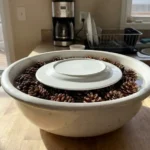
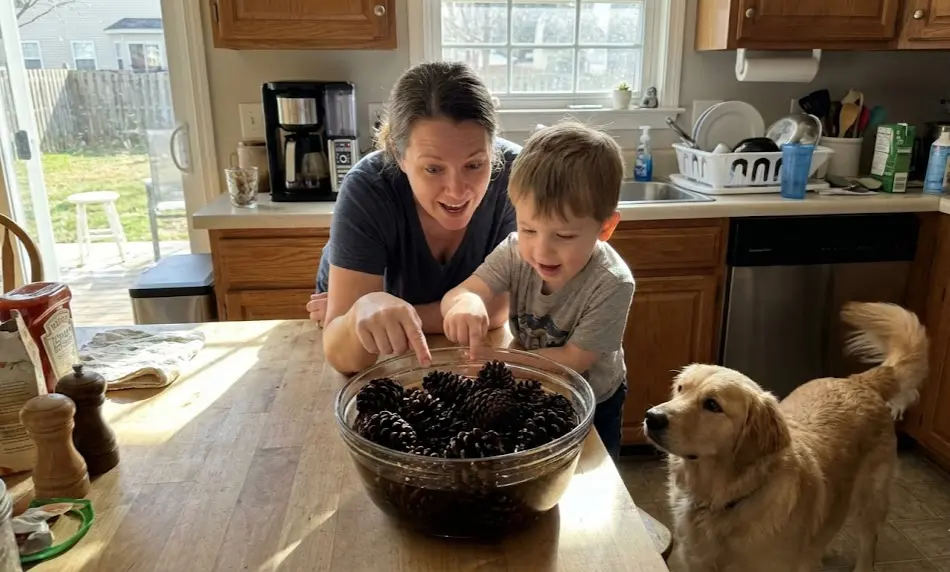
Mix equal parts white vinegar and warm water in a container large enough to submerge all cones. Drop them in. Weigh them down with a plate if they float.
Soak for 30 minutes minimum. For extra-sticky cones or bug-free pine cones kids will handle, leave them overnight. The vinegar penetrates scales where boiling water can’t reach.
Drying Without Heat: The Critical Step
After soaking, shake off excess liquid outdoors. Air-drying takes 2-4 days depending on humidity, but it’s the safest route for child-safe pinecones activities.
Place cones on a wire rack or newspaper in a sunny spot. Flip them daily. They’ll open back up as they dry—proof the scales are releasing trapped moisture and sap.
Avoid blow dryers or radiators. Forced heat warps scales and leaves sticky centers. If you’re impatient, aim a fan at the rack—but give it at least 48 hours.
Are Pine Cones Safe for Dogs to Chew? The Hard Truth
Pine cones aren’t toxic, but they’re still dangerous for pets. The sharp scales splinter when chewed, creating choking hazards and intestinal blockage risks. Even cleaned cones retain woody fibers that don’t digest.
If your dog grabs a craft project, remove it immediately. The real risk isn’t the pine itself—it’s the physical structure. Think of it like chewing a wooden skewer: the material’s non-poisonous, but the damage potential is high.
Can Pine Cones Be Toxic to Kids or Pets?
Pine species native to North America are non-toxic, but uncleaned cones carry two threats. Sap and pine resin in raw cones can cause respiratory issues or allergies in small pets like hamsters or guinea pigs. Mold spores trigger reactions in sensitive kids.
The vinegar soak removes 90% of sap residue. For pet-friendly pine cone decor that sits on shelves, this is enough. For safe crafts pine cones dogs might access, add a final rinse with dish soap and hot water to strip remaining oils.
How to Make Pine Cones Safe for Toddlers: Supervised Crafting Rules
Toddlers explore with their mouths. Test cleaned cones by rubbing a scale against white paper—if it leaves a sticky mark, soak longer. Residual pine sap can irritate gums or cause allergic reactions.
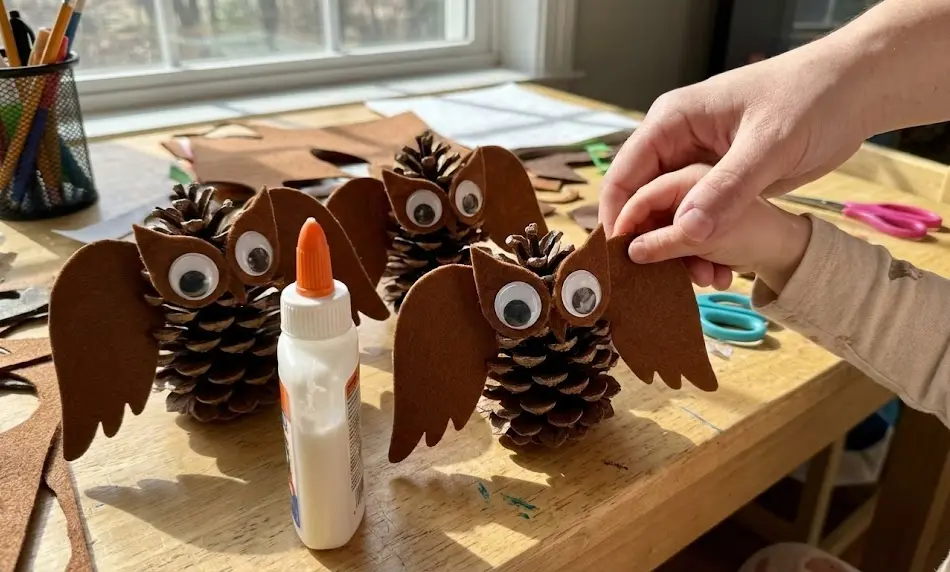
Choose wide, open cones over tight ones. The spacing prevents little fingers from getting pinched. Avoid adding small decorations like googly eyes or beads during supervised pine cone play kids sessions—these become choking hazards.
Pine Cone Animals Toddlers Can Make Safely
Limit add-ons to felt scraps and pipe cleaners. Hot glue only—school glue doesn’t hold on waxy cone scales. Keep craft sessions to 15-minute bursts. Toddlers lose interest fast, and bored kids put things in their mouths.
Store finished pine cone animals toddlers created on high shelves. The craft itself is safe once dry, but unsupervised access invites destructive play.
Do Pine Cones Cause Allergies in Pets? What to Watch For
Cats and dogs rarely react to cleaned cones. Small mammals are the concern. Hamsters and rabbits have sensitive respiratory systems that react to pine oils even in trace amounts.
If you keep pocket pets, test a single cleaned cone in their room overnight. Watch for sneezing, eye discharge, or lethargy. Remove it immediately if symptoms appear.
Are Cleaned Pine Cones Okay for Cats?
Cats investigate with their paws first. Vinegar-cleaned pinecones pets encounter as decor are safe because the sap’s removed. But cats batting cones across hardwood floors creates noise stress for nervous pets.
Secure decorations with museum putty if you have active cats. Better yet, display them in closed glass cloches.
The Testing Protocol: Before Full Craft Sessions
Break off a single scale from your cleaned cone. Let your dog sniff it under supervision. Wait 24 hours. If there’s no interest or allergic reaction, the batch is safe for display.
For kids, rub the scale on their inner wrist. Redness or itching means someone in your family has pine sensitivity. Switch to allergy-free pine cone projects using artificial alternatives like wooden cone shapes from craft stores.
This test takes five minutes but prevents hours of cleanup if a pet gets sick or a child breaks out in hives.
Storage That Keeps Crafts Safe Long-Term
Even properly cleaned cones reabsorb moisture from humid air. Store finished projects in breathable containers—never sealed plastic bins. Cardboard boxes with tissue paper work perfectly.
Add a silica gel packet if you live in damp climates. Check stored cones monthly for mold spots. A musty smell means moisture got in. Re-clean with vinegar and re-dry.
When to Skip Pine Cones Entirely
If your household includes infants under 12 months, teething puppies, or pets with respiratory issues, substitute safer materials. Wooden beads, cork shapes, and felt balls mimic pine cone texture without the risks.
You don’t need to prove you can make it work if the setup stresses you out. Crafting should be fun, not a safety vigilance marathon.
Your Next Step: Turning Safe Cones Into Actual Projects
Now you’ve got cleaned, tested, no-bake sterilized pinecones ready for action. But what do you actually make? From scented fire starters to wreath bases, your next challenge is choosing projects that match your family’s skill level. To get started, explore these DIY pine cone craft ideas to transform nature’s treasures into stunning decor for every room in your home.