Last April, I watched my beautiful spring porch setup get destroyed in a single afternoon.

The wicker basket? Warped. The jute rug? A soggy, mildew-smelling disaster. The cute paper lanterns? Gone — literally blown into the neighbor’s yard. That was the moment I stopped decorating for spring and started decorating against it.
The Real Problem with “Spring Decor” Advice
Most spring styling guides are written as if spring is a gentle season. It is not.
Spring is gale-force winds, sudden downpours, and UV rays bouncing off wet surfaces. If your decor can’t handle that, it’s not decor — it’s a waste of money and materials.
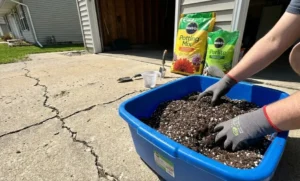
1. Cast Your Own Fluted Concrete Planters (DIY)
These are my absolute favourite spring project, and they cost almost nothing to make.
You use recycled cardboard tubes or molds to cast fluted (ridged) concrete planters, and the result looks like something from a high-end garden shop.
The magic is in the weight. These things do not move in a storm.

What you need:
- Rapid-setting concrete mix
- Two nested cardboard tubes (one smaller than the other for the hollow centre)
- A light coat of cooking spray as a release agent
- A dowel to create drainage holes
Fill the gap between the two tubes with concrete, let it cure for 48 hours, and peel away the cardboard. The corrugated texture of the tube creates that gorgeous fluted finish automatically.
Pro Tip: Add a handful of perlite to your concrete mix. It reduces the overall weight just enough to make moving them manageable, while keeping them heavy enough to anchor against wind.
2. The Reclaimed Teak “Anchor” Bench
A single well-made bench changes the entire personality of a porch.
Teak is one of those materials that genuinely gets better with spring weather, not worse. Its dense grain and natural oil content repel moisture and insects without a single drop of synthetic sealant.
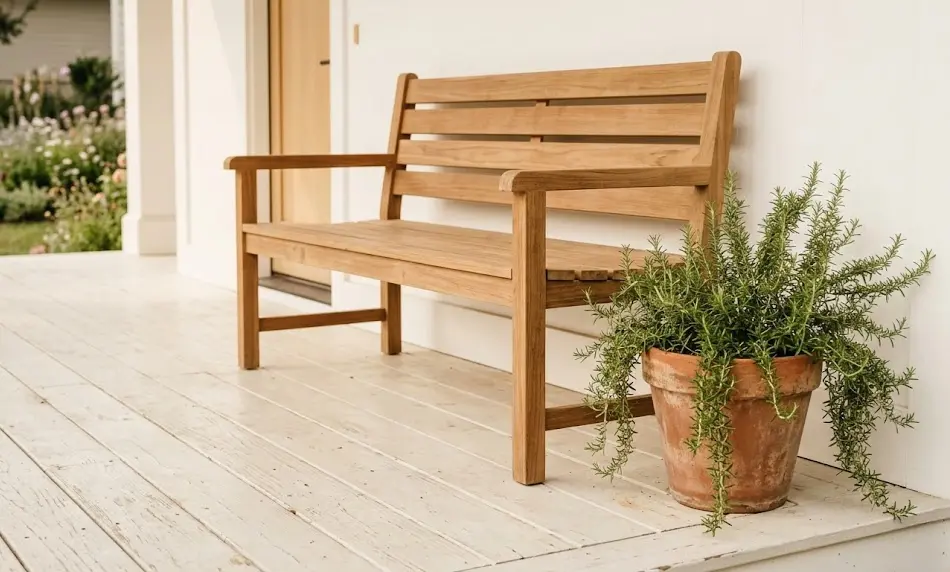
Over time, untreated teak weathers into a beautiful silvery-grey patina. You don’t fight it — you let it happen, and it looks intentional.
For a basic DIY bench, you need only four teak planks for the seat and two short lengths for the legs. No staining, no sealing, no annual maintenance ritual. Just sand smooth and assemble.
Did You Know? Thermally modified timber (wood that has been heat-treated rather than chemically treated) is a brilliant eco-friendly alternative if reclaimed teak is hard to source. It achieves the same weather resistance with zero toxic additives.
3. A DIY Copper Rain Chain (That’s Actually Functional)
This is the project that gets the most “wait, you made that?!” reactions.
A rain chain replaces your standard downspout with a series of linked copper cups or loops. Spring rainwater travels down the chain link by link — it’s genuinely mesmerising to watch during a storm, and it channels water safely into a rain barrel or French drain.
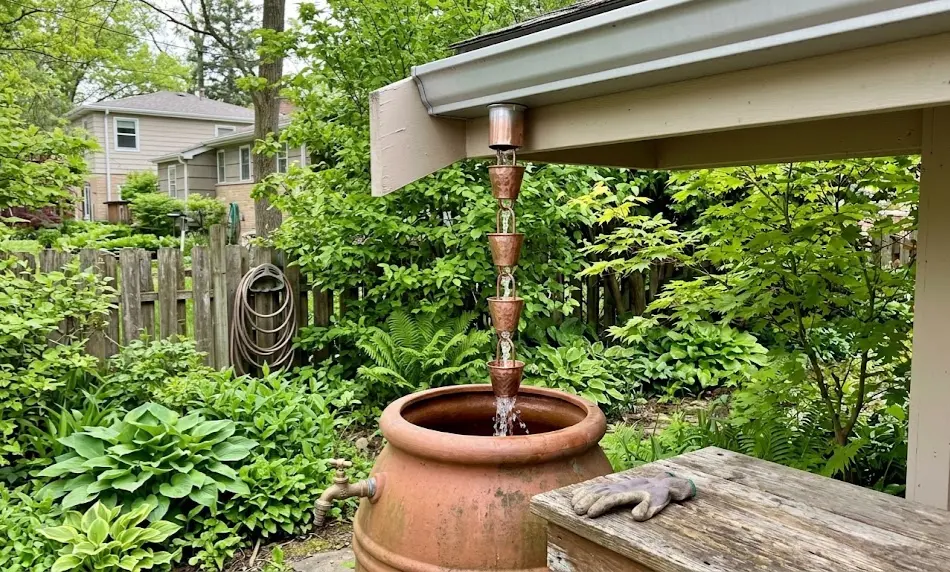
The DIY version is simple: Purchase copper plumbing rings or pre-cut copper cups from a hardware store. Link them with copper wire. Attach the top to the gutter outlet with a standard downspout adapter.
That’s it. As it weathers, the copper develops a gorgeous blue-green patina that looks completely intentional alongside spring greenery.
4. Upcycled Marine-Grade Lanterns
Spring evenings are breezy — lightweight lanterns are not your friend.
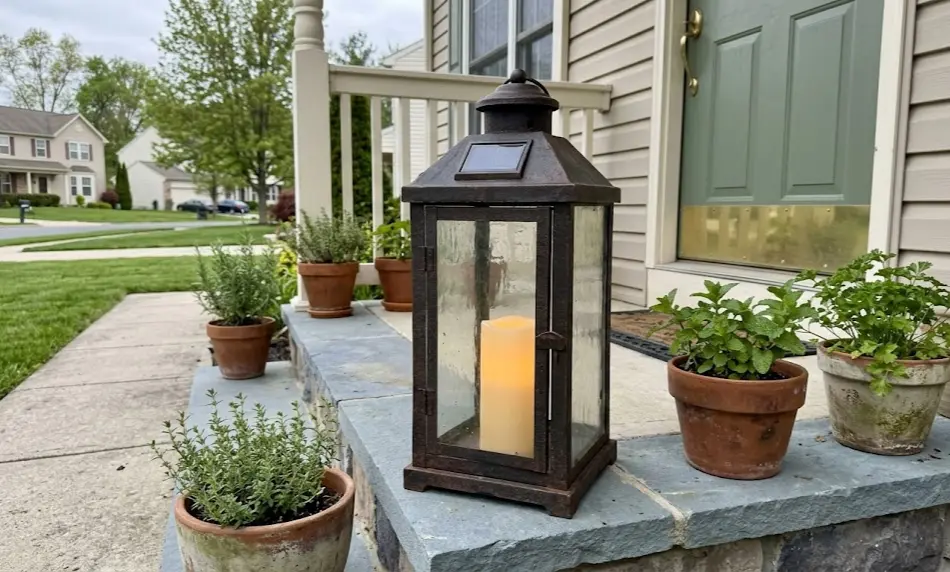
Instead of buying those flimsy paper or thin glass lanterns that shatter the moment a gust catches them, I hunt for heavy iron or stainless steel frames at thrift stores and give them a proper upgrade.
The upgrade kit you need:
- Marine-grade replacement glass panels (cut to size at most hardware stores)
- A solar LED candle (waterproof, with dusk-to-dawn sensors)
- High-temp black spray paint if the frame needs refreshing
Marine-grade glass is engineered to withstand salt air, so spring rain is nothing to it. The solar candle means zero cords, zero fire risk, and zero replacing of batteries in the middle of a downpour.
Pro Tip: Stainless steel lanterns have superior corrosion resistance compared to standard iron — if you can find one at a thrift store, snap it up immediately.
5. The Weighted Foraged Wreath That Won’t Blow Away
The number one complaint I hear about spring wreaths: they fly off the door in wind.
The fix is almost embarrassingly simple once you know it.

Build your wreath on a solid, dried grapevine base — these are heavy and grippy by nature. Add UV-resistant faux eucalyptus sprigs (the “real touch” varieties are genuinely convincing) and dried botanicals for texture.
Then here’s the secret: weave two or three small lead fishing weights into the bottom third of the base, hidden inside the foliage. The weight shifts the wreath’s centre of gravity downward, pressing it flat against the door rather than letting it catch air like a sail.
Finish with a heavy-duty wreath anchor hook rather than a standard over-the-door hook — the difference in wind resistance is enormous.
The Soggy Cushion Problem (And What to Do Instead)
Here’s the thing nobody tells you about spring porch styling: standard cushion foam is basically a sponge.
It absorbs moisture, stays damp for days, and becomes a mould incubator by mid-May. I’ve thrown out expensive cushions because of this, and I will not do it again.
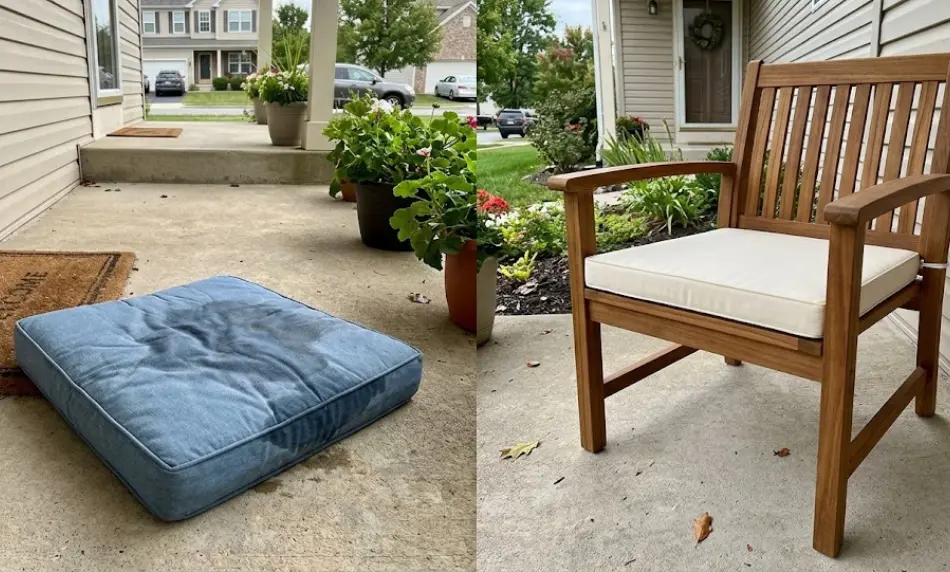
- Reticulated foam — an open-cell foam designed so water drains straight through rather than pooling inside. It’s what marine and boat upholstery uses.
- Solution-dyed acrylic fabrics (Sunbrella is the gold standard) or Olefin — both are engineered to resist moisture, mildew, and UV fading from the inside out, not just as a surface coating.
- Slatted furniture — teak or powder-coated aluminium slatted chairs dry in minutes after a downpour. No cushions required, and they look genuinely architectural.
Did You Know? Polywood furniture, made from high-density polyethylene (HDPE) sourced from recycled plastics, is one of the most genuinely eco-friendly choices for outdoor seating. It won’t splinter, warp, or fade — and it’s fully recyclable at the end of its lifespan.
Your Quick Reference: Best Materials for Spring Outdoor Decor
When you’re choosing materials, durability and sustainability go hand in hand.
Here’s the honest breakdown:
| Material | Best For | Why It Works |
|---|---|---|
| Reclaimed Teak | Benches, planters, tables | Natural oils repel water; ages beautifully |
| Polywood (HDPE) | Chairs, side tables | Fully weatherproof; made from recycled plastic |
| Powder-coated Aluminium | Frames, furniture | Rust-resistant; lightweight but durable |
| Copper | Rain chains, accents | Develops patina; genuinely ages well |
| Concrete | Planters, weights | Unmovable in wind; mouldable into beautiful forms |
| Resin Wicker | Woven furniture | Mimics natural wicker; fully water-resistant |
Pro Tip: Natural wicker will rot and fray within a single wet season outdoors. If you love the woven look, synthetic resin wicker (poly-wicker) is engineered to repel water and resist UV fading — it’s the only version worth putting outside.
Final Thought
Spring decor doesn’t have to be a seasonal throwaway.
When you choose heavy, honest materials — concrete, teak, copper, marine-grade glass — your porch becomes something that improves with every spring storm instead of being destroyed by it. That’s the shift worth making.
Now go cast something beautiful.