
The Hook
The Problem: You’re mid-project when reality hits—will this homemade tote bag survive a rain shower? Is that “waterproof” sealer actually safe for your kids’ art table? Between marketing buzzwords like “eco-friendly PUL” and construction-grade sealers that require hazmat-level warnings, choosing moisture-resistant materials feels like navigating a minefield of misleading labels and hidden dangers.
The Promise: This guide cuts through the confusion with research-backed clarity. You’ll learn which materials actually deliver on moisture resistance, which “eco” claims are genuine versus greenwashing, and—most importantly—how to match the right solution to your specific exposure scenario without compromising safety or your values.
Understanding the Moisture-Resistance Spectrum (Not All Water Exposure Is Equal)
Match Protection to Reality. The biggest mistake crafters make is treating all moisture scenarios identically—a bathroom wall hanging needs humidity tolerance, not the same waterproofing as an outdoor picnic blanket.
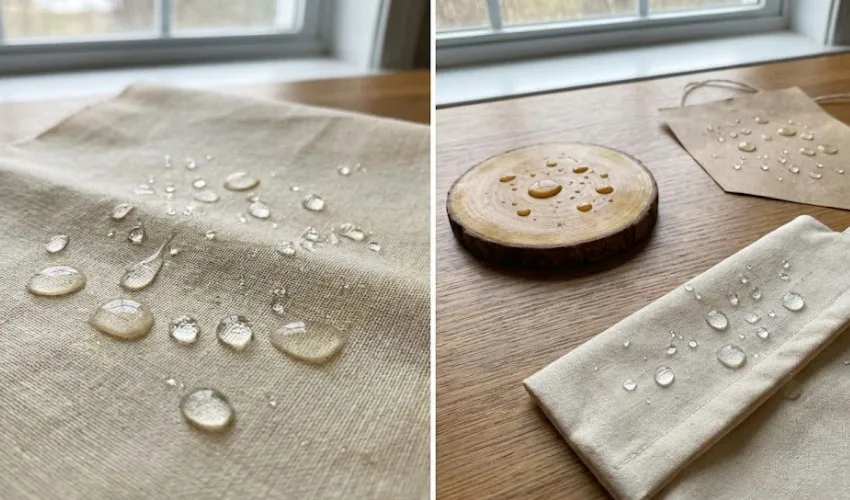
Indoor Splash Zones vs. Full Weather Exposure. Kitchen trivets, bathroom decor, and kids’ art stations face occasional splashes and high humidity. These need water resistance (materials that bead off droplets and dry quickly). Outdoor banners, garden tool bags, and patio cushions require true waterproofing (barriers that prevent water penetration under prolonged exposure and UV stress).
The Degradation Factor. Even legitimately waterproof materials have lifespans. PUL fabrics explicitly warn against prolonged sunlight exposure because UV degrades the polyurethane barrier. Waxed cotton loses effectiveness with abrasion and heavy flexing. Understanding this prevents premature project failure and wasted materials.
Fabric Options: Natural vs. Synthetic Water Resistance
The Natural Contenders
Wool for Damp Environments. Naturally water-repellent to light rain thanks to lanolin content, wool breathes while staying dry—perfect for coasters, trivets, wall hangings in humid bathrooms, or blankets in damp climates. Bonus: it’s biodegradable and requires no chemical treatment.
Waxed Cotton and Oilcloth. Natural cotton impregnated with beeswax or plant oils creates excellent bead-off water resistance suitable for:
- Market tote bags
- Gardening aprons
- Table covers for craft stations
- Tool roll-ups
The Trade-off: Texture stiffens noticeably, creasing shows over time, and heavy outdoor exposure will eventually wear through the wax coating. Best for semi-outdoor or protected use.
Hemp and Organic Cotton (Treated). On their own, these aren’t waterproof—but tightly woven and lightly waxed versions handle humidity and brief splashes while remaining fully biodegradable and chemical-minimal. Ideal for eco-conscious makers prioritizing compostability over extreme water protection.
The Synthetic Solutions
PUL and TPU Fabrics. Polyester or cotton bonded to thin polyurethane film—the gold standard for true waterproofing in:
- Cloth diapers and wet bags
- Mattress protectors
- Shower curtain liners
- Outdoor gear pouches
ECO-PUL Claims Decoded. Products marketed as “ECO-PUL” are CPSIA-compliant (tested for lead, phthalates, flammability) and emphasize reusability over disposables. However, they’re still plastic-based polyurethane laminates—the “eco” angle is reduced harmful additives, not absence of synthetics.
When to Use Them: Choose PUL/TPU only when genuine waterproofing is non-negotiable. Frame them honestly as “reusable plastic-based but safety-tested” rather than implying they’re natural materials.
Nylon and Polyester (Coated). Ripstop and taffeta versions make durable umbrellas, outdoor blankets, and gear bags. Strong and reliably waterproof when coated, but they shed microplastics during washing and aren’t biodegradable—use sparingly if eco-impact matters to your brand.
Sealers and Coatings: Navigating the VOC Minefield
The Safety Disasters (Avoid for Kid-Centric Crafts)
Construction-Grade and Automotive Sealants. Products like silane-based concrete sealers (e.g., Sikagard-740 W) and automotive seam sealers may boast “low VOC” on the label but carry CLP hazard codes including:
- H314: Causes severe skin burns and eye damage
- H332: Harmful if inhaled
- H411: Toxic to aquatic life with long-lasting effects
The Problem: These require gloves, eye protection, and ventilation—they’re engineered for building substrates and industrial use, not indoor craft tables where kids will touch finished projects.
The Craft-Safe Alternatives
Ultra-Low VOC Acrylic Art Sealers. Water-based acrylic sealers explicitly marketed as “non-toxic” and “safe for chemically sensitive individuals” are designed for:
- Unfinished wood decor
- Indoor brick or plaster surfaces
- Art pieces and paper crafts
- Kids’ craft boards
What to Verify: Check that the product documentation specifically lists “ultra-low VOC,” “non-toxic,” and shows no CLP hazard statements beyond basic cautions. These provide adequate moisture resistance for indoor high-humidity exposure without the safety red flags.
Paper and Cardboard Coatings. For water-resistant paper projects:
- Beeswax or Plant-Based Wax: Traditional, sustainable, and compostable. Works well for banners, envelopes, and decorative paper goods. Limitation: can crack with heavy flexing.
- Soy Wax or Corn-Starch Coatings: Make paper more water-resistant while remaining compostable. Protection level is lower than synthetics—suitable for light splashes, not submersion.
DIY “Waterproof” Recipes (Use Caution). Homemade Mod Podge alternatives (food-safe glue plus varnish/oil blends) circulate widely online. The problem: without ingredient disclosure and VOC testing, you can’t judge actual safety. If featuring these, require full recipe transparency and indoor-only use disclaimers.
Key Takeaways: Material-to-Use-Case Matching Guide
| Use Case | Best Material | Why It Works | What to Avoid |
|---|---|---|---|
| Indoor humid rooms (bathroom decor, kitchen trivets) | Wool, lightly waxed organic cotton, ultra-low VOC sealed wood | Natural moisture tolerance, breathable, safe for touch | Construction sealers with H314/H332 warnings |
| Occasional splash zones (kids’ art stations, craft table covers) | Waxed cotton, hemp canvas with plant coating, acrylic art sealers on wood | Bead-off water resistance, quick-drying, non-toxic | Automotive sealants, conventional lacquers (high VOC) |
| True waterproofing needed (wet bags, outdoor gear, mattress protectors) | PUL/TPU fabrics, coated nylon/polyester | Bonded polyurethane barrier prevents penetration | Natural fibers alone (will wick moisture) |
| Outdoor weather exposure (banners, patio items, garden bags) | Coated synthetics for long-term; waxed cotton for seasonal | UV resistance critical; expect degradation over time | PUL fabrics (degrade in sunlight), paper coatings (fail outdoors) |
| Compostable eco-priority (gift wrap, temporary decor, event supplies) | Plant-waxed paper, organic cotton with beeswax, untreated hemp | Fully biodegradable, chemical-minimal | Any synthetic laminate or polyurethane coating |
Myth-Busting: What “Eco-Friendly” and “Waterproof” Really Mean
Myth #1: “Water-Based” Equals Non-Toxic and Kid-Safe.
Reality Check: Water-based sealers can still carry CLP hazard statements for skin corrosion, eye damage, and aquatic toxicity. Always download the Safety Data Sheet (SDS) rather than trusting marketing language alone. A product can be water-based and still require ventilation and gloves.
Myth #2: “Eco” or “CPSIA-Compliant” Means Plastic-Free.
The Truth: ECO-PUL fabrics are marketed as eco-friendly and CPSIA-certified, but they’re still polyurethane film laminated to fabric. The “eco” claim refers to reduced harmful additives (no lead, phthalates) and reusability over disposables—not absence of plastic. Be transparent about this in tutorials.
Myth #3: Waxed or “Water-Resistant” Fabric Is Fully Waterproof Outdoors.
What Actually Happens: Waxed cotton and even some laminated fabrics lose performance with constant UV, abrasion, and weathering. PUL products explicitly warn against prolonged outdoor use because the polyurethane barrier degrades under sunlight. Set realistic expectations: water-resistant ≠ weatherproof for multiple seasons.
The Eco-Impact and Budget Reality Check
Natural Materials Cost More Upfront, Last Longer (If Matched Right). Organic waxed cotton runs 2-3× the price of standard polyester, but it’s repairable (re-wax periodically), biodegradable, and aligns with zero-waste values. For projects like reusable market bags that will be used hundreds of times, the per-use cost favors natural materials.
Synthetic Waterproofing Is Cheaper but Creates Microplastic Waste. PUL and coated nylon are budget-friendly and reliably waterproof, but they shed microplastics during washing and won’t biodegrade. If your brand emphasizes eco-impact, reserve these for applications where no natural alternative exists (true wet bags, medical-grade waterproofing) and educate users on washing in filter bags.
DIY Sealers Save Money—If You Verify Safety. Homemade wax coatings (beeswax melted with jojoba oil) cost pennies per project versus commercial sealers at $15-30/bottle. But commercial ultra-low VOC sealers offer liability protection through documented safety testing—worth the investment for tutorials aimed at families with young children.
The Hidden Cost of Mismatched Materials. Using construction-grade sealers on kids’ crafts may seem frugal, but the safety risk isn’t worth it. Similarly, applying indoor-only wax coatings to outdoor projects leads to early failure and material waste. Matching material grade to exposure class prevents do-overs.
Expert-Level Pro-Tip: The Exposure Class Documentation Method
Before recommending any moisture-resistant material or sealer in a tutorial, explicitly state three things:
- Intended Substrate: (e.g., “This sealer is designed for unfinished wood and plaster, NOT fabric or flexible materials”)
- Exposure Class: (e.g., “Indoor high-humidity,” “Occasional splashes,” “Full outdoor weather—expect re-sealing every 12-18 months”)
- Safety Documentation: (e.g., “Check the product SDS confirms ultra-low VOC and no CLP hazard warnings beyond basic skin/eye contact caution”)
Why This Matters. This prevents two catastrophic mistakes: (1) misusing powerful construction sealers that require hazmat-level safety gear on kid-friendly crafts, and (2) setting up makers for premature project failure by recommending indoor-grade materials for outdoor applications. Product documentation often explicitly warns “not for prolonged outdoor use” or “intended for masonry substrates only”—surface these limitations upfront.
Build Your Material Decision Tree
For Kid-Safe Indoor Projects: Choose wool, organic cotton with plant-based wax coating, or ultra-low VOC acrylic art sealers. Prioritize materials you can confidently touch and smell without gloves.
For True Waterproofing: Use PUL/TPU fabrics transparently (“reusable plastic-based, safety-tested”) when genuine impermeability is non-negotiable—wet bags, gear pouches, medical applications.
For Eco-Priority and Compostability: Stick with beeswax or plant-waxed natural fibers, accepting the trade-off of reduced extreme-weather durability for full biodegradability.
For Outdoor Durability: Choose coated synthetics for multi-season outdoor use, but disclose microplastic concerns. For seasonal outdoor decor, waxed cotton works with the expectation of annual re-treatment.
The right moisture-resistant material isn’t about finding a one-size-all solution—it’s about honest matching between protection level, safety requirements, eco-values, and realistic exposure conditions. When in doubt, under-promise and over-deliver: recommend the safer, more natural option with clear use limitations rather than overselling industrial-grade solutions that conflict with family-friendly crafting.
Still deciding on your next project? Check our Eco-Friendly Craft Supplies category for curated materials that balance performance and values, or explore Budget-Friendly Craft Tools for cost-effective sealing and finishing equipment that won’t compromise safety.