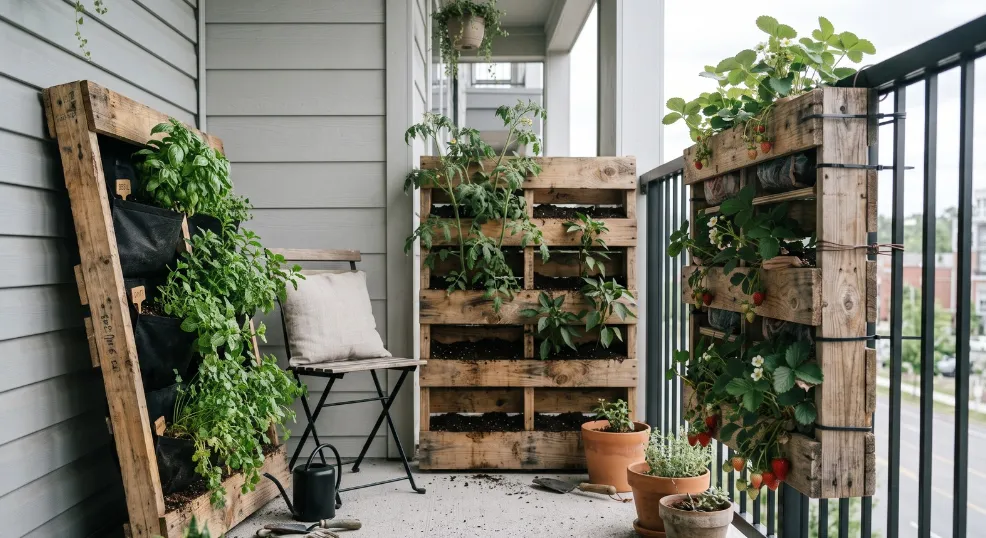
Staring at a cramped balcony and dreaming of fresh herbs? You are definitely not alone right now. Thousands of urban renters are turning bare 5×5-foot (1.5×1.5 meter) spaces into lush mini gardens without drills, saws, or even a single cut.
These three pallet planter designs use free materials you can easily grab from local retail dumpsters or warehouses. You can assemble them in under an hour with just your hands and some heavy-duty zip ties. No landlord complaints, no expensive hardware kits, and absolutely no woodworking skills required.
You only need simple stacking, clever positioning, and the joy of harvesting basil right from your own balcony railing.
Project Overview and Requirements
Getting your urban garden started requires barely any preparation or upfront cash. The materials are incredibly accessible for any renter looking to experiment with upcycling.
The difficulty level is entirely beginner-friendly since absolutely no tools are needed to build these setups. Your average cost will run between $0 and $10 for the free pallets plus some optional soil or landscape fabric. This setup is perfect for apartment dwellers, renters with tiny balconies, and first-time gardeners seeking instant gratification.
3 Clever Pallet Planters to Build Today
Transforming a discarded wooden shipping flat into a thriving garden is much easier than you might think. Here are three distinct ways to configure your space without lifting a hammer or plugging in a saw.
1. Vertical Herb Wall Planter
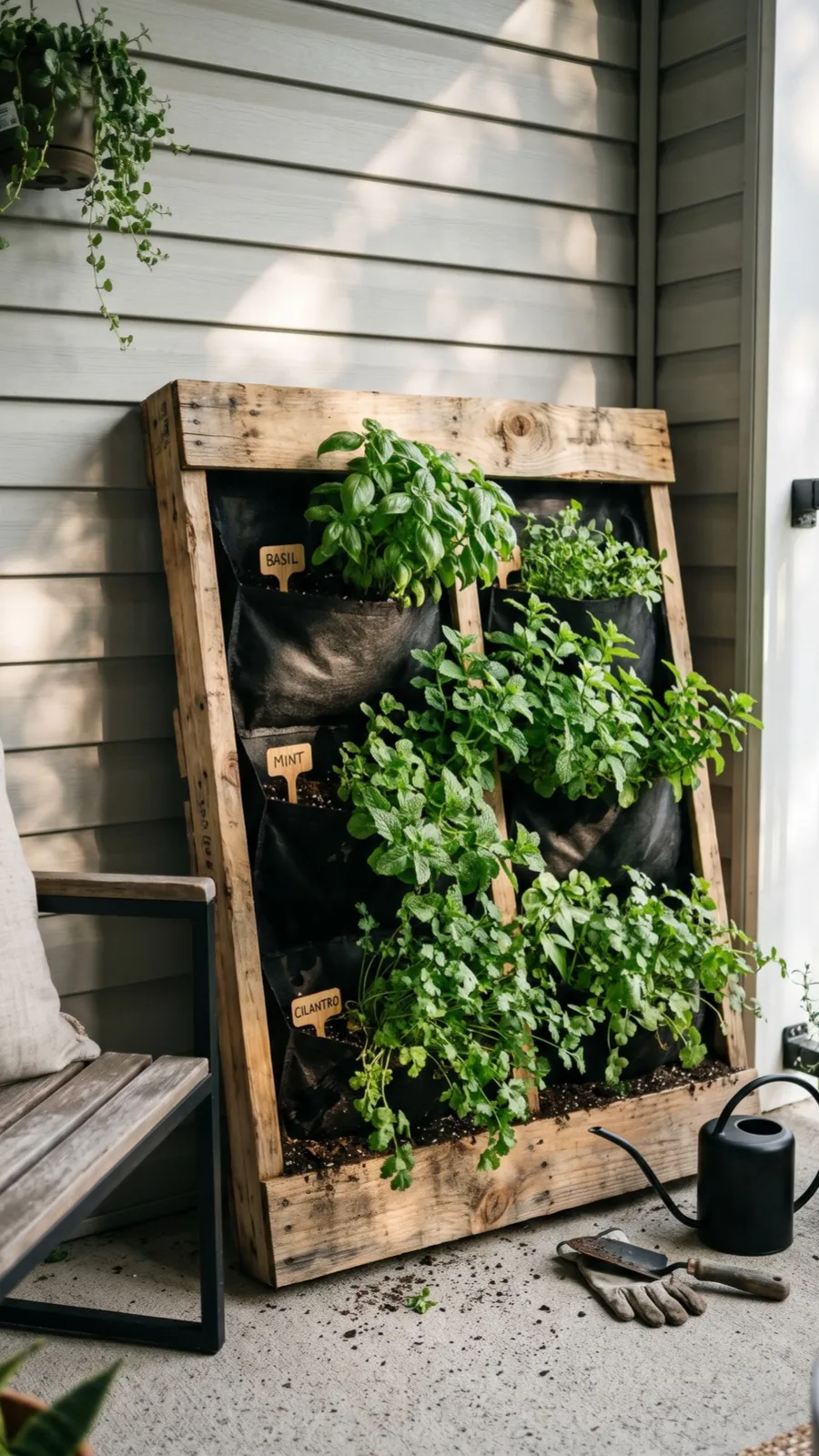
Maximize your small balcony footprint with a vertical herb wall that leans securely against your siding. This completely no-cut planter uses vertical space to grow fresh herbs like basil and mint without stealing your valuable floor area. You simply stand the intact pallet upright and secure it to your balcony railing with thick outdoor zip ties.
This space-saving wonder transforms a single pallet into a multi-pocket vertical garden that fits snugly in a 2×4-foot (60×120 cm) corner. You will line the natural openings between the horizontal slats with breathable landscape fabric to hold your soil. The slatted design creates natural pockets where herbs thrive at eye level for incredibly easy snipping.
The real magic of this design is the high yield density. Flat planters struggle to fit more than four pots in the same footprint, but this vertical approach delivers three times the harvest. Each fabric pocket drains independently, preventing the root rot that often plagues traditional window boxes.
Renters usually cannot drill drainage holes in their balcony floors, making this self-draining setup a total lifesaver. You will harvest fistfuls of fresh cilantro and thyme weekly instead of watching waterlogged stems turn yellow. Start by collecting your pallet from behind a local furniture store where they are usually free for the asking.
2. The Upright Corner Stack Planter
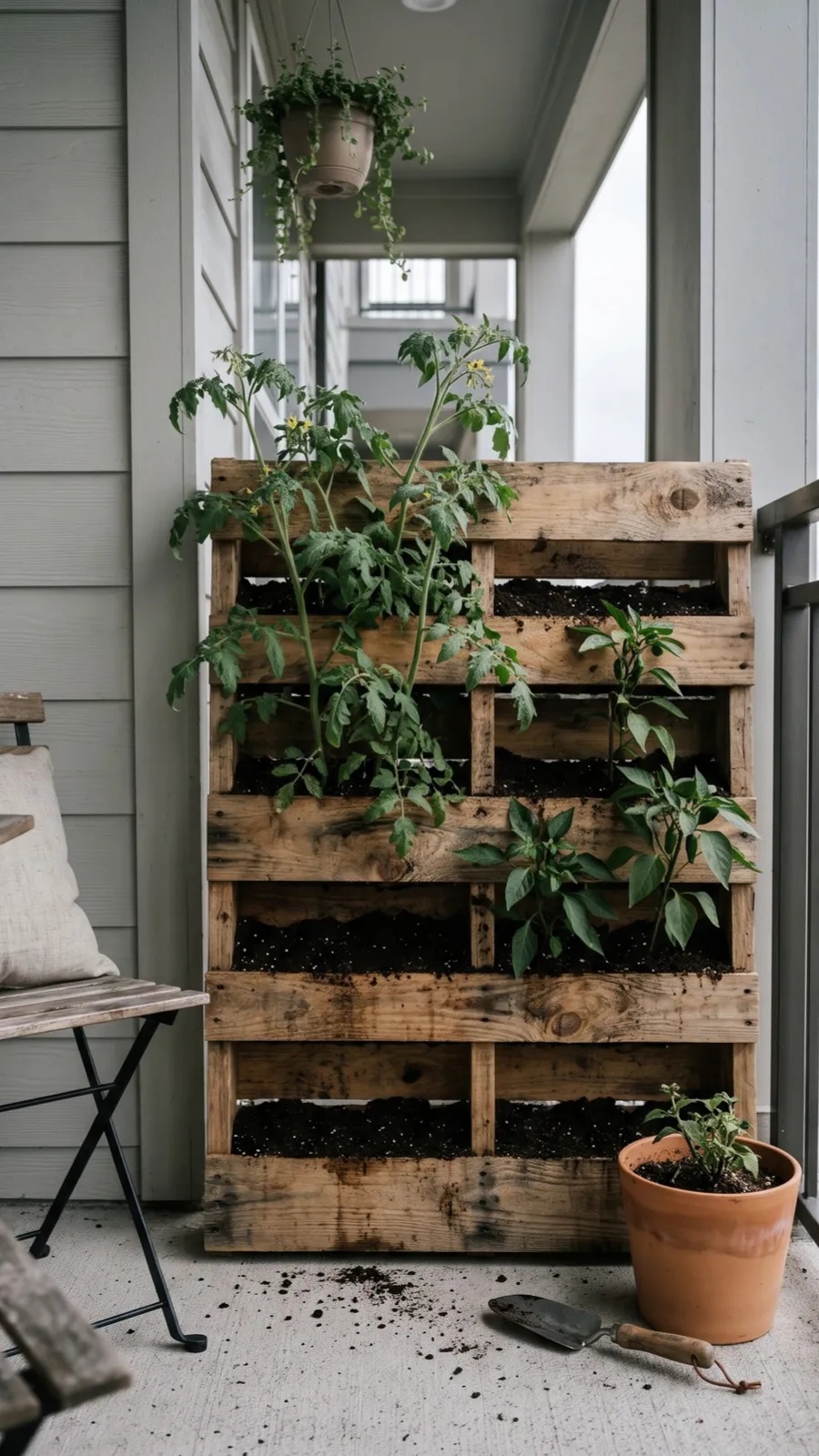
Maximize tight, shadowy corners with this incredibly sturdy stack planter setup. Using just thick outdoor twine to secure the pallet, you can create a vertical garden strong enough for heavy vegetable plants. This design stands a whole pallet upright on its end and reinforces the structure by weaving twine through the slats.
The bottom section gets a thick layer of gravel for drainage, which is crucial since you cannot drill through apartment flooring. You top that gravel with a rich potting mix that easily supports up to eight full-size tomato or pepper plants. These heat-loving vegetables actually prefer the slight afternoon shade these awkward balcony corners often provide.
This specific placement protects delicate leaves from scorching while still delivering enough ambient sun for heavy fruiting. What sets this planter apart from expensive store-bought vertical gardens is the instant structural stability. Competitor designs wobble and require wall mounting, but this upright method self-supports through sheer weight distribution.
The natural gaps between the wood create airflow that prevents powdery mildew from taking over your crops. Humid urban microclimates often trap moisture, making this breathability a massive advantage for your vegetable yields. Secure your twine in a figure-eight pattern around each corner post, pulling it snug but leaving room for the plants to grow.
3. The Railing Straddle Planter
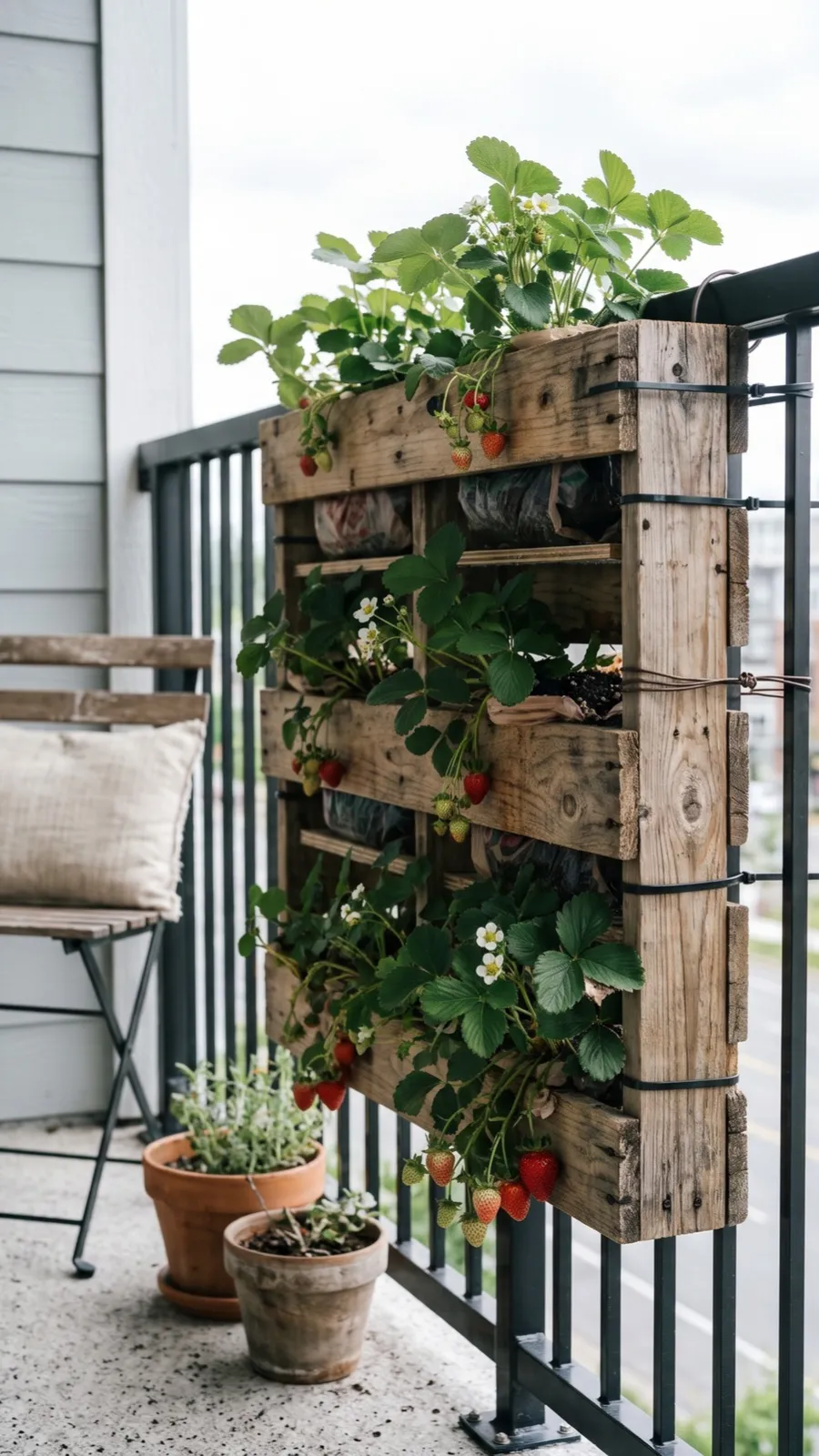
Growing strawberries and trailing flowers right on your railing is entirely possible without drilling a single screw. This no-drill system uses an intact, lightweight half-pallet that simply straddles your sturdy metal or wooden balcony railing. You secure the wooden frame tightly to the vertical railing balusters using rust-proof wire or heavy zip ties.
Each internal cavity of the pallet gets lined with repurposed plastic grocery bags to create waterproof planting pockets. Remember to poke a few small holes in the bottom of these bags so excess rainwater can escape. The staggered heights of the pallet slats create a beautiful cascading effect that maximizes sunlight exposure for trailing plants.
This straddle design keeps the weight of the wet soil distributed evenly across the structural railing of your apartment. The breakthrough here is complete flexibility, allowing you to snip the zip ties and move the planter as the seasons shift. This solves the zero floor space problem for studio balconies where even a tiny footprint feels totally intrusive.
Your landlord cannot complain about structural modifications since everything detaches in seconds without leaving a scratch. The shallow planting depth of just 4 inches (10 cm) means your potting soil costs will stay remarkably low. You can easily keep your total investment under a few dollars while enjoying fresh berries all summer long.
Complete Budget and Material Breakdown
Building an urban oasis should not drain your bank account or require trips to a specialty hardware store. Here is exactly what you can expect to spend to get these specific setups running.
Three pallets will cost you absolutely nothing if you ask furniture stores or grocery warehouses to offload them. One cubic foot (28 liters) of quality potting soil usually runs about $8 at a local garden center. Mixing this bagged soil half-and-half with cheap compost provides incredible nutrition for hungry vegetable roots.
A 3×6-foot (90×180 cm) roll of standard landscape fabric costs roughly $5 and lines all three projects easily. A pack of heavy-duty 50-pound test zip ties or thick outdoor twine will set you back about $3. You can propagate plants from grocery store herbs for free or swap seeds with your neighbors to keep your costs down.
Your total investment will hover around $16 to $26 for a completely custom, organic setup. Compare this to prefab balcony kits that cost upwards of $80 and hold far fewer plants.
Troubleshooting Urban Gardening Challenges
Every balcony gardener faces a few specific hurdles when trying to grow food on concrete and steel. These simple preventative measures will save your plants from the most common renter mistakes.
Always check the stamp on the side rail of your pallet before hauling it home in your trunk. Pallets marked HT are heat-treated and will easily last over three years outdoors in the harsh elements. Avoid pallets marked MB entirely, as methyl bromide is highly toxic and degrades rapidly when exposed to constant moisture.
Drainage disasters are the quickest way to anger your downstairs neighbors when living in an apartment complex. If water pools on your balcony floor, tilt the planters slightly toward the railing using small wood shims. Line your catch trays with small pebbles to elevate the drainage holes above any standing water.
Potting mix naturally settles and compresses by about 30 percent during the first month of heavy watering. Top up your planters every two weeks with fresh compost to keep the root zones nice and fluffy. This prevents the sunken, cracked soil surface that inevitably strangles delicate new plant growth.
Start Growing Your Urban Harvest Today
Your cramped balcony has endless potential to become a highly productive, lush green space. You just need to look at discarded materials with a little bit of creative vision and a willingness to try.
These three simple pallet projects prove that a lack of square footage does not limit your green thumb. You can grow heavy-yielding tomatoes, fragrant herbs, and sweet strawberries for the cost of a single restaurant salad. Plus, keeping those wooden shipping flats out of the local landfill makes this a major win for the environment.
Pick the design that best fits your specific sunlight situation and start gathering your free materials today. Share your progress with our community using the LoveHobbyCraft upcycling tags online so we can cheer you on. Your zero-tool urban oasis is just a weekend afternoon away.