Every year, US households toss over 50 billion toilet paper rolls that could become adorable Valentine crafts instead. These easy Valentine crafts for kids with recyclables turn egg cartons, cardboard tubes, and yogurt cups into process-oriented projects that build fine motor skills without breaking your budget. Whether you’re prepping for a classroom party or rainy afternoon fun, these ideas use materials you already have at home.
Why Choose Recycled Valentine Crafts for Kids
Recyclable materials make Valentine’s Day crafting accessible for every budget. You skip the craft store run and teach kids that creativity doesn’t require fancy supplies. Paper egg cartons and toilet paper tubes are completely compostable, so leftover scraps don’t add to landfill waste.
These projects focus on the making process rather than perfect results. Cutting egg carton petals or wrapping yarn around cardboard strengthens hand-eye coordination in ages 3 and up. Kids take ownership when they transform yesterday’s recycling bin finds into today’s Valentine decorations.
Gathering Your Recyclables
Check your recycling bin before you start crafting. Paperboard egg cartons (not styrofoam) cut cleanly into flower petals and heart shapes. Toilet paper rolls and paper towel tubes work for anything from Valentine animals to card holders.
Save clean yogurt cups, cereal boxes, and grocery bags throughout January. Rinse containers with food residue and let them air dry completely to prevent mold or odors. Cardboard from shipping boxes gives you large flat pieces for bigger projects.
Toilet Paper Roll Valentine Crafts
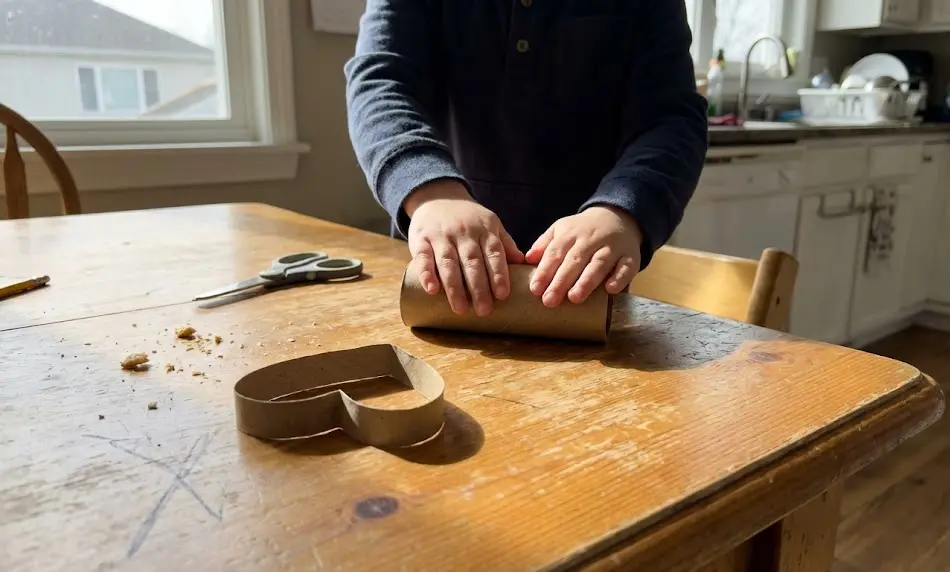
Flatten toilet paper rolls to create instant heart shapes for toddlers. Press the tube flat, then fold it in half and cut a curved edge to make symmetrical hearts. Let kids paint them red or pink, then glue onto construction paper for simple cards.
For ages 5 and up, keep tubes round to make Valentine animals. Cut small triangles for owl ears at the top edge, then let kids paint faces and glue on googly eyes. Paper wings glued to the sides complete the look. These tube creatures can hold small candy or pencils as classroom Valentines.
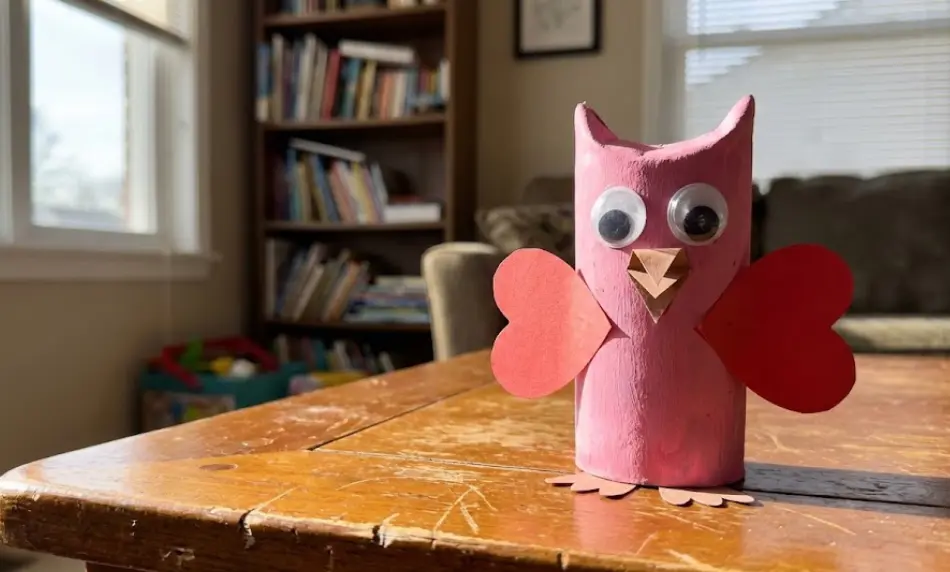
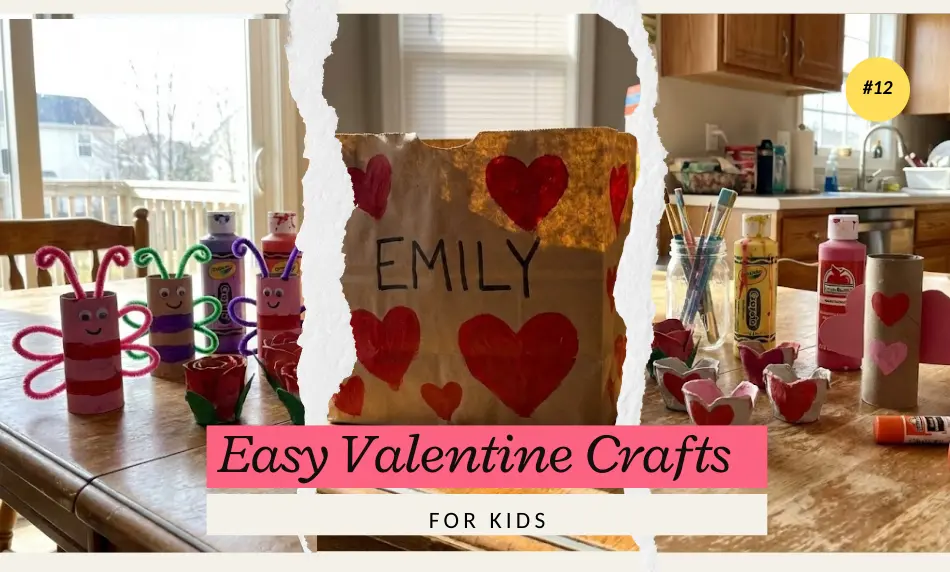
Create cardboard tube Valentine animals like love bugs by painting rolls in bright colors. Pipe cleaners poked through small holes become antennae. Kids enjoy the poking and twisting motions that build grip strength.
Egg Carton Heart Crafts
Cut individual egg carton cups to make 3D roses for Valentine bouquets. Trim the edges into petal shapes using child-safe scissors, then let kids paint them. Stack two or three painted cups together on a pipe cleaner stem for dimension.
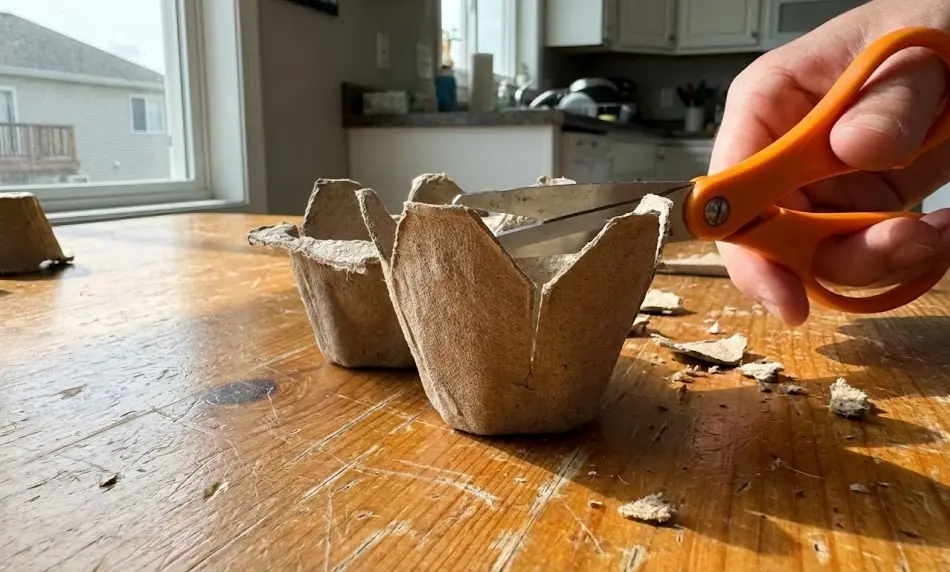
This cutting activity teaches fine motor skills for ages 3 and up as they control the scissors around curves. Paperboard egg cartons are 100% recyclable and compostable, so trimmed scraps go straight to your compost or recycling. The irregular handmade petals add charm that store-bought flowers lack.
Egg carton roses can be glued to cards or arranged in small vases. Paint them traditional red and pink, or let kids choose purple, orange, and yellow for non-traditional Valentine colors. Attach leaves cut from green construction paper to complete each stem.
Bubble Wrap Heart Stamps
Bubble wrap creates textured heart prints that toddlers love. Cut bubble wrap into heart shapes, then tape to a wooden block or thick cardboard for a handle. Kids dip the bubble side into washable paint and stamp onto paper.
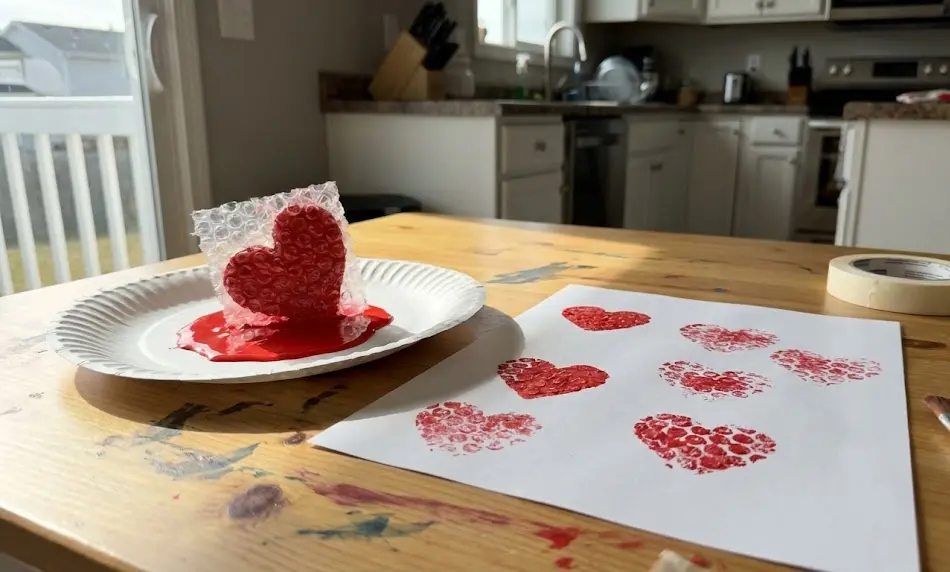
The raised bubbles meet CPSC safety guidelines because they’re larger than 1.25 inches, making them safe for children under 3. The stamping motion is simple enough for the youngest crafters while creating satisfying textured results. Use these stamped papers as wrapping paper or card backgrounds.
Cleanup is easier when you cover your work surface with old newspapers first. Many parents on parenting forums mention paint disasters on kitchen floors from “quick” crafts, so this prep step saves scrubbing time. Peel the bubble wrap off the handle when done and toss it in recycling.
Recycled CD Valentines
Old CDs and DVDs shine like mirrors for eye-catching Valentine decorations. Trace heart shapes on colored paper, cut them out, then glue to the shiny CD surface. Kids can add stickers, drawn designs, or write messages around the edges.
These make unique classroom Valentines that stand out from paper cards. Punch a hole at the top and thread ribbon through to hang as sun catchers in windows. The reflective surface catches light beautifully without requiring expensive materials.
Stack CDs to create standing Valentine displays. Glue three together with foam dots between layers, then decorate the top disk. The weight keeps them stable on desks or shelves.
Grocery Bag Valentine Holder
Brown paper grocery bags transform into Valentine mailboxes for collecting classroom cards. Cut the bag to your desired height (usually 6 to 8 inches), then fold the top edge down twice to reinforce it. Kids decorate the outside with paint, markers, or glued-on magazine collage hearts.
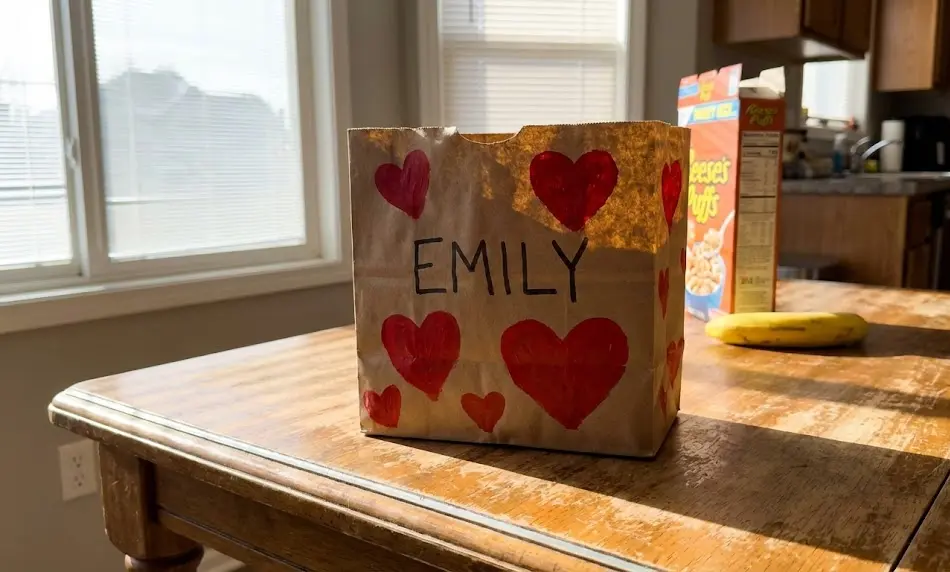
Cut a mail slot in the front so classmates can “deliver” Valentines. Handles made from twisted paper or yarn let kids carry their bags home. These holders are sturdier than paper lunch bags and can be flattened and reused for future parties.
Magazine collage valentine cards use old magazines as colorful scrap sources. Kids tear or cut out red and pink images (flowers, hearts, food) and arrange them on folded cardstock. This no-rules approach lets even toddlers participate successfully.
Newspaper Heart Garland Kids
Newspaper becomes rustic Valentine garland when cut into hearts and strung together. Fold newspaper sheets in half and cut half-heart shapes along the fold for perfect symmetry. Let kids paint some hearts or leave others with newsprint showing for a mixed media look.
Thread hearts onto twine or yarn by punching holes at the top of each shape. Spacing them 3 to 4 inches apart creates flowing garland for doorways or mantels. The black and white newsprint mixed with pops of red paint creates farmhouse-style decor.
This project uses up newspapers piling up in recycling bins. Kids practice cutting on curved lines, which is trickier than straight cuts. Hang finished garlands across classroom bulletin boards or above kitchen windows.
Yarn Wrapped Cardboard Hearts
Cut heart shapes from cereal boxes or other thin cardboard. Punch holes around the perimeter about 1 inch apart. Kids weave yarn through the holes, wrapping around the cardboard edge to create colorful borders.
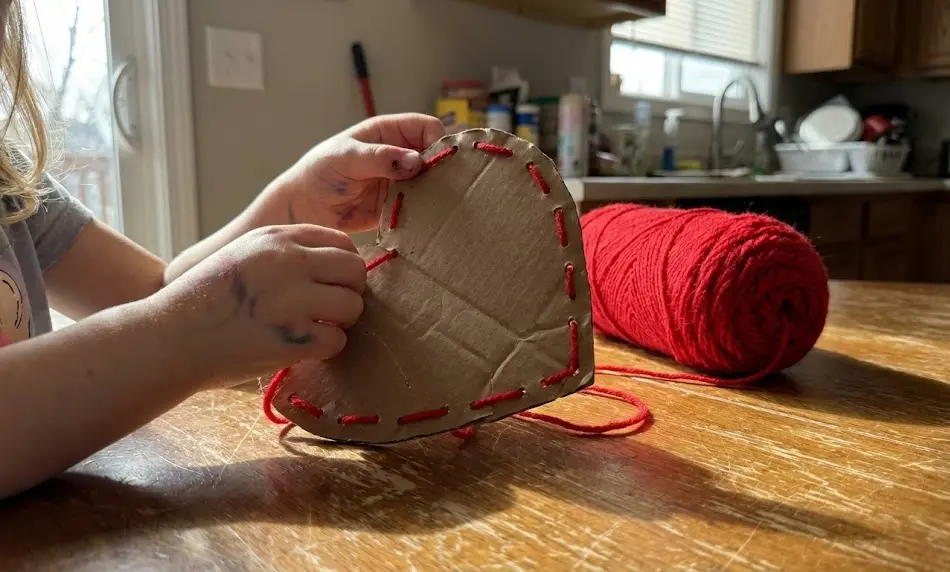
This threading activity builds hand-eye coordination and patience. Younger kids may need pre-punched holes and help getting started, while older children can handle the hole punch themselves. Mix different yarn colors for rainbow effects or stick to Valentine reds and pinks.
Finished hearts can be ornaments, gift tags, or card decorations. The raised yarn texture adds dimension that flat paper crafts lack. Cardboard from shipping boxes works especially well because it’s thicker and holds its shape better.
Fabric Scrap Rag Heart Ornaments
Old t-shirts and fabric scraps become puffy Valentine ornaments. Cut two identical hearts from thin cardboard (cereal boxes work perfectly). Kids tear fabric into 1-inch strips, no sewing needed.
Glue fabric strips around the edge of one cardboard heart, leaving the strips hanging loose. Place the second heart on top and glue the edges together, sandwiching the fabric between layers. The fabric strips create a shaggy rag rug effect all around the perimeter.
This is perfect for using worn-out clothes before they hit the trash. The tearing motion is satisfying for kids and requires no scissors. Punch a hole at the top and add ribbon for hanging. These ornaments are lightweight enough for even the flimsiest tree branches.
Age-Appropriate Project Modifications
Flatten toilet paper rolls completely for toddlers who struggle with fine motor control. The flat surface is easier to paint and glue without rolling away. Pre-cut shapes for children under 4 so they focus on decorating rather than struggling with scissors.
Ages 5 and up can handle more complex projects like the tube owls or yarn-wrapped hearts. They enjoy following multi-step directions and seeing their creations take shape. Let them punch their own holes and do more of the cutting independently.
Many parents online complain that recycled crafts are ‘too fiddly’ without modifications. Adjust each project to your child’s current skill level rather than their age. Some 3-year-olds can handle intricate work, while some 6-year-olds need simplified versions.
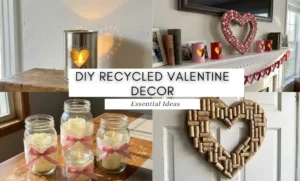
While the kids are busy crafting, you might be inspired to spruce up your own space. Check out our favorite ways to create stunning DIY recycled Valentine decorations for your mantel and dining table using similar upcycled materials.
Quick Cleanup Tips
Cover your entire work surface with newspapers or an old plastic tablecloth before starting. This simple step prevents paint and glue from reaching your kitchen table or floor. When kids finish, roll up the newspaper and toss it in recycling.
Keep a damp cloth nearby for wiping hands between colors. This prevents paint mixing and reduces trips to the sink that spread mess through the house. Use washable paint and glue whenever possible for easier cleanup of spills.
Set up a designated drying area away from the craft table. A corner of the kitchen counter lined with newspaper works well. This keeps wet projects from getting bumped or mixed up while kids work on additional crafts.
Making Classroom-Friendly Batches
Prep recyclables in advance for classroom parties by cutting toilet paper rolls and egg cartons into shapes ahead of time. Pre-punching holes in cardboard hearts or cutting bubble wrap stamps saves class time. Store prepped materials in labeled plastic bags or bins.
Set up stations for larger groups so kids rotate through different activities. One table does egg carton roses while another works on tube animals. This prevents everyone from needing the same supplies simultaneously and reduces wait times.
Send cut recyclables home with parents if you’re coordinating a virtual or at-home craft event. Include a simple instruction sheet with each bag. This works well for remote learning situations or snow day activities.