Your basil looked lush all summer. Now it’s January, and those once-vibrant leaves are yellowing, drooping, or dropping faster than you can say “pesto.” Winter indoor conditions wreak havoc on tropical basil, but you don’t need expensive gadgets to save it. With recycled materials, organic solutions, and a few scheduling tweaks, you’ll turn that struggling plant around—no garden center required.
Why Basil Struggles Indoors During Winter
Basil is a tropical drama queen. It evolved in warm, humid climates with consistent 10-12 hours of bright light daily. Your heated home offers the opposite: dry air, weak winter sun, and temperature swings from drafty windows.
Natural light drops 50-70% indoors during winter months. That south-facing window that worked in July? It’s now delivering barely 4-6 hours of usable light. Meanwhile, your furnace sucks humidity below 30-40%—basil needs 50% minimum to keep leaves from crisping at the edges.
Cold drafts are silent killers. Basil blackens and dies when nighttime temps dip below 50°F, even for a few hours. One drafty window or door can create a 15-degree temperature drop your plant can’t survive.
Problem 1: Leggy Growth from Low Light
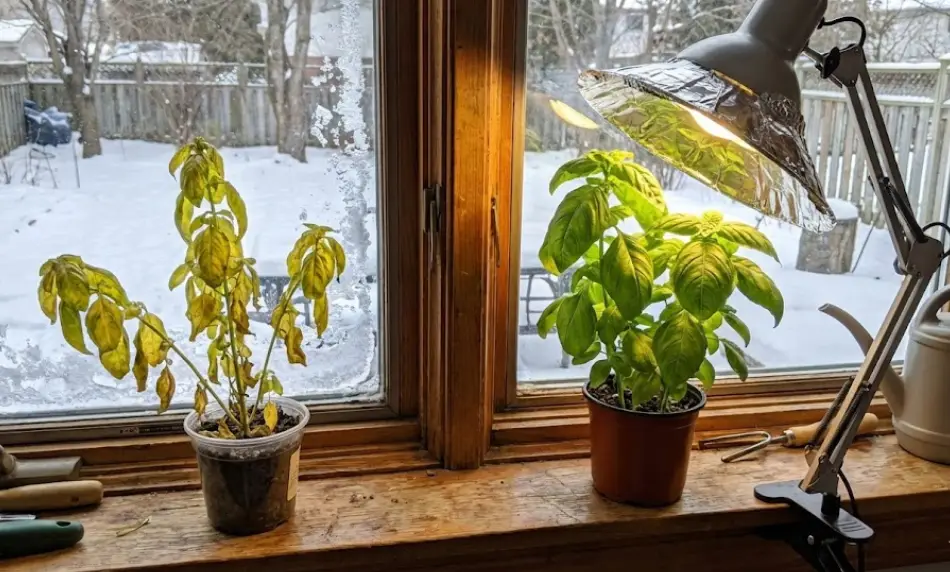
Stretched stems with sparse leaves mean your basil is hunting for sun. Those long gaps between leaf nodes? That’s the plant throwing energy into reaching light instead of producing the bushy growth you want.
The Eco-Friendly Fix: DIY Grow Light Hack
Grab a desk lamp and a full-spectrum LED bulb (look for “daylight” 5000-6500K at thrift stores or your garage). Position it 12 inches above your basil for 12 hours daily—not more, or you’ll trigger flowering.
Recycle aluminum foil or old mirrors to reflect light onto the plant’s lower leaves. Tape foil inside a cardboard box frame and position it behind the basil to double your light without doubling your electricity bill.
Set a $5 outlet timer to automate the schedule. Basil counts hours like clockwork; inconsistent light confuses its growth hormones and weakens the plant.
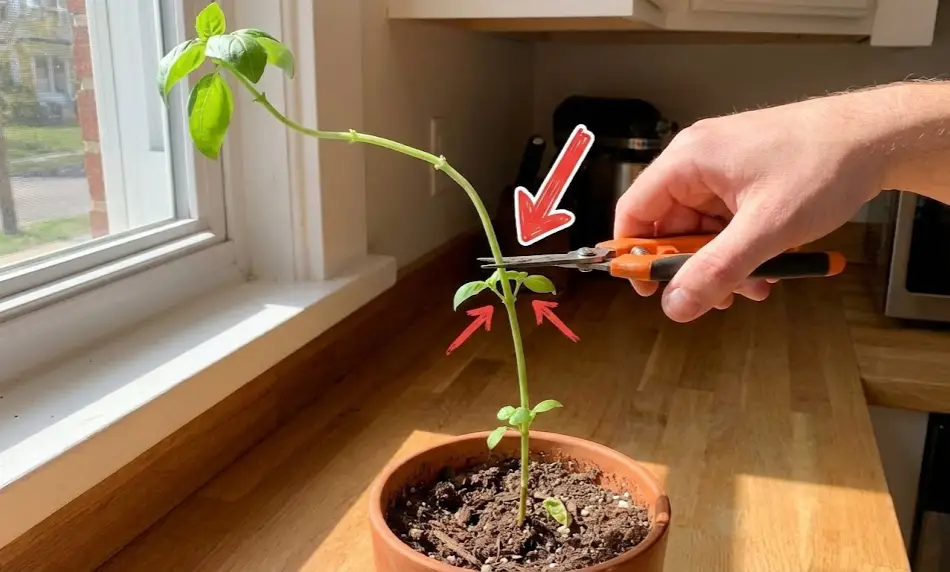
Pruning Leggy Stems Correctly
Cut stems back by one-third above a leaf node pair. This forces branching at lower nodes, creating bushier growth instead of one tall, weak stem. Use those cuttings in tonight’s dinner—waste nothing.
Prune every 2-3 weeks during winter to maintain compact shape. Remove any flower buds immediately; once basil flowers, leaf production tanks and flavor turns bitter.
Problem 2: Yellow Leaves from Overwatering
Soil stays wet twice as long indoors because winter air doesn’t evaporate moisture like summer heat does. Your outdoor watering schedule doesn’t work here. Roots sitting in soggy soil can’t breathe, turning leaves yellow from the bottom up.
The Finger-Test Solution
Stick your finger 2 inches into the soil before watering. Dry? Water thoroughly until it drains. Still damp? Wait another day. Indoor basil needs water maybe once weekly in winter versus daily in summer heat.
Check drainage holes religiously. If water pools in the saucer 10 minutes after watering, you’ve got a problem. Empty saucers immediately and consider adding perlite to your soil mix for better airflow around roots.
Invest in a $3 moisture meter from the hardware store if you’re a chronic overwaterer. Stick it in the root zone; only water when the needle reads “dry” in the bottom third of the pot.
Problem 3: Leaf Drop from Dry Winter Air
Heating systems drop humidity below 30%. Basil evolved in 50%+ humidity environments; dry air causes leaf edges to brown, curl, and eventually drop. You’ll see this on leaves closest to heating vents first.
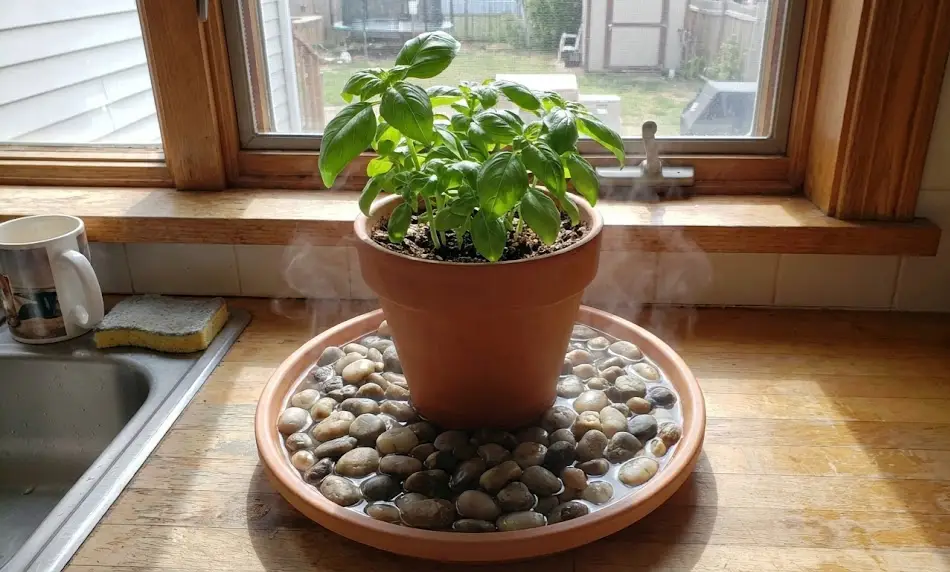
The Jar-and-Pebble Humidity Tray
Grab a shallow dish or old baking pan and fill it with pebbles from your driveway or craft stones from a dollar store. Add water until it sits just below the top of the pebbles.
Set your basil pot on top (not touching the water—you’re creating evaporation, not soaking roots). As your heater runs, water evaporates upward around the plant’s leaves, boosting local humidity by 10-15%.
Refill every 3-4 days. You’ll notice the difference within a week—leaves perk up, edges stay green, and that crispy texture disappears.
Misting: The Quick Boost
Spray leaves with room-temperature water every morning. This gives a temporary humidity spike during the driest part of the heating cycle. Don’t mist at night—wet leaves in cool darkness invite fungal problems.
Group plants together to create a micro-climate. Multiple plants transpiring moisture help each other maintain higher humidity than a single isolated pot.
Problem 4: Black Leaves from Cold Drafts
Basil is a tropical baby—it thrives at 70-80°F days and 60°F+ nights. One night below 50°F near a drafty window, and you’ll wake up to black, mushy leaves. That damage is permanent; those leaves won’t recover.
Draft-Proofing Your Basil Station
Move basil away from exterior walls and windows at night. Even insulated glass loses heat. A 6-inch shift toward the room’s interior can raise nighttime temps by 10 degrees.
Check for air leaks with a candle flame test. Light a candle near window edges; if it flickers, cold air is seeping in. Seal gaps with rolled towels, draft snakes made from old jeans stuffed with rice, or weatherstripping from the hardware store.
Use a min/max thermometer ($8 at garden stores) to track nighttime lows. Place it pot-level where your basil sits—you need data, not guesses. If it’s dipping below 55°F regularly, relocate the plant or add a heat source.
Problem 5: Pests (Aphids, Spider Mites)
Winter’s dry air and weakened plants attract pests like aphids and spider mites. You’ll spot sticky residue on leaves (aphid honeydew) or fine webbing between stems (mites). These insects multiply fast in warm indoor conditions.
Organic Neem Spray Recipe
Mix 1 tablespoon cold-pressed neem oil with 1 teaspoon castile soap (dish soap works) in 1 quart warm water. Shake hard—the soap emulsifies the oil so it doesn’t separate.
Spray all leaf surfaces (tops and undersides) until dripping. Pests hide under leaves, so thorough coverage matters. Repeat every 5-7 days for three weeks to break the breeding cycle.
Apply in the evening so neem doesn’t burn leaves under grow lights or sun. Wipe leaves with a damp cloth first to remove existing pests and honeydew before spraying.
The Rinse Method for Light Infestations
Take your basil to the sink and spray leaves firmly with lukewarm water. This physically removes 80% of aphids and mites without chemicals. Let the plant drain completely before returning it to its spot.
Isolate infected plants immediately. Pests jump to neighboring plants within days. Quarantine the affected basil until you’ve confirmed three weeks pest-free.
Preventing Future Winter Basil Problems
Create a winter care calendar. Mark pruning dates every 2-3 weeks, pest check days (weekly), and humidity tray refills. Consistency beats sporadic heroic efforts.
Rotate your basil pot 90 degrees weekly so all sides get equal light exposure. This prevents lopsided growth and ensures even leaf development.
Watch for over-lighting. More than 14 hours under grow lights stresses basil into flowering and reduces flavor. Stick to the 12-hour sweet spot—Reddit’s “3x sunlight” myth creates more problems than it solves.
Your Basil’s Spring Preview Starts Now
You’ve rescued your basil from winter’s worst. Those yellow leaves, leggy stems, and pest invasions? Handled with recycled materials and organic solutions that cost under $20 total.
Your next challenge: Scaling up production when spring arrives. Check out our guide on budget-friendly outdoor herb garden setups to transition your thriving indoor basil to a full harvest system.