The Problem Every Crafter Faces
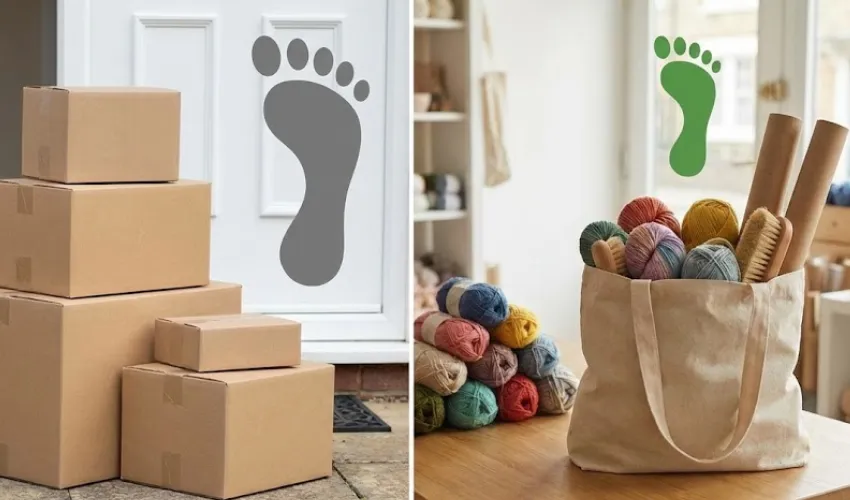
You’ve just clicked “Buy Now” on that single skein of specialty yarn from Etsy, feeling virtuous because you didn’t drive anywhere. But here’s the uncomfortable truth: that convenient click might carry a bigger environmental burden than a trip to your local craft store. The carbon footprint of online craft shopping isn’t just hidden—it’s often misunderstood, and the craft community deserves clarity on what really happens between checkout and doorstep.
The Promise: This guide decodes the actual emissions data behind your online craft orders, exposes the three biggest hidden costs that lightweight supplies amplify, and shows you exactly how to shop smarter without sacrificing your creative flow.
Why Online Craft Orders Hit Harder Than You Think
Last-Mile Delivery Dominates the Equation. That final journey from distribution center to your door generates approximately 204g of CO2 per parcel on average, but expedited shipping can triple this footprint. For lightweight craft supplies—think beads, glue sticks, or embroidery floss—the emissions per gram of product skyrocket compared to bulk grocery deliveries.
Packaging Waste Multiplies for Fragile Items. E-commerce generates 4.8x more packaging waste per dollar spent than in-store purchases. Craft supplies amplify this problem dramatically:
- Air pillows and bubble wrap for glass beads
- Oversized boxes for small paint tubes
- Plastic envelopes that won’t biodegrade
- Multiple layers to prevent breakage during transit
The Return Rate Problem. Online craft shopping sees return rates around 40% (compared to just 7% in physical stores), and this matters enormously for crafters. Ordered the wrong shade of acrylic paint? That’s now a double journey—your package travels twice, doubling transport emissions before you even start your project.
Impulse Buying Fragments Deliveries. Small, frequent orders—a craft stapler here, washi tape there—create the worst emissions profile. Each separate delivery carries the full packaging and transport overhead, while bulk orders from local stores eliminate these redundant trips entirely.
The Real Numbers: What Your Craft Orders Actually Emit
| Shopping Scenario | CO2e per Item (approx.) | Key Emission Drivers |
|---|---|---|
| Amazon-style craft package | 0.1–0.33 kg | Delivery van fuel (~100g) + packaging materials (~230g) |
| Etsy seller-to-buyer shipment | Part of 135,000 tons annually | 98% of Etsy’s total footprint comes from shipping logistics |
| Local craft store delivery | 0.07 kg | Efficient batch routing from nearby warehouse |
| Solo car trip to store | 0.1–0.4 kg | Round-trip fuel (8.7 kg for full journey, divided by items purchased) |
| Express packaging lifecycle | 132 million tons (2018 China e-commerce) | Production + disposal, growing 43% annually |
The Craft-Specific Reality. Platforms like Etsy contribute heavily to these figures, with shipping accounting for 98% of their environmental impact. While Etsy offsets 100% of their calculated shipping emissions (approximately 55,000 tons equivalent industry-wide per day), these offsets don’t address upstream seller transport or the packaging waste that persists long after delivery.
Pure-Play vs. Bricks-and-Clicks. Pure online platforms (Amazon-style) emit 2-5x more per item than “bricks-and-clicks” retailers offering local pickup options. For urban crafters especially, ordering online for store collection cuts emissions by roughly 50% compared to home delivery.
Three Myths Sabotaging Your Eco-Craft Choices
Myth #1: “I’m Avoiding Car Emissions by Shopping Online.” Reality Check: A solo drive to your local craft store emits around 0.1 kg CO2 per item purchased, but pure online shopping averages 0.18–0.33 kg due to piecemeal deliveries and excessive packaging. The crossover point? If you’re buying 3+ items in one store trip, in-person shopping usually wins. Multi-stop errands (craft store + grocery + post office) make physical shopping dramatically more efficient.
Myth #2: “Lightweight Craft Packages Must Have Low Carbon Footprints.” Reality Check: Fixed packaging overhead dominates emissions for small, low-weight orders like yarn skeins or glue bottles. A single Etsy yarn skein generates approximately 330g CO2e—mostly from packaging materials—while that same packaging infrastructure for heavier items spreads the emissions across more product weight. Fillers inflate waste disproportionately for crafts compared to dense products like books or electronics.
Myth #3: “Carbon Offsets from Etsy and Amazon Erase My Impact.” Reality Check: Offsets fund external reforestation or renewable energy projects but don’t reduce emissions at the source. Etsy’s program covers calculated shipping emissions (their largest impact area), but packaging waste, return journeys, and seller transport remain unaddressed. Additionally, the effectiveness and “additionality” (whether funded projects would have happened anyway) of carbon offsets remains scientifically debated.
How to Slash Your Craft Shopping Footprint
Bundle Orders Ruthlessly. The single most powerful action you can take: consolidate craft supply purchases into larger, less frequent orders. Bundling 5+ items drops per-item emissions from ~330g to under 100g CO2e by spreading packaging and delivery costs across multiple products. Set a threshold—aim for $20-30 minimum orders—to naturally batch your creative needs.
Prioritize Local Craft Stores for Bulk Buys. Physical hobby shops eliminate delivery emissions entirely when you batch errands (combining with grocery runs or other stops). This approach cuts packaging waste by 80-90% and supports your local creative community. For crafters in Indonesia, traditional pasar markets offer natural fibers and yarn with virtually zero packaging.
Choose “Bricks-and-Clicks” Pickup Options. Chain craft retailers with store pickup options reduce emissions by approximately 50% compared to home delivery. Order online for convenience, but collect in person—ideal for urban makers with nearby locations. This hybrid approach combines selection with sustainability.
Skip Express Shipping. Standard delivery allows carriers to optimize routes and consolidate packages efficiently. Express shipping triples your carbon footprint by forcing dedicated, less-efficient delivery runs. Plan your projects ahead to avoid rush orders—your creative timeline and the planet both benefit.
Support Platforms with Transparent Environmental Programs. While offsets have limitations, they’re better than nothing. Etsy’s 100% shipping offset program and Amazon’s Climate Pledge Friendly certifications at least acknowledge responsibility. Pair this with the bundling strategies above for genuine impact reduction.
Buy Secondhand and Local First. Thrift stores, estate sales, and local craft swaps offer supplies with zero new production emissions. Community Facebook groups and neighborhood craft exchanges build connections while keeping materials in circulation.
Key Takeaways: Your Craft Shopping Cheat Sheet
When Online Shopping Wins:
- Bulk orders of 5+ items from a single retailer
- Bricks-and-clicks pickup from local store locations
- Specialty items unavailable locally (consolidated with other purchases)
- Standard shipping with consolidation options selected
When In-Store Shopping Wins:
- Single or two-item impulse purchases
- Batched errands combining multiple stops
- Immediate project needs that would otherwise require express shipping
- Supporting local businesses and reducing packaging waste
The Break-Even Math: For solo car trips to craft stores, your emissions crossover point is typically 3-4 items purchased. Below this threshold, online delivery often emits more; above it, the in-store trip becomes more efficient—especially if you combine stops.
The Bottom Line for Conscious Crafters
Online craft shopping isn’t inherently evil, but it rewards strategic thinking. The hidden carbon costs—last-mile delivery logistics, excessive packaging for lightweight items, and high return rates—compound quickly for the typical small, frequent orders that crafters make. A single yarn skein delivered to your door can carry triple the emissions of buying it during a multi-purpose shopping trip.
Your power lies in the pattern shift: Bundle ruthlessly, choose pickup over delivery when possible, and support local shops for immediate needs. These simple behaviors transform your craft habit from a carbon-intensive cycle into a manageable, mindful practice. The materials you love don’t have to cost the earth—literally—when you shop smarter, not harder.
Still exploring ways to make your creative practice more sustainable? Check our Eco-Friendly Craft Supplies category for projects that use low-impact materials and techniques that honor both your artistic vision and environmental values.