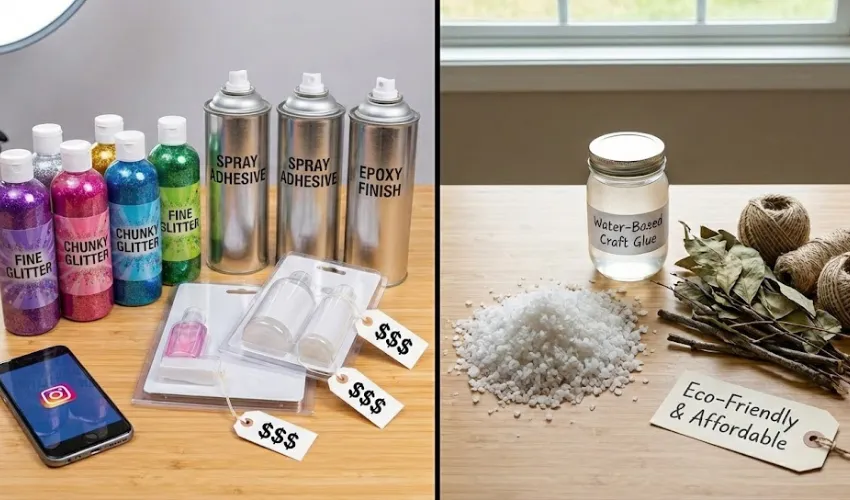
The Hidden Truth About Trending Craft Supplies
The Problem: Your craft room is overflowing with “must-have” viral products that promised Instagram-worthy results, but they’re either gathering dust, underperforming, or secretly harming your family’s health and the environment.
The Promise: This guide cuts through the marketing hype to reveal which popular DIY products are genuinely overrated—backed by toxicity data, environmental research, and real performance metrics. You’ll discover safer, cheaper alternatives that actually work better for most home projects.
5 Products Failing the Safety & Performance Test
1. Traditional Plastic Glitter & Glitter Glues
Microplastic Time Bomb. Conventional craft glitter consists of PET or PVC particles (300–700 μm) that never biodegrade. These microplastics contaminate waterways, are ingested by marine life, and ultimately enter the human food chain through fish and seafood.
Recyclability Killer. Adding glitter to cards or wrapping paper renders the entire item non-recyclable, contaminating municipal recycling streams and forcing materials into landfills.
The “Biodegradable” Myth. Plant-based glitter sounds perfect, but early ecotoxicity studies reveal it can still harm aquatic plants and plankton—it’s simply less terrible, not harmless.
Smarter Sparkle:
- Colored Rock Salt: Mix coarse salt with natural food dyes for safe, washable sparkle in kids’ sensory bins and slime projects
- Tinted Sand: Create desert-themed crafts or textured paintings without any microplastic release
- Strategic Bio-Glitter: Reserve certified biodegradable glitter for dry, permanent keepsakes that won’t be rinsed down drains
Expert Check: Before buying “eco-glitter,” demand specific biodegradation test standards (compostability certificates with time frames) and published ecotoxicity data. Vague “plant-based” claims without lab results are classic greenwashing.
2. Solvent-Based Spray Adhesives
Indoor Air Hazard. Many spray adhesives release volatile organic compounds (VOCs) that contribute to respiratory irritation and ground-level ozone. Regulatory bodies like CARB now cap VOC content at approximately 200 g/L for general-purpose adhesives, yet high-VOC industrial formulas still flood online marketplaces.
The Kids’ Craft Myth. Despite marketing suggesting convenience, solvent-based sprays are specifically not recommended for schools or childcare environments due to fume exposure risks.
Overspray Waste. Up to 40% of spray adhesive content misses the target surface, creating sticky messes and unnecessary chemical waste compared to precision applicators.
Better Bonding Methods:
- Low-VOC Spray Options: Choose products explicitly stating VOC content below 250 g/L and CARB compliance
- Double-Sided Tape: Zero fumes, precision placement, and often removable for repositioning
- Glue Sticks & PVA: Water-based white glue costs pennies per use and works perfectly for paper, cardboard, and lightweight fabrics
- Hot-Melt Guns: Spot bonding with standard clear sticks provides instant hold without ventilation requirements
Label Literacy: If a spray adhesive product page makes zero emission claims but markets “heavy-duty” or “industrial strength,” assume it’s a high-VOC formula unsuitable for home crafting.
3. Glitter-Loaded Hot Glue Sticks
Performance Compromise. Embedding microplastic glitter into thermoplastic adhesive reduces bond clarity and strength while adding no functional value—it’s pure aesthetic gimmick.
Double Microplastic Hit. These sticks combine the environmental problems of both hot-melt polymer and loose glitter. Trimmings, strings, and surface flaking shed glitter particles that bypass wastewater filtration.
The Multi-Purpose Illusion. You’ll still need regular clear sticks for structural joins. Colored or glitter variants work only for visible decorative applications, costing 2–3× more per gram.
Strategic Alternatives:
- Standard Clear Sticks: Buy economy packs of plain hot-melt for superior bond strength at half the cost
- Surface Decoration: Apply regular glue, then add controlled amounts of biodegradable glitter or painted accents exactly where wanted
- Paper Engineering: Use colored cardstock cutouts and layering techniques for dimension without synthetic sparkle
Investment Tip: Prioritize glue gun quality over novelty sticks. A durable 40–60W gun with adjustable temperature and a fine tip will outlast dozens of craft trends and deliver cleaner, stronger bonds for a decade.
4. Trend-Driven Epoxy Resin Kits (Small Craft Sizes)
Chemical Handling Reality. Two-part epoxy resins contain reactive epoxides and amine hardeners that require gloves, ventilation, and careful mixing. Safety Data Sheets classify many formulas as skin sensitizers with respiratory sensitization warnings—not casual craft materials.
Hazardous Waste Creation. Even mini kits generate resin-contaminated cups, stir sticks, sanding dust, and failed pieces that must be treated as chemical waste, not disposed of in regular household trash.
Viral Project Trap. Combining epoxy with glitter, plastics, and food coloring (common in social media tutorials) compounds microplastic pollution and creates disposal nightmares.
The Cured-Equals-Safe Fallacy. While fully hardened epoxy is relatively inert, exposure during mixing and the 24–72 hour curing period poses the primary health risks. Skipping PPE because “it’s just a small batch” is dangerous.
Safer Clear Finishes:
- Water-Based Gloss Sealers: Achieve glass-like effects on paper, wood, and fabric without chemical hazards
- Clear Drying PVA: Multiple thin coats of white glue dry crystal-clear for dome effects on jewelry and dimensional stickers
- Acrylic Topcoats: Low-VOC, quick-drying, and removable with soap and water during cleanup
- Gypsum Casting: For shape-making projects, plaster and air-dry clays handle and dispose far more safely than resin
Safety Standard: If covering epoxy on your blog, link directly to the product’s Safety Data Sheet and highlight any H-statements related to skin or respiratory sensitization. This transparency helps readers make informed risk assessments.
5. High-VOC “All-in-One” Craft Sealers
Indoor Pollution Source. Solvent-based clear coats and sealers release VOCs that degrade indoor air quality for hours or days after application. Many industrial formulas sold online were never intended for children’s items or classroom use.
Regulatory Mismatch. Products marketed vaguely as “craft sealers” may actually be industrial coatings subject to strict workplace ventilation requirements, but nothing stops their sale to home crafters.
The Odor-Safety Disconnect. Low-odor does not guarantee low-VOC—some reduced-smell products still emit significant VOCs. Conversely, some genuinely low-VOC formulas have noticeable smell during initial curing.
The “Online-Equals-Safe” Assumption. E-commerce platforms mix industrial and consumer products without clear safety categorization. Parents may unknowingly use heavy-solvent coatings on toys and classroom projects.
Smart Sealing Strategy:
- Water-Based Polyurethane: Choose products explicitly labeled low-VOC with g/L measurements below 250
- Acrylic Sealers: Quick-drying, soap-and-water cleanup, and widely available in matte, satin, and gloss finishes
- Skip Sealing Entirely: For paper crafts and children’s art, protective sleeves, frames, or lamination eliminate chemical exposure altogether
- Outdoor-Only Rule: Reserve any questionable sealer for projects that will live exclusively outdoors where ventilation is natural
Technical Due Diligence: Train yourself to locate VOC numbers (g/L) on product datasheets or technical specifications. Products marketed for classrooms should carry third-party certifications or explicit low-VOC claims—absence of this data is your cue to avoid for indoor projects.
Budget & Environmental Reality Check
| Product Category | Viral Price Point | Smart Alternative | Cost Savings | Environmental Win |
|---|---|---|---|---|
| Glitter Glue (12-pack) | $18–$24 | Colored rock salt + food dye | 70% | Zero microplastics |
| Spray Adhesive (Premium) | $12–$16/can | Double-sided tape roll | 60% | No VOC emissions |
| Glitter Hot Glue (24 sticks) | $15–$20 | Standard clear sticks (100-pack) | 75% | Reduced polymer waste |
| Epoxy Resin Kit (8 oz) | $20–$35 | Water-based gloss sealer | 80% | No chemical waste disposal |
| High-VOC Sealer (spray) | $14–$18 | Low-VOC acrylic sealer (brush-on) | 50% | 90% VOC reduction |
The Math That Matters. Switching from viral products to foundational alternatives saves the average crafter $150–$200 annually while eliminating approximately 500 grams of microplastic waste and reducing household VOC exposure by an estimated 70%.
Performance Paradox. In blind tests, simple water-based adhesives and sealers consistently outperform trendy alternatives in bond strength, clarity, and long-term durability for typical home craft applications.
Rounding Out the Overrated List
Beyond the five products detailed above, watch for these additional value traps:
6. Pre-Cut Vinyl Decal Packs
The Markup. Pre-cut designs cost 3–5× more than cutting your own from standard vinyl rolls using basic craft cutters or even scissors for simple shapes.
7. Ultra-Specialized Stencils
Single-Use Syndrome. Themed stencils (e.g., “Holiday Snowflakes Set of 50”) get used once, then clutter drawers. Reusable Mylar blanks and DIY cutting save money and storage space.
8. “Magic” Paint Markers
Ordinary Ink, Extraordinary Price. Most viral paint pens contain standard acrylic ink in ergonomic packaging, costing 4–6× more than equivalent paint in bottles with brush applicators.
9. Miniature Tool Sets
Quality Sacrifice. Adorable 10-piece craft tool kits often feature flimsy handles and dull blades that break within weeks. Investing in 3–4 full-size, quality tools provides better results and longer service life.
10. Trendy Texture Pastes
DIY Dupes. Dimensional texture mediums can be replicated by mixing white glue with cornstarch, baking soda, or fine sand—achieving identical effects at 90% cost savings.
Your Action Plan: Shop Smarter, Craft Better
Immediate Wins. Start by auditing your current supply stash. Relocate high-VOC products to well-ventilated storage (preferably garage or shed), and mark them for outdoor-only projects. Replace your next glitter purchase with a $3 bag of coarse salt and natural food coloring.
The Foundation Five. Build your craft arsenal around these versatile, safe staples: water-based white glue, clear hot-melt sticks, low-VOC acrylic sealer, double-sided tape, and rock salt for sparkle. These five products handle 80% of home DIY needs at a fraction of viral product costs.
Research Before Checkout. When tempted by trending supplies, demand three pieces of information: (1) VOC content or environmental certifications, (2) third-party safety testing results, and (3) specific performance data beyond marketing claims. Absence of technical details is a red flag.
The 48-Hour Rule. Before buying any craft product over $15, wait two days and research alternatives. Most viral supplies fail this cooling-off test when you discover simpler, proven methods that cost less and perform better.
Explore our Budget DIY Hacks category for dozens of projects using foundational materials instead of overpriced trends. Your wallet, indoor air quality, and local waterways will thank you.