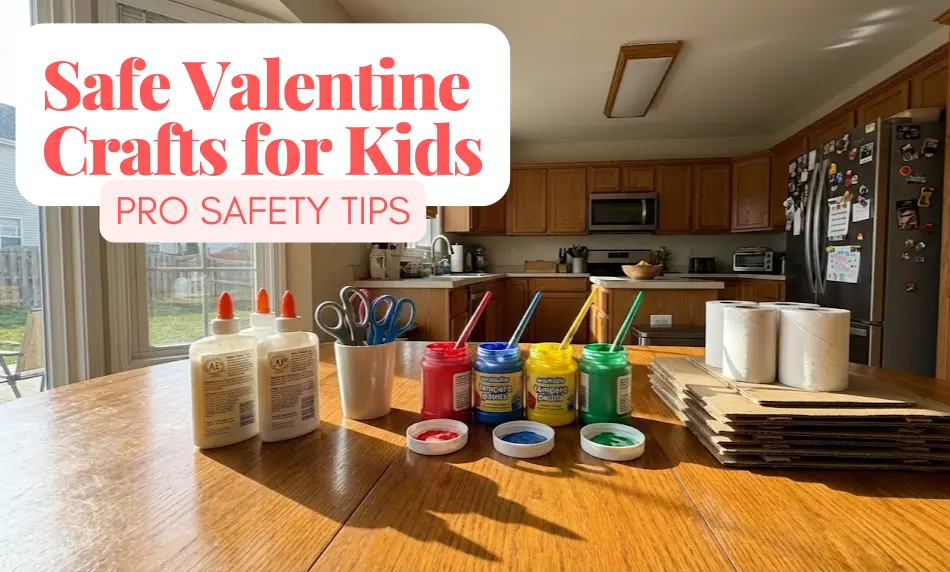
Valentine craft safety for kids starts with understanding what “non-toxic” actually means and spotting red flags before you open that glitter jar. Every year, over 60,000 kids under 14 end up in the ER from craft-related injuries, with scissors and hot glue causing the most trips. This guide gives you the exact safety rules, age-specific tool swaps, and material checks you need before starting any Valentine project with toddlers, preschoolers, or elementary-age kids.
Understanding Non-Toxic Labels and Certifications
Not all craft supplies marketed to kids are actually safe. The US Consumer Product Safety Commission (CPSC) requires art materials for children under 12 to carry a “non-toxic” label, but the AP seal from the Art and Creative Materials Institute (ACMI) is your real confirmation that a product passed toxicity testing.
If you see a CL seal or no certification at all, skip it. Those products contain materials that can cause acute reactions or long-term health issues if ingested or absorbed through skin.
Check every glue, paint, marker, and adhesive before you buy. Look for the AP seal on the label, not just vague marketing claims like “safe” or “child-friendly.”
Safe Glues and Adhesives for Valentine Projects
White School Glue (AP Certified)
White school glue with an AP seal is your safest bet for all ages. It washes off skin and fabric with water, dries clear or white, and won’t cause burns or fume irritation.
Toddlers under 3 can use it with direct supervision since it’s water-based and non-toxic even if they get some in their mouth. Keep a damp cloth nearby for quick cleanup.
Glue Sticks (Washable Formula)
Glue sticks eliminate the mess and reduce choking risks since there’s no liquid to spill or ingest. Choose washable formulas so you can remove mistakes or accidents from clothing and hands without chemicals.
These work best for paper-to-paper bonding in Valentine cards and collages. They won’t hold heavier upcycled materials like cardboard tubes or fabric scraps.
Hot Glue Guns (Elementary Age Only)
Hot glue guns are not safe for toddlers or preschoolers under any circumstances. For kids ages 7 and up, use a low-temperature glue gun (under 250°F) with direct adult supervision at all times.
Forty percent of craft-related ER visits from hot glue are burns to fingers and palms. Set up a dedicated gluing station away from the main craft table so younger siblings can’t grab the gun while it’s plugged in.
Never leave a hot glue gun unattended, even for 30 seconds. Unplug it and place it on a heat-resistant mat immediately after each use.
Non-Toxic Paints and Markers
Washable Tempera Paint (Toddler Safe)
Washable tempera paint with an AP seal is safe for toddlers because it contains no solvents or heavy metals. These paints clean up with soap and water even after drying on skin or surfaces.
Pour small amounts into shallow containers so kids can’t tip over full bottles. Replace the paint every 30 minutes during long sessions to prevent bacterial growth in water-based formulas.
Washable Markers (Broad Tip)
Washable markers eliminate staining risks and are safe if kids chew on the tips (though you should still discourage it). Choose broad-tip markers for toddlers and preschoolers since fine-tip versions can poke eyes or skin during sudden movements.
Check that the cap has ventilation holes to prevent choking if swallowed. Replace dried-out markers immediately since kids will press harder and potentially break the tip, creating sharp edges.
Finger Paints (Edible Formula)
For toddlers who still mouth objects regularly, edible finger paints made from food-grade ingredients offer an extra safety layer. These often contain cornstarch, food coloring, and water with bitter flavoring to discourage eating.
Even edible paints should carry an AP seal. “Edible” doesn’t automatically mean “tested for safety” without proper certification.
Age-Appropriate Scissors and Cutting Tools
Blunt-Tip Safety Scissors (Ages 2 to 5)
Blunt-tip safety scissors have rounded ends that won’t puncture skin or eyes during accidental jabs. These work for thin paper and tissue but struggle with cardboard or foam sheets.
Scissors cause 40% of all craft-related injuries in kids under 14, so start with these even if your child seems coordinated. Upgrade to pointed tips only after they demonstrate consistent control and never run with scissors in hand.
Student Scissors (Ages 5 to 8)
Student scissors have slightly pointed tips but duller blades than adult versions. These handle construction paper, thin cardboard, and felt without requiring excessive grip strength.
Choose scissors with large finger holes so kids don’t have to squeeze hard. Tight grips cause hand fatigue and sloppy cuts that lead to frustration and careless movements.
Adult Scissors (Elementary Age with Supervision)
Kids ages 8 and up can use regular adult scissors for thick materials like corrugated cardboard or multiple paper layers, but only under direct supervision. Set up a designated cutting station where they sit down to cut instead of walking around with open blades.
Store adult scissors in a locked drawer or high shelf between projects. Don’t assume older siblings will remember to put them away after helping younger kids.
Identifying Choking Hazards in Valentine Materials
The CPSC defines choking hazards as any object under 1.25 inches in diameter that can fit through a toilet paper tube. Toddlers under 3 should never have access to small beads, buttons, sequins, googly eyes, or pom-poms without constant one-on-one supervision.
Check Valentine kits and pre-packaged supplies before opening them. Many contain mixed-age materials with small parts that aren’t separated by age warnings.
Small Embellishments and Sequins
Skip loose sequins, rhinestones, and mini buttons for toddlers entirely. Use fabric heart stickers or pre-glued felt shapes instead for texture and visual interest.
For preschoolers and elementary kids, keep small parts in a single shallow tray at the center of the table. This prevents pieces from rolling onto the floor where younger siblings or pets can find them.
Glitter Safety
Traditional craft glitter is a micro-plastic that can cause eye injuries and respiratory irritation if inhaled. Never use glitter with toddlers who rub their eyes frequently or put hands in their mouths.
For older kids, choose biodegradable glitter made from plant cellulose. Apply it over a contained tray and teach kids to keep hands away from their face until they wash up.
Vetting Upcycled Materials for Hidden Hazards
Assuming recycled materials are automatically safe leads to rashes, ingestion risks, and cuts. Every upcycled item needs a safety check before it touches kids’ hands.
Washing Protocols for Food Containers
Wash all food containers (yogurt cups, cereal boxes, egg cartons) with hot soapy water even if they look clean. Residual food proteins can cause allergic reactions or attract insects during storage.
Dry containers completely before crafting to prevent mold growth. Cardboard should sit for 24 hours after washing to ensure it’s not damp inside the layers.
Checking for Sharp Edges and Metal
Run your fingers slowly around every edge of cardboard boxes, tin cans, and plastic containers. Cut edges from manufacturing can be microscopically sharp even if they look smooth.
Cover sharp edges with masking tape or sand them down with fine-grit sandpaper before letting kids handle the materials. Never use items with exposed staples, metal rims, or broken plastic shards.
Avoiding Old Paint and Chemical Residues
Boxes and containers that previously held cleaning products, motor oil, or pesticides should go straight to recycling, not craft bins. Chemical residues absorb into porous materials like cardboard and can transfer to skin even after washing.
Check for faded warning labels or chemical smells. If you’re unsure what was stored in a container, skip it and find a fresh alternative.
Setting Up Safe Craft Spaces for Groups
Group settings like classrooms or playdates require extra safety rules since you can’t watch every child simultaneously. Space is your first defense against pokes, trips, and material-grabbing fights.
Table and Floor Space Requirements
Give each child a 3-foot diameter work zone with their own supplies. This prevents arms from colliding during cutting or gluing and reduces the urge to grab tools from neighbors.
For groups larger than 4 kids, set up multiple craft stations instead of crowding everyone at one table. Rotate groups through stations every 15 minutes to keep attention focused.
Material Distribution Strategy
Pre-portion supplies into individual trays or paper plates before kids sit down. This eliminates the free-for-all scramble at a central supply pile where kids reach over each other and knock over containers.
Assign one adult to manage the hot glue gun station if you’re using one. Kids wait in a short line, state what they need glued, and return to their table while the adult handles the gun.
Emergency Response for Common Craft Injuries
Even with perfect safety measures, accidents happen. Know the immediate response for the three most common craft injuries so you don’t waste time searching online while a child is hurt.
Minor Cuts from Scissors or Paper
Rinse the cut under cool running water for 30 seconds to remove debris and glue residue. Apply pressure with a clean cloth for 2 minutes, then check if bleeding has stopped.
Cover with a bandage if the cut is still oozing. Call a parent or doctor if the cut is deeper than 1/8 inch, won’t stop bleeding after 5 minutes, or is on the face or hands where scarring matters.
Hot Glue Burns
Run cool (not ice-cold) water over the burn for 10 minutes immediately. Don’t apply ice, butter, or creams since these can trap heat and worsen the burn.
Cover with a non-stick bandage after cooling. Most hot glue burns are first-degree and heal in 3 to 5 days, but call a doctor if blisters form or the child complains of severe pain after 30 minutes.
Choking on Small Materials
If a child is coughing or making noise, let them cough it out naturally while you stay close and calm. If they’re silent and can’t breathe, perform age-appropriate back blows or the Heimlich maneuver (call 911 simultaneously).
Remove all small materials from the craft area immediately after an incident, even if the choking was minor. The fear and stress will distract other kids and increase accident risk.