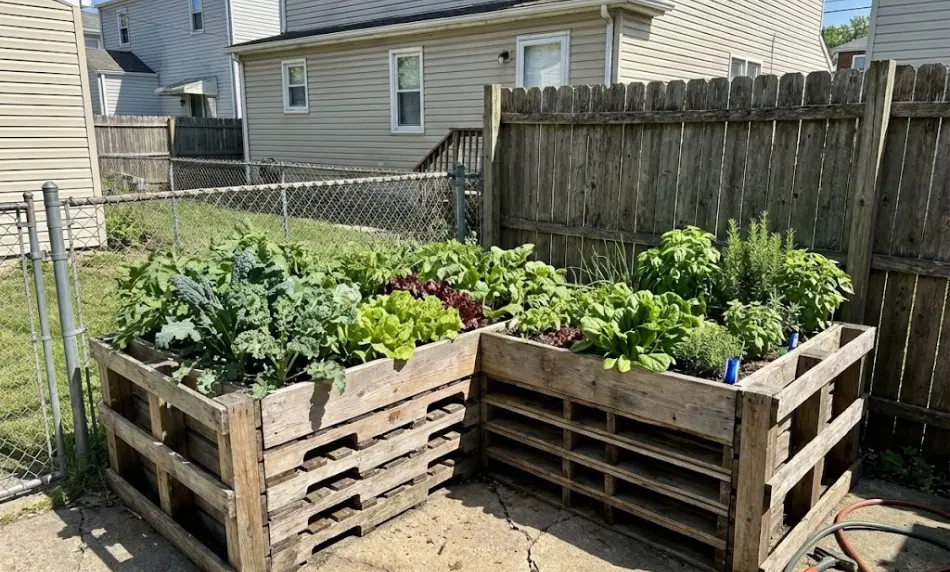
You’ve got 12 square feet of balcony or a postage-stamp yard, and you’re convinced real gardening isn’t possible. Think again. Advanced pallet bed designs flip the script on space limitations, using vertical stacking, corner angles, and mobility to triple your growing capacity without expanding your footprint. These five builds prove small spaces don’t mean small harvests.
Corner L-Shape Pallet Bed (3-Pallet Maximum Footprint)
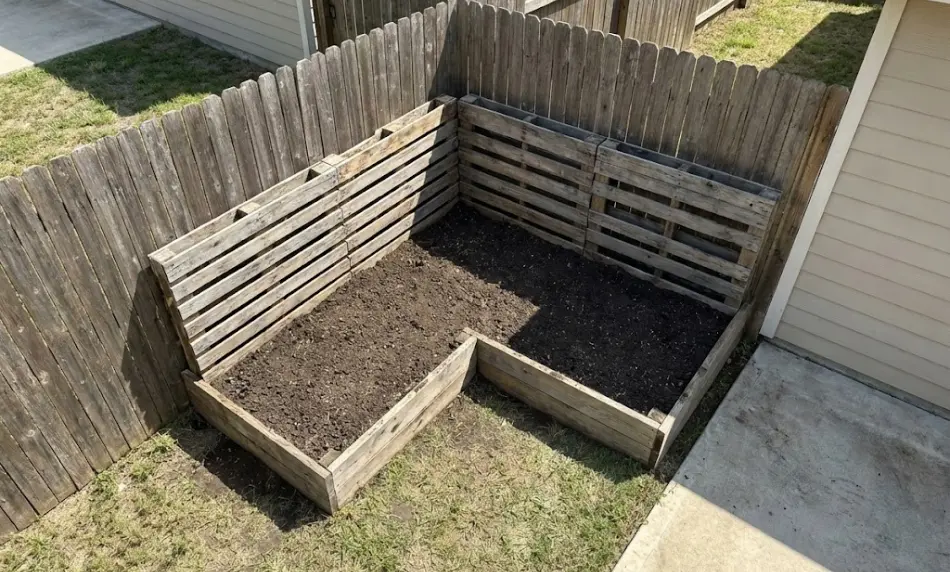
Unused corners are gold mines in compact yards. Corner L-shaped pallet beds from 3 pallets maximize these dead zones, increasing your growing area by 20-30% without stealing walkway space. The design creates two perpendicular 4-foot beds meeting at a 90-degree angle, perfect for herb spirals or companion planting setups.
Assembly Strategy for Tight Corners
Position the first pallet flush against your primary fence line, then butt the second pallet perpendicular to create the L-joint. The third pallet extends the shorter leg. Use 3-inch deck screws through overlapping edges—no advanced joinery needed since corner walls provide lateral support.
Line each pallet bay with heavy-duty landscape fabric, stapling it to interior slat edges every 4 inches. This prevents soil bleed while maintaining drainage through bottom gaps. Fill with 10-12 inches of garden soil mixed 50/50 with compost for shallow-root crops like lettuce, herbs, and strawberries that thrive in the 1-foot depth single-pallet raised beds typically provide.
Vertical Add-On for Corner Beds
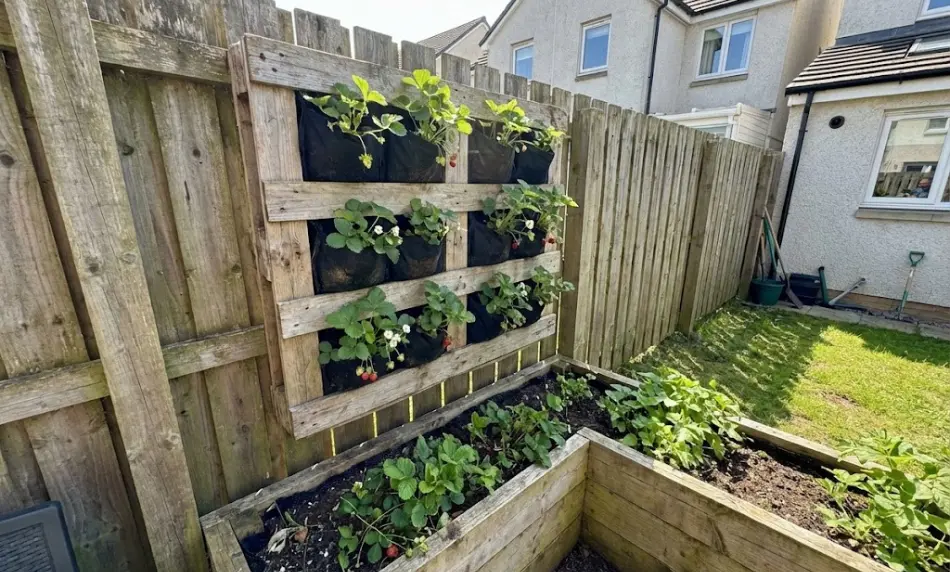
Transform the back corner into a vertical pallet garden by securing a fourth pallet upright against the fence. Staple landscape fabric to create soil pockets between slats, supporting lightweight plants like strawberries or succulents. Vertical pallet designs save 80-90% of ground space—critical when your L-bed already maxes out your corner footprint.
Anchor the vertical pallet with fence brackets or L-brackets screwed into both the fence post and pallet frame. Reddit users report vertical pallets tipping in wind or rain without secure wall mounting, often spilling soil across patios. Heavy-duty brackets plus waterproof fabric liners solve both stability and drainage issues most DIY guides skip.
Wheeled Mobile Pallet Planter (Sun-Chasing Design)
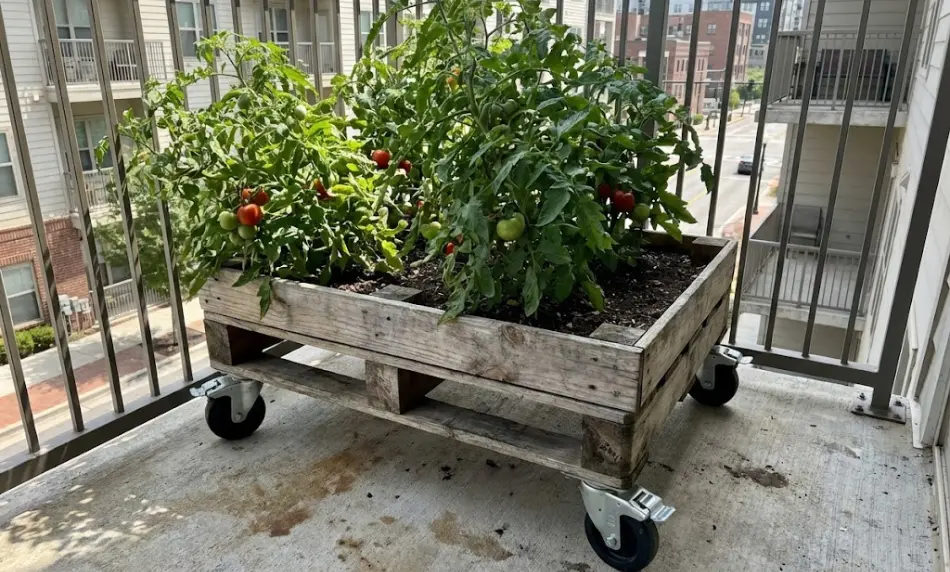
Balconies and patios shift from blazing sun to deep shade as the day progresses. Wheeled pallet planters solve the mobility problem, letting you chase optimal light without replanting. A single pallet on heavy-duty locking casters creates a 16-square-foot mini pallet raised bed you can roll weekly.
Caster Selection and Weight Distribution
Choose 3-inch swivel casters rated for 150+ pounds—soil-filled pallets easily hit 120 pounds once watered. Bolt casters through pallet runner boards (the thick perimeter boards), not deck slats, distributing weight across the frame’s strongest points. Position one caster at each corner for balanced rolling.
Flip the pallet upside-down before attaching casters so the smooth deck surface becomes your planting bed. This eliminates gaps between slats where soil escapes. Line with landscape fabric, then fill with lightweight potting mix instead of garden soil to reduce total weight while maintaining drainage.
Balcony Wind Stability
Lock all four casters when positioned, then add 10-15 pounds of river rock along the bottom before soil. Apartment balcony pallet gardens face wind shear that lighter planters can’t resist. The rock ballast plus locked wheels prevent tipping without permanent mounting—crucial for rental balconies.
Tiered Stack Pallet Raised Bed (3-Level Vertical)
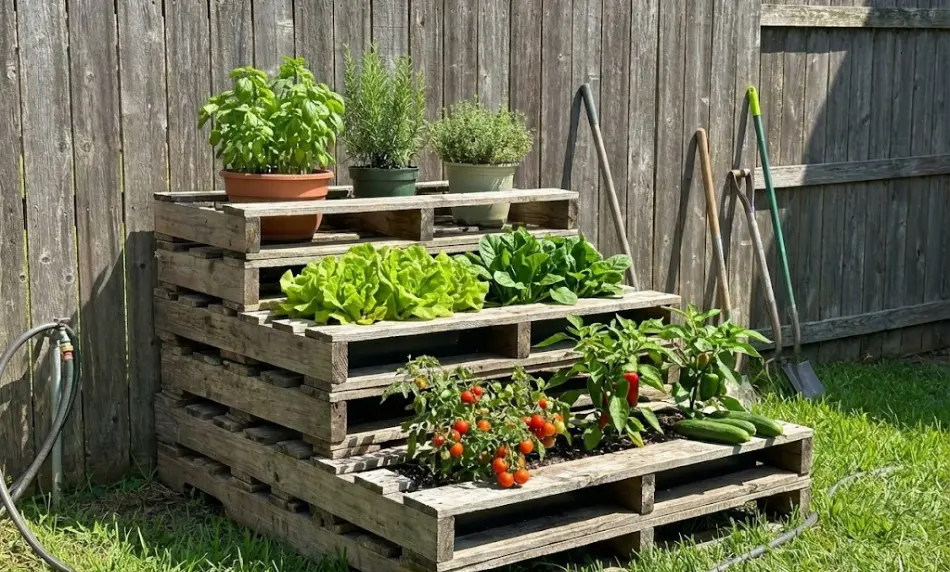
Vertical space is wasted space in small yards. Tiered pallet raised beds stack three pallets in stair-step formation, creating 48 square feet of growing area in a 4×4 footprint. Each tier sits offset by 12 inches, forming cascading beds for different plant heights.
Stacking Mechanics Without Toppling
Anchor the bottom pallet with 18-inch rebar stakes driven through corner gaps into the ground. Stack the second pallet offset 12 inches back, securing it to the bottom pallet with 4-inch lag bolts through the rear runner boards. The third pallet offsets another 12 inches, bolted to the second tier.
This creates a 36-inch-tall structure with three 4-foot-wide planting beds. Fill the bottom tier with root vegetables needing depth, the middle with bushier crops like peppers, and the top with trailing plants like strawberries that cascade down. The stair-step design ensures each level receives full sunlight.
Drainage Layer Critical for Stacks
Forum complaints about root rot in tiered pallet beds trace to poor drainage between levels. Before filling each tier with soil, line the bottom with 2 inches of pea gravel, then landscape fabric. Drill 1/2-inch drainage holes every 6 inches through bottom slats. Water from top tiers should drain freely without pooling—test by soaking the top tier and watching runoff patterns.
Narrow Balcony Pallet Bed (18-Inch Width)
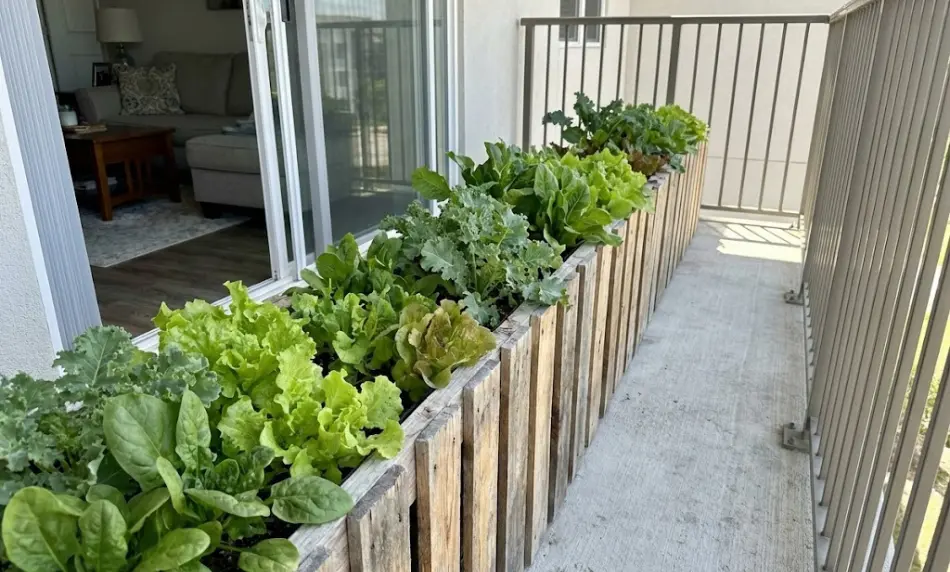
Standard pallets are 40 inches wide—too deep for most apartment balconies where you need walkway clearance. Rip a pallet lengthwise to create an 18-inch-wide balcony pallet raised bed that maximizes your railing-to-door space without blocking traffic flow.
Cutting Pallets Safely for Narrow Spaces
Mark a lengthwise cut 18 inches from one edge, running parallel to the pallet’s length. Use a circular saw set to 3/4-inch depth to cut through deck boards, then pry off the runner board section with a flat bar. You’ll have two pieces: an 18-inch-wide narrow bed and a 22-inch remainder for another project.
Reinforce the cut edge by screwing a 2×4 rail along the exposed runner to replace structural support lost from cutting. This prevents the narrow bed from racking when you move it. Add casters for mobility or leave it stationary against the balcony railing.
Railing-Mount Wind Protection
Balcony winds shear narrow planters, especially above the third floor. Secure the narrow pallet bed to railing posts using adjustable planter brackets or bungee cords looped through pallet gaps. Don’t rely on weight alone—even soil-filled beds shift in gusts. Staple landscape fabric taut with bottom drainage holes every 4 inches to prevent the soil-spilling issues forum users report with vertical beds.
Comparison: Which Small Space Pallet Bed Fits Your Setup?
Corner L-shape (3 pallets) works best for ground-level patios or yards with fence corners—maximizes dead space without mobility. Wheeled mobile (1 pallet) suits balconies needing sun rotation or renters who can’t drill into walls. Tiered stacks (3 pallets) dominate vertical space in yards with fence backing for support.
Narrow balcony beds (1 cut pallet) target ultra-tight apartment balconies under 3 feet deep. All designs use single-pallet depths (12 inches), perfect for shallow-root crops like herbs, lettuce, and strawberries that thrive with free materials and simple construction.
Your 12 square feet just became 40 square feet of productive garden. Pick the build that matches your space constraints, then scale up next season when neighbors ask how you grew tomatoes on a balcony.