I still remember dragging a bag of cracked plastic pumpkins to the curb last November, thinking, never again. That moment sent me down the most satisfying rabbit hole — transforming my front porch into something that looks genuinely expensive, stays beautiful all season, and doesn’t end up in a landfill by May.
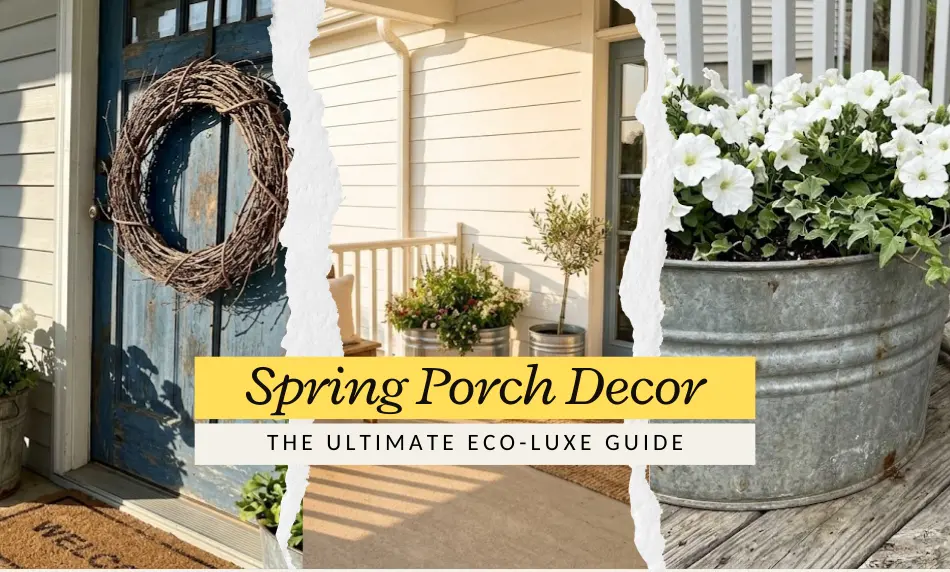
This is that guide.
Why “Fast Decor” Is Quietly Ruining Your Porch
Here’s the thing nobody tells you in the generic roundups.
That cheerful plastic welcome sign? Spring UV rays will bleach it within weeks. Those adorable faux-rattan baskets? One good rainstorm and they’re warped.
The cycle of buy → fade → trash is exhausting — and expensive over time.
The eco-luxe approach flips the script. We’re talking reclaimed materials, vintage scores, and zero-waste styling tricks that look like they belong on a magazine cover.
The Eco-Luxe Porch Framework (Start Here)
Before you buy a single thing, think in three zones:
Zone 1 — The Entry Statement (Your Door)
Zone 2 — The Anchor (Seating + Structure)
Zone 3 — The Details (Planters, Textiles, Lighting)
Nail these three zones and your porch feels designed, not decorated.
Zone 1: Your Door Display — Zero-Waste Wreaths That Look Wildly Expensive
Skip the $120 dried floral wreath from store. Seriously.
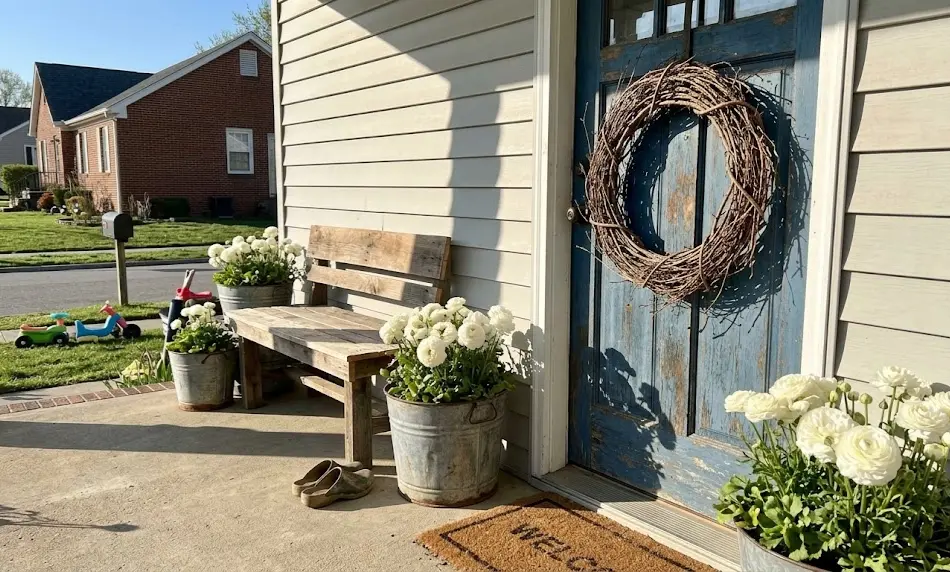
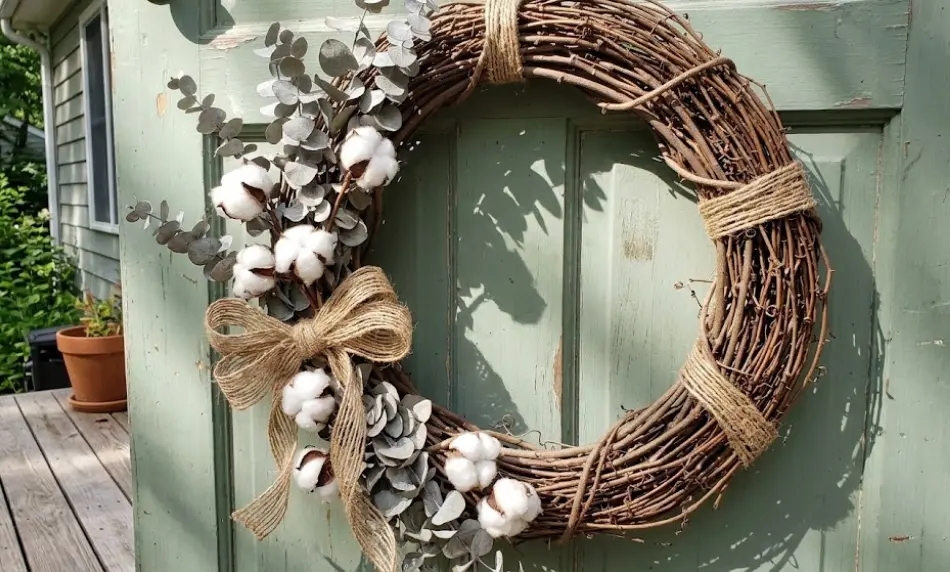
A foraged grapevine base (free if you have any growing nearby, or $3 at a thrift shop) woven with dried local clippings, eucalyptus, and tied with compostable jute twine costs under $10 and looks more beautiful.
Here’s the trick: Asymmetry. Don’t center everything. Let a few stems trail down one side. That imperfect, organic lean is what makes it look artisan rather than store-bought.
A Note on Timing Your Live Greenery
One of the most common (and heartbreaking) mistakes?
Rushing to fill your porch with ferns and tulips the first warm weekend in March — only to lose everything to a late frost.
Hold off on frost-sensitive plants until your last frost date has passed. Use architectural salvage, cold-hardy herbs like rosemary, or upcycled vintage statues as your “anchor” plants until the weather truly stabilizes.
Zone 2: Porch Seating That Doesn’t Cost $400 Per Chair
Premium HDPE lumber Adirondack chairs are stunning — and $400+ each.
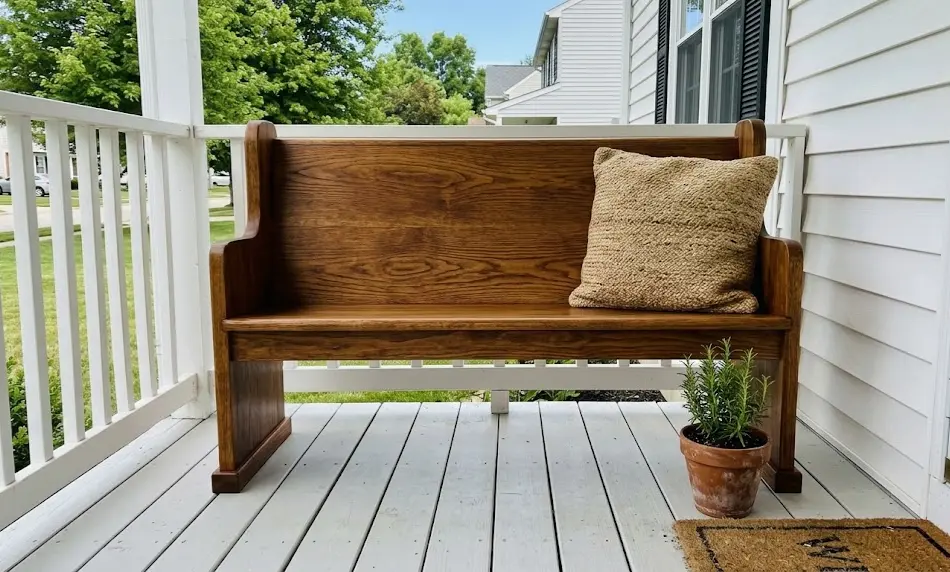
The upcycled alternative? An old thrifted solid-wood bench or reclaimed pallet seating, sanded smooth and sealed with natural tung oil for weather protection.
The finish is warm, honey-toned, and genuinely beautiful. And the whole project runs about $30.
How to Weatherproof Upcycled Wood (So It Actually Lasts)
This is where most DIYers lose the plot.
- Sand first — 80 grit to remove rough spots, finish with 220 grit for smoothness.
- Clean with white vinegar — kills mildew spores that cause premature rot.
- Apply tung oil in thin coats — 2–3 coats, letting each dry fully between applications.
- Annual touch-up — one coat every spring keeps it looking fresh for years.
That’s it. No complicated chemicals, no low-VOC exterior finishes needed for natural wood treated this way.
Pro Tip: If you’re sourcing reclaimed barn wood or old-growth timber from salvage yards, look for FSC-certified porch seating materials at architectural salvage stores. Old-growth wood is actually denser and more rot-resistant than most new lumber — it’s structural superiority built over decades.
Zone 3: Planters That Stop Traffic
Here’s the comparison that changed how I shop:
| Decor Element | Retail Price | Eco-Luxe DIY | DIY Cost |
|---|---|---|---|
| Spring Planters | Designer terracotta, $80+ each | Vintage galvanized wash tubs or thrifted urns + eco-friendly chalk paint | ~$15 |
| Door Display | Pre-made dried wreath, $120+ | Foraged grapevine + dried clippings + jute twine | $0–$10 |
| Porch Seating | HDPE Adirondack chair, $400+ | Reclaimed wood bench + tung oil | ~$30 |
| Outdoor Rug | Recycled ocean plastic rug, $150+ | Hand-loomed upcycled jute or denim mat | $20–$30 |
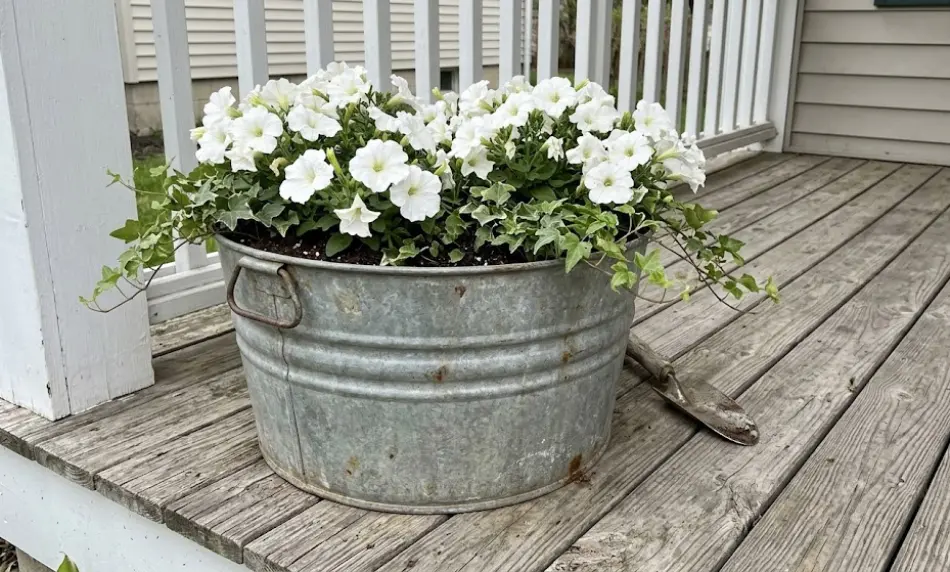
The galvanized planter is my personal obsession.
How to Style Repurposed Galvanized Planters
Galvanized metal has this beautiful, industrial-meets-farmhouse quality that looks equally at home on a rustic cottage porch or a modern minimalist entry.
The texture trick: Mix 1 part eco-friendly chalk paint with 1 tablespoon of baking soda. Brush it onto the outside of your tub in loose, imperfect strokes. Once dry, it gives an aged, chalky patina that looks like it cost serious money.
Drill a few drainage holes in the bottom before planting, and you’re done.
The Textile Layer: Your Porch’s Secret Weapon
Most people forget this and wonder why their porch still feels “off.”
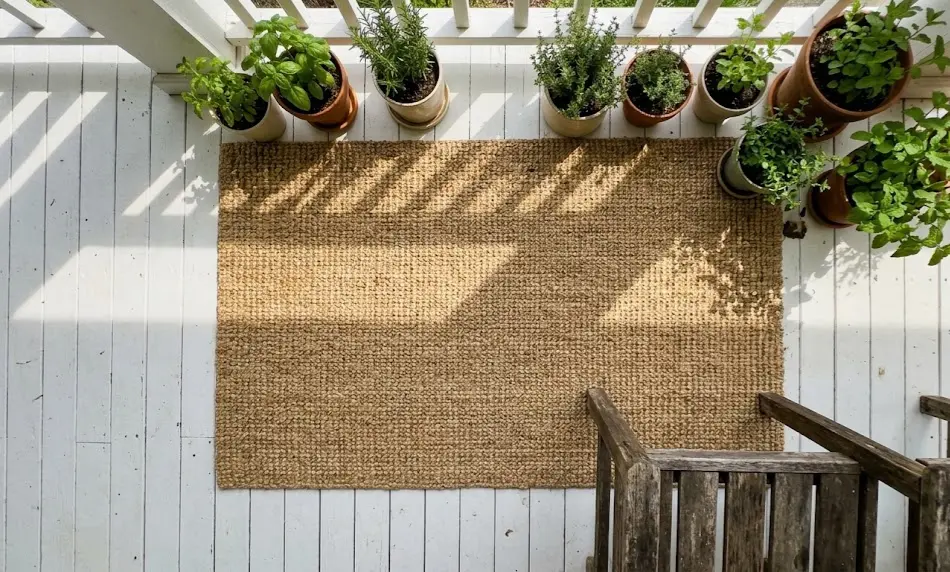
An outdoor rug and a couple of throw pillows pull the whole space together — they’re the visual anchor that makes your seating area feel intentional.
A hand-loomed jute mat ($20–$30 from thrift stores or artisan markets) beats a $150 recycled ocean plastic rug on aesthetic every time. Jute has this warm, natural texture that photographs beautifully and ages gracefully.
Transitioning From Winter: The 3-Step Swap
If your porch is still in “cozy winter mode,” here’s the fastest way to shift it.
Step 1 — Remove and store any dark textiles, heavy lanterns, and evergreen arrangements. (Don’t throw them away — you’ll want them in November.)
Step 2 — Introduce lightness with pale-toned textiles, white or blush flowers, and fresh greenery.
Step 3 — Add one “wow” element — a statement wreath, a cluster of galvanized planters, or a restored bench. One focal point does more than a dozen scattered trinkets.
Did You Know? The global eco-friendly furniture market is projected to reach $113.94 billion by 2033 — growing at a 10% annual rate. Homeowners are actively shifting away from fast decor toward durable, sustainably sourced outdoor materials that hold their value season after season.
FAQ: Spring Porch Decor Questions Answered
How can I decorate my porch for spring on a budget without it looking cheap?
Focus on one statement piece — a handmade wreath, a galvanized planter cluster, or a restored bench — rather than spreading your budget across ten small items. Quality over quantity always reads as more expensive.
What are the most durable, eco-friendly materials for outdoor spring decor?
Reclaimed solid wood (sealed with tung oil), galvanized metal, natural jute, and FSC-certified timber are your most durable, weather-resistant options. All of them look better aged than their plastic alternatives.
What is the difference between recycled and upcycled outdoor furniture?
Recycled materials are broken down and reprocessed into something new — which requires energy. Upcycled materials preserve the original structural integrity and require significantly less processing energy, making it the more carbon-efficient choice for home upgrades.
How do I transition my front porch from winter to spring sustainably?
Swap textiles first (dark → light), store rather than toss your winter decor, introduce cold-hardy greenery before frost-sensitive plants, and add one new handmade element each season rather than a complete overhaul.
The Eco-Luxe Porch Checklist
Before you start shopping or styling, run through this:
- [ ] Foraged or thrifted wreath base ready?
- [ ] Vintage galvanized planters sourced?
- [ ] Reclaimed wood sealed and prepped?
- [ ] Natural jute or woven textile in the mix?
- [ ] Last frost date checked before buying live plants?
One check at a time. This is supposed to be fun.
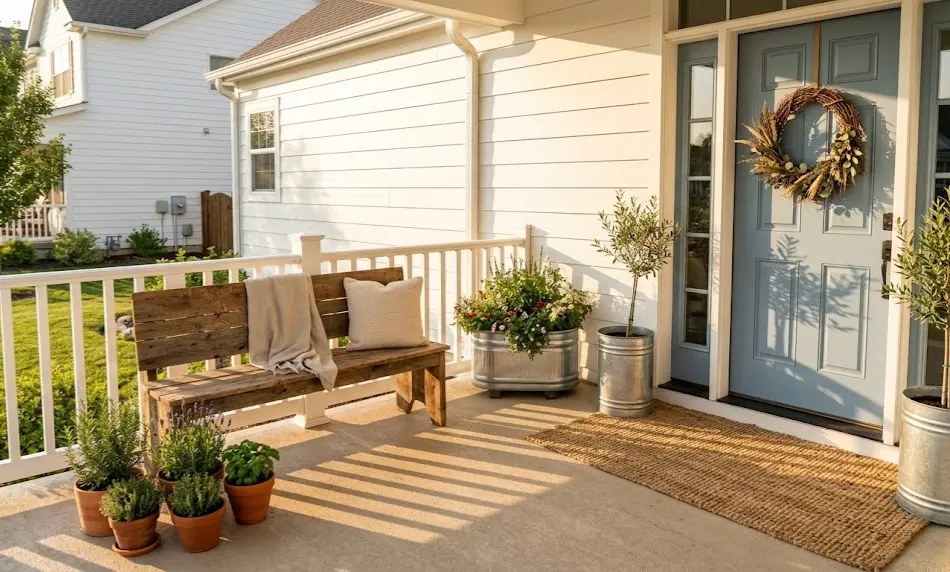
There’s something deeply satisfying about a porch that looks expensive because it was made with intention — not because you spent a fortune at a big-box store.
Your porch is the first thing the world sees of your home. Make it tell the right story.