You’re trying to do the right thing. You rinse your coffee cup, toss in that chip bag with the recycling symbol, and feel good about saving the planet. But here’s the uncomfortable truth: most of those items are contaminating entire recycling loads, sending thousands of pounds of legitimately recyclable material straight to the landfill.
This isn’t your fault. The recycling industry has created a confusing maze of symbols, codes, and mixed messages that make it nearly impossible to know what actually belongs in your curbside bin. That innocent-looking paper coffee cup? It’s sabotaging your recycling efforts in ways you’d never expect.
Here’s what you’ll learn: The 10 most commonly mis-recycled items that look recyclable but aren’t, the surprising science behind why they fail, and the budget-friendly alternatives that actually work. No guilt-tripping, no complicated jargon—just straightforward answers to fix your recycling confusion once and for all.
The 10 Recycling Imposters Contaminating Your Bin
1. Single-Use Coffee Cups
The Illusion. They look like cardboard, feel like paper, and even have that satisfying “paper” sound when you crumple them. But single-use coffee cups are composite packaging in disguise.
The Hidden Problem. Every paper coffee cup is lined with a thin polyethylene plastic layer—typically less than 5% by weight—fused directly to the paperboard. This plastic coating makes the cup waterproof, but it also makes separation at paper mills nearly impossible with standard equipment.
What Actually Happens. When coffee cups enter paper recycling streams, the plastic flakes clog pulpers and screens, forcing mills to reject entire batches of mixed paper. But the contamination goes deeper: studies reveal that these cups leach up to 36 different elements into hot drinks, including aluminum, barium, chromium, copper, and even radionuclides like potassium-40, thorium, and uranium.
The Bottom Line. Unless your city has a specific coffee cup take-back program with specialized processing, these belong in trash—not recycling, not compost (unless they’re certified for industrial composting and you have access to that facility).
Budget Alternative: A $15 stainless steel travel mug pays for itself in about 15 coffee runs and eliminates the problem entirely.
2. Coffee Cup Lids (Including “Compostable” Ones)
The Size Problem. Most coffee lids are made from polystyrene or mixed polymers, and they’re too small and lightweight for conventional sorting equipment to capture. They slip through screens, end up as residue, and go to landfills anyway.
The Compostable Trap. See a lid marked “compostable”? It’s still not recyclable. PLA (polylactic acid) compostable lids require industrial composting facilities operating at 50–60°C to break down within a month. Toss them in paper recycling or conventional plastics, and they’re contaminants that ruin entire batches.
What Recycling Plants Actually Do. Small, flat pieces like lids are exactly what sorting systems are designed to reject. Even when they make it through initial sorting, they contaminate the wrong material streams.
Smart Move: Skip lids when you’re drinking immediately, or invest in a reusable cup with an integrated silicone or stainless steel lid.
3. Thermal Paper Receipts
The Chemical Reality. Thermal receipts develop their print through heat-activated phenol coatings—commonly Bisphenol A (BPA) or Bisphenol S (BPS). These chemicals don’t disappear during paper pulping; instead, they contaminate recycled paper products and wastewater.
Why Paper Mills Reject Them. Standard pulping processes cannot remove these additives. One contaminated receipt in a recycling batch can compromise thousands of pounds of paper fiber.
The Shredding Myth. Shredding receipts doesn’t make them safe for recycling—it just distributes the problematic chemicals across more fibers, making contamination worse.
Eco-Friendly Switch: Request digital receipts via email. For sensitive purchases requiring privacy, cross-cut shred and dispose in regular trash (not recycling).
4. Used Tissues, Napkins, Paper Towels & Toilet Paper
The Fiber Science. These products are manufactured from already-recycled paper with extremely short cellulose fibers. By the time you’ve used them, those fibers are too weak and degraded for another pulping cycle—they’re literally designed to be end-of-line products.
Contamination Central. Food residues, oils, bodily fluids, and cleaning chemicals make these hygiene hazards that disrupt paper recycling processes. Wet, weak fibers disintegrate and clog sorting screens even when “clean.”
The Rinse Myth. Rinsing doesn’t restore fiber strength or remove oils that have already penetrated the paper structure.
Budget Win: Switch to washable cotton napkins and microfiber cleaning cloths. Initial investment of $20–30 eliminates ongoing tissue/towel costs and reduces waste by hundreds of pounds annually.
5. Plastic Bags & Soft Plastic Film
The Technical Truth. Most plastic bags are made from recyclable LDPE or HDPE resin. The problem isn’t the material—it’s the form.
The Equipment Killer. Thin, flexible film wraps around conveyor belts, tangles in sorting screens, and shuts down entire recycling facilities for hours. This is such a widespread problem that “plastic bag downtime” is a major operational cost for Materials Recovery Facilities.
The Symbol Deception. That chasing-arrows Mobius loop typically indicates resin type, not acceptance in your local curbside program. Resin codes #2 and #4 might be “technically” recyclable, but collection systems are designed exclusively for rigid containers.
Real Solution: Keep reusable fabric bags in your car. For the occasional plastic bag you accumulate, check if your grocery store has a legitimate store drop-off program (and verify they actually recycle rather than landfill).
6. Chip Bags, Snack Pouches & Crisp Packets
The Multi-Layer Problem. That shiny, crinkly snack bag isn’t a single material—it’s laminated layers of plastic, aluminum, and sometimes paper fused together with adhesives. These layers cannot be separated economically in mechanical recycling.
The Foil Illusion. The metallic shine isn’t aluminum like a soda can; it’s metallized plastic film—a completely different material that contaminates aluminum recycling streams.
Why Washing Fails. Cleanliness has nothing to do with the fundamental issue: you can’t un-laminate composite packaging without specialized chemical processing that doesn’t exist in standard facilities.
Bulk Alternative: Buy snacks in refillable containers from bulk stores, or choose large tubs made from single-material rigid plastics that your local program actually accepts.
7. Greasy Pizza Boxes & Food-Soiled Cardboard
The Grease Science. Oil and cheese residues coat paper fibers so they cannot properly bond during repulping. This weakens recycled paper products and creates quality control failures at mills.
The Contamination Cascade. Food residues promote microbial growth and odors in storage bales. One contaminated pizza box can lead mills to reject entire truckloads of otherwise clean cardboard.
The Partial Solution. Tear the clean lid off and recycle that section. The grease-soaked base should go to organics collection (where available) or regular trash.
Zero-Waste Tip: Request dine-in service or ask restaurants to use reusable containers. Some pizza shops now offer bring-your-own-container options for sustainability-minded customers.
8. Plastic Cutlery
The Sorting Failure. Even when made from recyclable polypropylene or polystyrene, plastic forks and spoons are too small and oddly shaped for optical sorters to identify. They fall through mechanical screens and contaminate paper streams.
The Bioplastic Trick. “Plant-based” or “compostable” plastic utensils need industrial composting facilities operating at specific temperatures. Most municipal composters reject them, and they absolutely don’t belong in conventional plastics recycling.
The Resin Code Trap. A recycling number stamped on plastic cutlery doesn’t guarantee acceptance. Shape, size, and local market demand matter more than resin type.
Carry Solution: A compact stainless steel cutlery set costs $10–15 and fits in a purse or laptop bag. For large events, use actual silverware or rent from party supply companies.
9. Disposable Paper Plates & Food-Service Packaging
The Coating Problem. Most disposable plates are coated with polyethylene or fluorinated compounds (PFAS) to resist water and grease. These barrier chemicals are persistent environmental pollutants that standard pulping cannot remove.
The Double Contamination. Heavy food residue plus chemical coatings create a worst-case scenario for paper recycling. These items fail both cleanliness and material composition standards.
The “Compostable” Caveat. Labels claiming compostability don’t mean universal acceptance. You need PFAS-free certification AND access to commercial composting facilities that specifically accept food-service items.
Durable Option: Reusable melamine or stainless steel plates for events. Upfront cost of $2–3 per plate is recouped after 3–4 uses compared to disposables.
10. Shower Curtains & Flexible PVC Items
The PVC Problem. Polyvinyl chloride (PVC) contains chlorine and numerous additives—plasticizers, stabilizers, and other compounds that complicate recycling and can release hazardous substances during improper processing.
The Contamination Risk. PVC behaves completely differently from common recyclable plastics like PET or HDPE. Mixing even small amounts into those streams ruins entire batches.
The Flexible Film Confusion. While both soft plastics and PVC are problematic for curbside recycling, they fail for different technical reasons. PVC is specifically excluded from packaging recycling systems due to its chemical composition.
Longevity Investment: Polyester or PEVA (polyethylene vinyl acetate) curtains last 3–5 years, avoid PVC additives, and can be repurposed as drop cloths. Glass shower doors offer 20+ year durability where feasible.
Key Takeaways: The Pattern Behind Recycling Failures
| Problem Category | Why It Fails | What to Do Instead |
|---|---|---|
| Composite Materials (coffee cups, chip bags, coated plates) | Multiple materials fused together can’t be separated in standard mills | Choose single-material packaging or reusables |
| Too Small/Light (lids, cutlery, plastic bags) | Falls through sorting screens or tangles equipment | Opt for full-size containers, reusable utensils, fabric bags |
| Chemical Coatings (receipts, thermal paper, PFAS-treated items) | Toxic additives contaminate recycled products and water systems | Request digital alternatives, choose uncoated options |
| Food Contamination (tissues, greasy cardboard, soiled plates) | Residues disrupt fiber bonding and promote microbial growth | Compost clean portions where allowed, use washables |
| Wrong Polymer Type (PVC, PS items, compostable plastics) | Incompatible chemistry contaminates conventional plastic streams | Check local acceptance lists, avoid PVC, use proper composting |
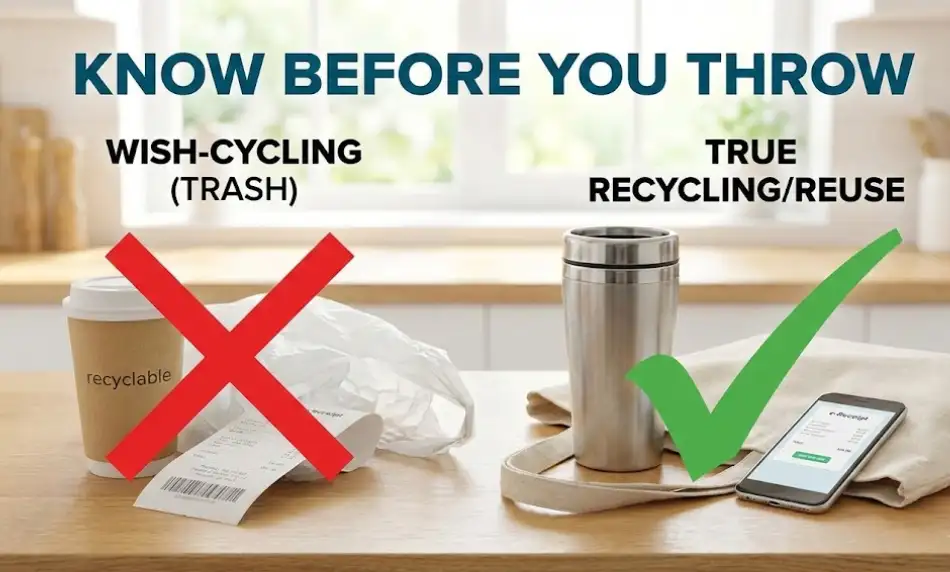
The “Wish-Cycling” Problem. The biggest contamination driver isn’t one specific wrong item—it’s trusting the chasing-arrows symbol or resin codes without checking your local program’s actual acceptance list.
The Expert Rule. Treat anything that is multi-layer (paper + plastic or plastic + metal), very small or lightweight (lids, cutlery, films), or heavily food-soiled as “guilty until proven innocent” for curbside recycling.
The Default Strategy. When in doubt, prioritize reusables first, then check for specialized take-back programs. Your curbside bin should be your last option, not your first guess.
The Eco-Impact Reality Check
The Contamination Cascade. One misplaced coffee cup in a recycling bin doesn’t just fail to get recycled—it can contaminate an entire bale of mixed paper weighing several tons. When mills reject contaminated loads, legitimately recyclable materials go to landfills alongside the contaminants.
The Energy Paradox. Manufacturing “recyclable” packaging that can’t actually be recycled wastes more resources than using clearly non-recyclable materials that people dispose of correctly. A plastic bag that goes straight to landfill has less environmental impact than one that shuts down recycling equipment for hours and contaminates thousands of pounds of otherwise clean material.
The Chemical Legacy. Items like thermal receipts and PFAS-coated plates don’t just fail to recycle—they introduce persistent pollutants into recycling streams, contaminating new products with hazardous compounds. This turns recycled paper products into vectors for chemical exposure.
The Market Truth. Many items marked with recycling symbols have no viable end market for recycled content. Collection programs that “accept” soft plastics often stockpile them because no buyers exist, eventually landfilling years of accumulated material.
The Budget Reality. Contamination costs U.S. recycling facilities approximately $300 million annually in equipment repairs, downtime, and rejected loads. These costs get passed to consumers through higher trash collection fees and taxes—meaning we pay for the privilege of contaminating our own recycling systems.
The Reusables Win. A $15 travel mug replaces approximately 300 disposable cups over its lifetime, eliminating 6+ pounds of composite waste and preventing contamination of 30–60 tons of potentially recyclable paper. The environmental ROI on reusables is immediate and measurable.
Bottom Line: What Actually Works
The Verdict. Curbside recycling isn’t broken because people are careless—it’s broken because the packaging industry created materials that look recyclable but aren’t, then shifted responsibility to consumers without providing clear guidance.
Your Three-Step Fix:
- Check First. Visit your local waste management website and download the actual acceptance list—not what you think should be accepted.
- Default to Reusables. The best recycling is the recycling you never have to do. Invest in durable alternatives for your top 5 disposable items.
- When in Doubt, Throw It Out. One contaminated item ruins tons of good recycling. If you’re uncertain, it’s environmentally better to landfill the questionable item than contaminate a whole bin.
The Mindset Shift. Stop asking “Can I recycle this?” and start asking “Should I buy this in the first place?” Reusables, refill programs, and single-material packaging solve the problem upstream before it reaches your bin.
Looking to put these principles into action? Check our Budget DIY Hacks section for practical projects using truly recyclable materials, or explore Eco-Friendly Craft Supplies to find sustainable alternatives for your creative projects.