You found the perfect pine cones in your yard. They’re free, charming, and begging to become wreath centerpieces—until you notice the sticky sap, mystery bugs, and dusty film clinging to every scale. Before you start dreaming up DIY pine cone craft ideas to transform your nature finds into decor, you need a clean canvas.
Skip the oven completely. A white vinegar pine cone bath sanitizes outdoor pinecones, kills hidden insects, and loosens dirt without heat damage or lingering kitchen smells. Here’s the exact ratio, timing, and drying method for bug-free pine cones that stay intact.
Why Vinegar Works Without Baking
Vinegar’s natural acidity kills insects and eggs in pine cones during a 20-30 minute soak, making it the safest natural pine cone cleaner for homes without ovens or when you’re processing 100+ cones at once. Unlike baking, which forces scales to open unnaturally fast and risks scorching, the vinegar soak pinecones method preserves shape while tackling three problems simultaneously: bugs, sap, and mold spores.
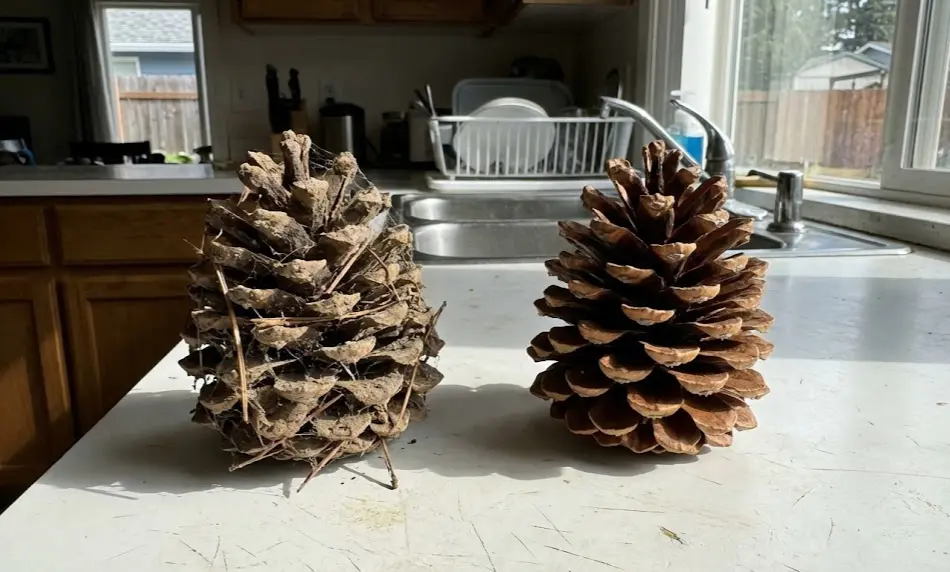
White vinegar-water mix (1:1 ratio) effectively removes dirt, sap, and sanitizes without heat, but timing matters. Too short and bugs survive; too long and you’re wasting vinegar. The sweet spot balances thorough disinfection with zero-waste efficiency.
The Vinegar-Water Recipe (Exact Ratios)
Base Formula for Small Batches
Mix equal parts white distilled vinegar and warm tap water in a bowl large enough to submerge pine cones completely. For 10-15 medium cones (3-4 inches), use 2 cups vinegar + 2 cups water.
Warm water (not hot) helps loosen sap faster than cold, but avoid boiling temperatures that can warp resin. If your cones feel extra sticky, add 1 tablespoon of dish soap to the first batch to break down surface oils before the main sanitize pine cones bugs soak.
Scaling for 100+ Cones
Use a 5-gallon bucket with 1 gallon vinegar + 1 gallon water for bulk cleaning. This handles 50-75 large cones per batch without crowding. Reuse the solution twice (filtering debris between batches), then compost-drain it instead of pouring fresh vinegar down the sink every time.
Soak Times by Pine Cone Size
Small Cones (Under 2 Inches)
Soak for 20 minutes exactly. Tiny cones absorb vinegar quickly and over-soaking makes them too acidic-smelling for indoor crafts. Swirl the bowl at 10 minutes to dislodge trapped air bubbles.
Medium to Large Cones (3-5 Inches)
30 minutes gives vinegar time to penetrate deep scales where bugs hide. Can vinegar kill bugs in pine cones this fast? Yes—the acetic acid disrupts insect respiratory systems and dissolves egg casings within the first 15 minutes, but the full half-hour ensures sap starts loosening from inner layers.
Jumbo Cones (6+ Inches, Like Sugar Pine)
Go 45 minutes for thick-scaled varieties. These giants have more layers where sap pools, so the extended soak prevents sticky surprises later. Check at 30 minutes—if water still looks murky brown, they need the full time.
The Floating Problem (and Fix)
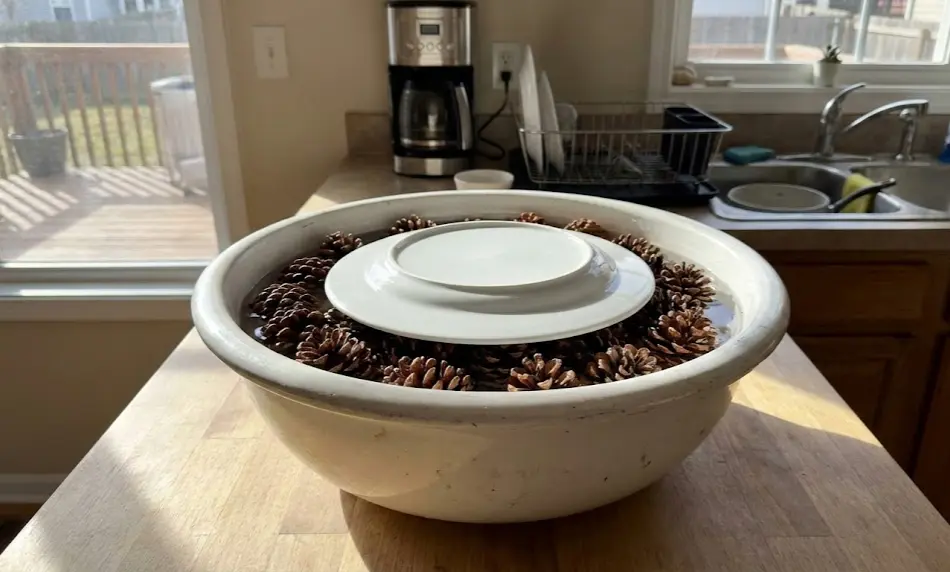
Pine cones float during soaking, exposing top halves to air instead of vinegar. This creates uneven cleaning where bottom scales sanitize but tops stay buggy.
Place a ceramic dinner plate directly on top of cones to press them underwater without crushing. The plate’s weight distributes evenly across the batch, keeping every cone fully submerged. Avoid mesh bags—they trap air pockets that block vinegar contact.
Check after 10 minutes to rotate any stubborn floaters. Waterlogged cones eventually sink, but early intervention prevents half-cleaned results.
What Vinegar Does (and Doesn’t) Remove
Kills Bugs Completely
Vinegar’s acidity kills insects and eggs in pine cones on contact, including pine cone beetles, aphids, and spider mites. You’ll see dead bugs floating in the water after 15 minutes—this is normal and proof the method works.
Loosens Light Sap
Does vinegar remove sap from pine cones? Partially. The acid softens fresh, tacky sap so it rinses away during the air-dry phase, but thick, hardened resin (especially on sugar pines) needs extra help.
Here’s the hidden truth: Vinegar soak often fails to fully remove sticky sap residue, even after multiple tries. If you see shiny patches after drying, dab those spots with rubbing alcohol on a cotton swab before the final craft assembly. The alcohol dissolves resin that vinegar can’t touch.
Sanitizes Mold Spores
The disinfect pine cones naturally process eliminates white fuzzy mold you’d find on cones stored in damp garages. Vinegar prevents regrowth better than plain water rinses, keeping wreaths fresh-looking for months.
Air-Dry Tips (No Baking Required)
The Closing-Reopening Cycle
Do pine cones close up in vinegar water? Yes—pine cones close when wet in vinegar but reopen upon air drying, typically in 1-3 days. This is a natural moisture response, not damage. Closed cones actually dry faster because water drains from compressed scales more efficiently.
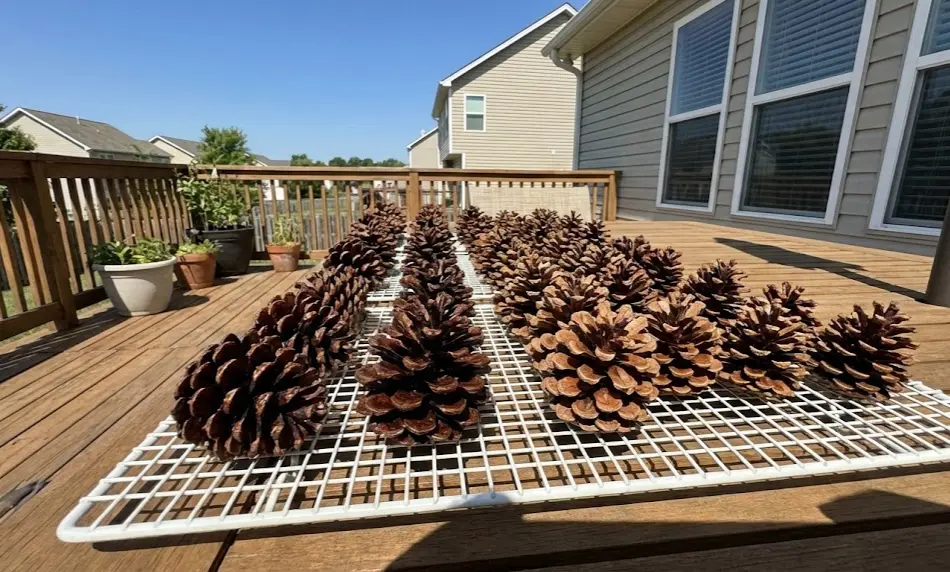
Lay cones on wire cooling racks (not towels) so air circulates underneath. Towels trap moisture and create mold spots on bottom scales within 48 hours.
Timing by Season
How to dry pine cones after vinegar soak depends on humidity:
- Summer (low humidity): 24-48 hours indoors near a fan
- Winter (high humidity): 3-5 days on a sunny windowsill, flipping daily
- Rainy climates: Use a dehumidifier room or they’ll stay damp for a week
Never microwave or oven-dry after vinegar soaking. The trapped moisture inside scales turns to steam and explodes cones into splinters. The whole point of this method is patience.
The Shake Test
Gently shake each cone after 48 hours. Fully dry cones rattle slightly as scales loosen; damp ones feel heavy and silent. If still wet, give them another day before crafting.
Zero-Waste Drain Method for Bulk Batches
Reuse the same vinegar-water solution for 2-3 batches before discarding. Strain out pine debris with a fine-mesh sieve between rounds. The solution loses potency after the third use, so retire it then.
Pour spent vinegar around acid-loving plants like azaleas, blueberries, or hydrangeas instead of down the drain. The diluted acidity feeds soil microbes without harming roots—a true zero-waste finish when you’re cleaning 100+ cones for holiday markets.
When Vinegar Isn’t Enough
Stubborn sap after two vinegar soaks? Switch to the alcohol spot-clean: dip a cotton ball in 70% isopropyl rubbing alcohol and dab only the sticky scales. Let air-dry 10 minutes, then rinse under cool water. This hybrid method handles the toughest resin without re-soaking the entire cone.
Persistent bugs even after 30-minute vinegar bath? Your cones might have burrowed larvae. Freeze them for 48 hours post-vinegar as a backup kill step, then air-dry normally.