The Dilemma Every Crafter Faces. You’re standing in front of that tempting bulk deal—500 sheets of cardstock for half the per-unit price—but your brain screams “Where will I store this?” and “What if I never use it all?” The promise of savings battles against the fear of waste, and suddenly that “deal” feels like a gamble.
Here’s What You’ll Learn. This guide cuts through the bulk-buying confusion with 2026 cost data, real profitability math, and eco-impact analysis. You’ll discover exactly when bulk pays off (and when it quietly destroys your budget), plus smarter alternatives that split the difference between savings and sanity.
When Bulk Actually Saves You Money
Staple Materials with Constant Rotation. Bulk purchasing makes financial sense when you’re buying high-use essentials—printer paper, white glue, basic acrylic paints, seed beads, or cotton fabric. These items don’t expire quickly and get used up before storage becomes a problem. The unit cost advantage is real: wholesale pricing leverages economies of scale where fixed costs (transport, packaging, handling) spread across hundreds of units instead of dozens.
True Wholesale Access Matters. Not all “bulk” is created equal. Real savings require accessing genuine volume discounts that clearly slash unit prices compared to retail—and that includes shipping. Industry data shows craft suppliers can buy at significantly lower per-unit costs and still charge higher retail prices, which is precisely why bulk is marketed as “cost-effective” for schools and makers.
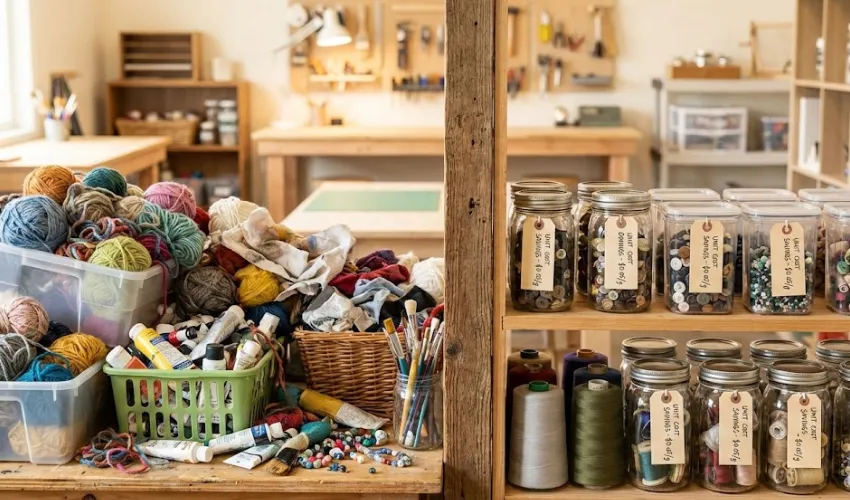
Storage Infrastructure Exists. You need safe, climate-controlled space. Humidity ruins paper, sunlight fades pigments, and pests destroy fabric. If you have proper storage—sealed containers, stable temperature, dark shelving—bulk staples can sit safely for years while delivering consistent savings.
The Hidden Costs That Kill Bulk Deals
The Overbuying Trap. Bulk is only cheaper if you actually use most of what you purchase. Supply chain analyses warn that when wholesale inventory purchases exceed revenue (some projections show craft supplies hitting 120% cost of revenue in 2026 without renegotiation), they actively destroy profit margins. Home crafters face the same math: buy 1,000 googly eyes at $0.02 each, never use 700 of them, and your “deal” just became expensive waste.
Materials That Don’t Wait. Trendy colors, seasonal kits, and specialty items have short shelf lives—not just literally (paints dry out, adhesives separate) but culturally. That metallic rose gold you bulk-bought in 2025 might feel dated by 2026. Assume 5-15% loss from expiration or damage when calculating true unit cost.
The Shipping Math No One Does. Add delivery fees, platform charges, and import costs to your per-unit calculation. A $0.10-per-sheet paper deal becomes $0.18 after shipping and handling fees, suddenly competing with retail pricing.
Eco Impact: When Bulk Helps (and Hurts) the Planet
Packaging Reduction Wins. Bulk purchasing directly lowers your carbon footprint through reduced packaging and consolidated transportation. Schools and organizations using wholesale craft supplies cut packaging waste significantly compared to multiple small retail purchases. Eco-focused fabric suppliers specifically highlight that buying sustainable textiles in bulk reduces logistics emissions and plastic wrap.
But Waste Cancels Eco Gains. Here’s the paradox: bulk reduces per-unit environmental impact, but overbuying materials that expire, warp, or sit unused until you toss them completely negates those savings. Paint that dries out, glue that separates, paper damaged by improper storage—all of it becomes landfill that never delivered creative value.
The Sweet Spot. Focus bulk purchases on eco-certified staples you actually use: recycled paper, FSC-certified cardstock, non-toxic adhesives, or organic cotton. Moderate bulk quantities of high-rotation materials yield both cost savings and legitimate sustainability claims.
Key Takeaways: The Bulk Decision Matrix
| Factor | Bulk Wins | Bulk Loses |
|---|---|---|
| Item Type | Staples (paper, glue, basic paint) | Trendy colors, seasonal kits |
| Usage Rate | Constant, predictable consumption | Sporadic or one-time projects |
| Storage | Climate-controlled, pest-free space | Garage, basement, humid areas |
| Unit Price | 40%+ savings after shipping | <20% savings or unclear discount |
| Shelf Life | Years (when stored properly) | Months (adhesives, specialty items) |
| Waste Risk | Low (use 90%+ of purchase) | High (30%+ sits unused) |
| Eco Impact | Less packaging + high usage = win | Packaging saved < disposal impact |
The Profitability Formula. Calculate your true unit cost: item price + (shipping ÷ quantity) + (5-15% expected loss) + storage cost. Compare that to retail. Craft business models explicitly track wholesale purchases as a percentage of revenue, pushing toward 1.0 instead of 1.2 to ensure bulk buying strengthens margins rather than quietly eroding them.
Smarter Alternatives to Solo Bulk Buying
Micro-Bulk Co-Op Orders. Split cases of paper, adhesive, or beads with friends, maker groups, or classroom teachers. You unlock wholesale pricing without each household absorbing storage risks and waste potential. Three crafters splitting a 500-count cardstock order get the unit discount while storing manageable 165-sheet stacks.
Project-Specific Bundles. Instead of random bulk, seek curated kits containing exactly what one project needs—priced slightly below buying components separately. These bundles leverage wholesale savings behind the scenes while eliminating overstock. Industry profitability playbooks recommend this approach to cut waste while maintaining margin efficiency.
Strategic Staple Stockpiling. Buy bulk only for materials you genuinely use weekly or monthly. Keep a 3-month consumption log before committing to bulk. If you use 50 sheets of white cardstock weekly, a 500-sheet bulk order makes sense. If you use 10 sheets monthly, retail is smarter.
The Verdict: When to Bulk and When to Bail
Bulk buying craft supplies in 2026 saves money when you purchase high-rotation staples, have proper storage, and access genuine wholesale discounts. The unit cost advantage is mathematically real—but only if you avoid the three killers: overbuying items you won’t use, lacking climate-controlled storage, and ignoring shipping-inclusive true cost.
For most home crafters, a hybrid approach wins: bulk-buy your top 5-8 staple materials, split orders with fellow makers, and buy trendy or specialty items retail in project-sized quantities. This balances budget efficiency with storage reality while minimizing waste—both financial and environmental.
The math doesn’t lie. Calculate that true unit cost, track your actual usage, and remember that the “cheapest” option that sits unused is always the most expensive mistake.
Still figuring out which supplies deserve bulk investment? Check the Budget-Friendly Craft Tools category for tested recommendations on high-value staples worth stockpiling versus items better bought as needed.