You are staring at a blank wall and scrolling through online shops, wondering if you should drop $50 on a print or grab some canvas and paints for $15. The internet promises that making your own art saves serious cash. You have every right to be skeptical about these cheerful claims.
The One-Piece Trap and Hidden Expenses
Creating a single piece of art costs roughly $5 to $15 in basic materials like canvas and craft paints. This sounds incredibly cheap until you factor in the $8 cutting mat you will use once and the $12 sealer you barely touch. Two failed attempts can easily consume another $10 in wasted supplies.
Your budget project just quietly climbed to $45. Beginners rarely nail their first attempt when trying out a new aesthetic. That textured abstract piece that looked so easy on social media just ate up an entire Saturday afternoon.
Tool creep is a very real threat to your wallet. You start with basic brushes, then realize you need palette knives for texture and proper UV sealer. Leftover supplies like half-empty tubes of burnt umber become sunk costs that never appear in quick tutorial videos.
When Making Your Own Art Actually Saves Money
Making your own art becomes genuinely economical when you are creating multiple pieces. Once you own the tools and buy paints in larger quantities, your per-piece cost drops dramatically.
Your first piece might cost $50 including tools and failed experiments. By your fifth piece, you are only spending $8 to $12 on materials since your tools are already paid for. By your tenth piece, bulk materials and refined techniques bring your cost down to just $5 to $8.
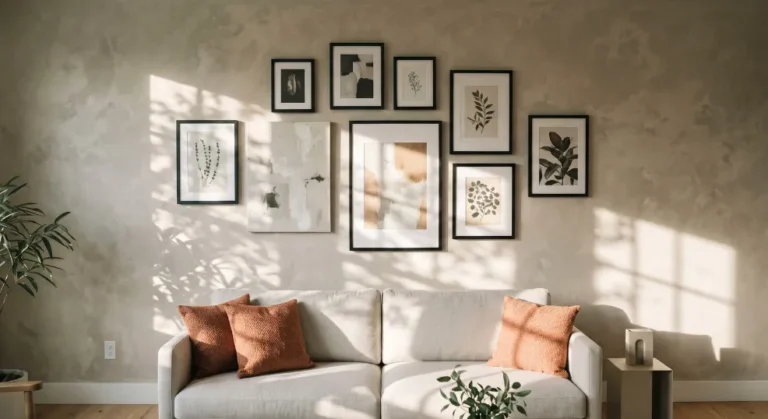
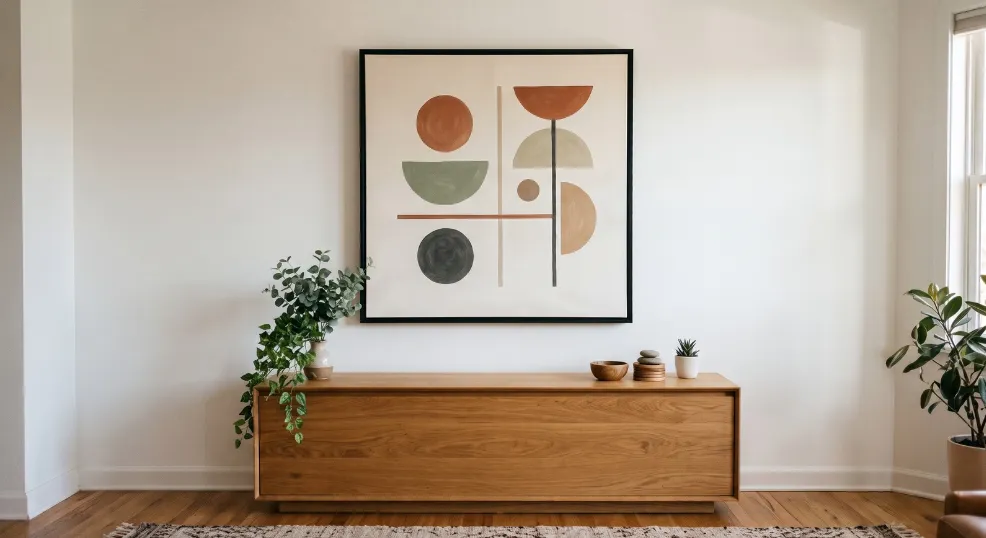
This is the perfect time to explore different aesthetics to maximize your supplies. If you need inspiration for your next few pieces, explore some budget-friendly wall art ideas for living rooms to keep your gallery wall growing.
Durability and The Cost-Per-Year Reality
A standard 11×14 inch (28×35 cm) professional print with UV-resistant inks and quality paper lasts about 10 years in a bright room. This gives you an annual cost of just $2 per year on your wall.
A $15 handmade canvas using budget craft paints and unsealed paper will likely fade or warp in two to three years. Your actual annual cost becomes $5, which is more than double the price of the professional print.
Quality materials completely change the math in your favor. Using artist-grade acrylics and proper UV-protective varnish pushes your initial cost to $40 but extends the lifespan to eight years. You are now highly competitive with professional prints as long as you make multiple pieces.
Eco-Impact and Indoor Safety
Controlling your own materials allows you to choose low-VOC paints, recycled canvases, and reclaimed wood frames from thrift flips. Water-based acrylics emit minimal VOCs that drop to near-zero after a couple of days of curing.
However, abandoned projects create a significant amount of waste. Partially used canvases and leftover paints you will never finish represent embodied carbon and landfill contributions. Single-use craft supplies easily undermine the environmental benefits of making things yourself.
Commercial printing consumes paper, inks, and shipping energy, but many shops now offer recycled papers and eco-friendly inks. Your handmade route wins environmentally only if you complete your projects and use your materials fully.
When to Make It vs When to Buy It
Professional prints are your best choice when you only need one or two statement pieces for a room. High-fidelity photography and detailed illustrations require professional printing equipment that is impossible to match at home. Ordering takes minutes, making it the smartest choice when your time is scarce.
Making your own art is the better route when you plan to create four or more pieces. Your tool costs amortize, allowing your per-piece cost to drop significantly below retail prices. This is also the perfect choice when you need exact color matching for a specific room palette.
If crafting is your recreation rather than just a chore, the time investment becomes a feature instead of a bug. Building a maker habit means your tools get continuous use to maximize your cost efficiency.
Conclusion
Creating your own wall art is cheaper than buying prints only after you clear the five-piece threshold and build a basic tool kit. For single pieces or occasional decorating, professional prints deliver better long-term value, superior fade resistance, and zero time investment.
Quality matters significantly more than the initial sticker price you see in the craft aisle. By planning your gallery walls strategically, you can mix affordable professional prints with your own beautiful creations. Your walls will look incredible, and your wallet will thank you.