Tired of synthetic air fresheners that smell like a chemical factory exploded? Your kitchen trash holds the secret to a beautifully scented home—and it’s completely free.
Those orange peels you’re about to toss? They’re packed with fragrant oils that can replace expensive store-bought sprays. Add a few herbs from your spice rack, simmer gently, and you’ve got a natural room freshener that actually works. Better for your lungs, your wallet, and the planet.
The Cheat Sheet
- Time Required : 10-15 min active, 30-120 min passive
- Cost : $0 (uses scraps)
- Difficulty : Beginner
- Eco-Rating : 9/10
Scrap-Ability Score: 9/10 – You’re literally using trash to make your home smell amazing.
What You Need
Materials:
- Citrus peels (orange, lemon, lime, or grapefruit—saved from snacks or juicing)
- 2 cups water (tap is fine for same-day use; distilled for spray versions)
- Fresh or dried herbs (rosemary, thyme, mint, basil, or bay leaves)
- Whole spices (cinnamon sticks, cloves, star anise, or cardamom pods)
- Optional boosters: Vanilla extract, white vinegar, or vodka (for spray versions)
Tools:
- Small saucepan or pot with lid
- Cutting board and knife
- Fine-mesh strainer (for spray versions)
- Heat-safe jar or bowl
- Spray bottle (optional, for cooled liquid)
- Trivet or heat pad
Shop your home first! Check your fruit bowl, spice drawer, and herb stash before buying anything.
Step-by-Step Instructions
Step 1: Save and Trim Your Citrus Peels
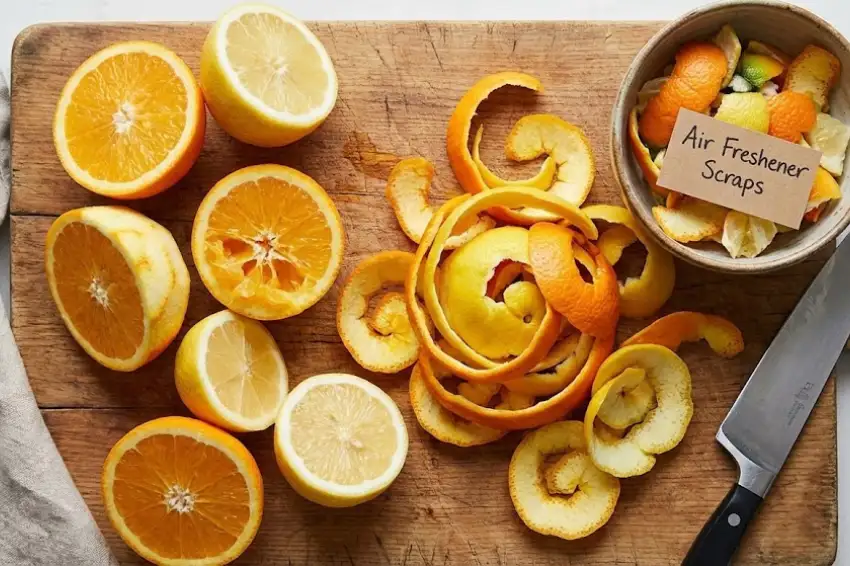
Start collecting citrus peels whenever you eat fruit or juice lemons. Rinse them under cool water to remove any sticky residue or waxy coating. Roughly chop the peels into 2-3 cm pieces using a sharp knife.
Pro-Tip: Chopping the peels into smaller pieces releases more fragrant oils into the water, making your air freshener stronger and longer-lasting.
Step 2: Layer Peels, Herbs, and Spices
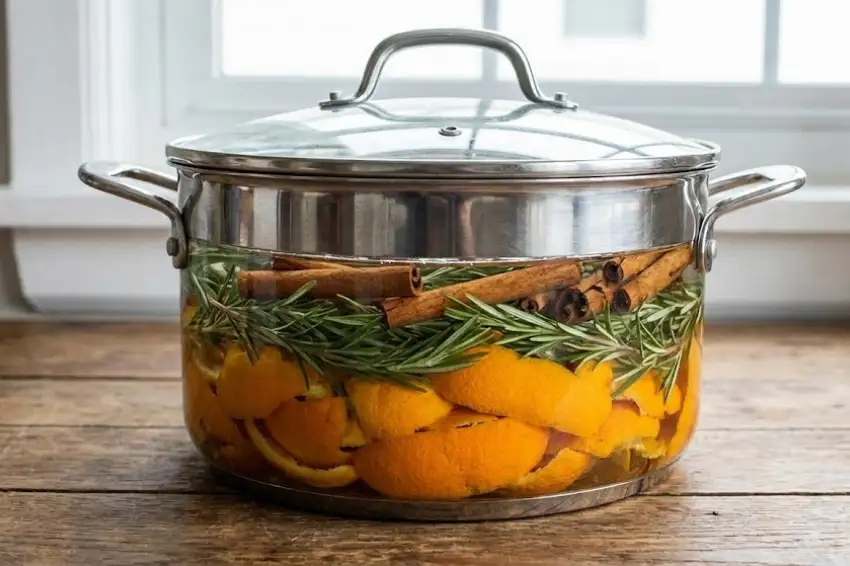
Add your chopped peels to a small saucepan—aim for about 1 to 1.5 cups of loosely packed peels. Toss in 2-3 herb sprigs (fresh or dried) and 2-4 whole spices like cinnamon sticks or cloves. Don’t go overboard with spices or they’ll overpower the fresh citrus scent.
Pro-Tip: Too many spices create a heavy, overwhelming smell instead of a light, fresh fragrance. Start with less—you can always add more next time.
Step 3: Cover with Water and Add Boosters
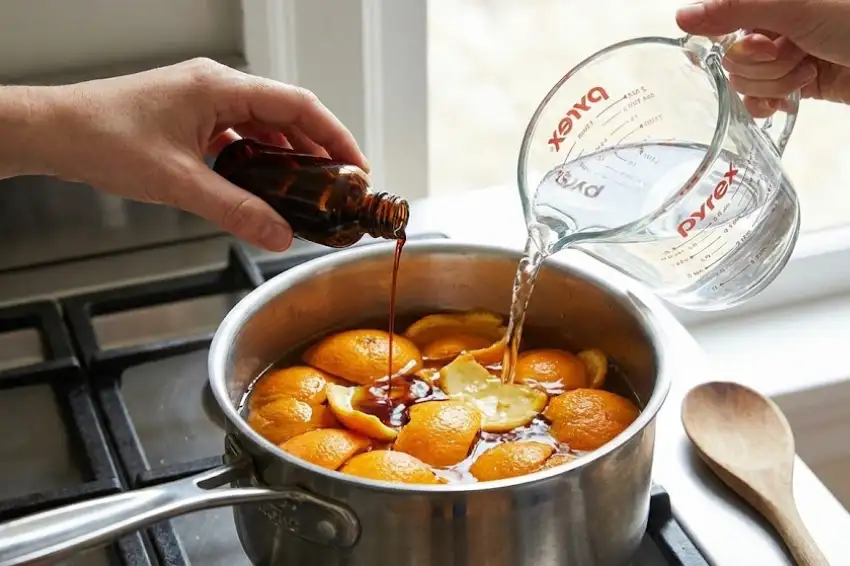
Pour enough water to cover the scraps by about 1-2 cm. If you’re planning to make a spray version that you’ll store, use distilled or previously boiled water. Add a tablespoon of vodka or white vinegar per cup of water to slow bacterial growth.
Pro-Tip: Distilled or boiled-and-cooled water prevents cloudiness and mold in spray bottles, extending shelf life to 1-2 weeks when refrigerated.
Step 4: Simmer Low and Slow
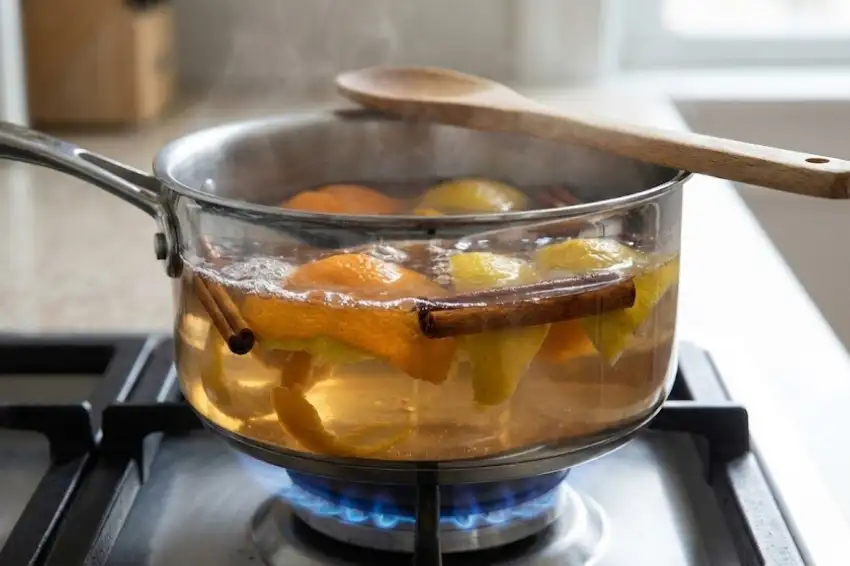
Place the pot on your stove and turn the heat to the lowest setting. You want barely-simmering heat—just a few small bubbles breaking the surface occasionally, not a rolling boil. Check every 15-20 minutes and top up with hot water as it evaporates.
Pro-Tip: Keep heat low to avoid scorching peels and evaporating water too fast. A rolling boil burns the oils and creates a burnt smell instead of fresh citrus.
Step 5: Let the Steam Scent Your Room
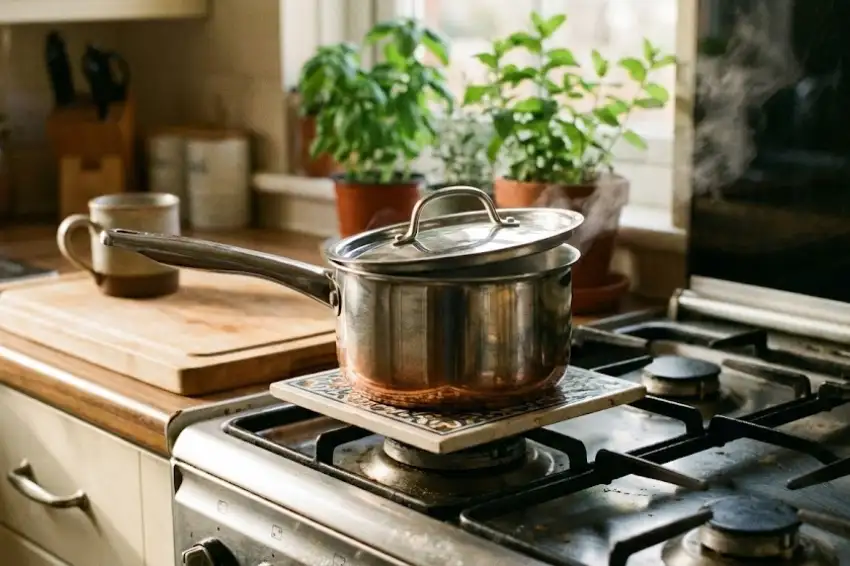
Move the pot to a central location in your kitchen or living area. Leave the lid slightly ajar so warm, scented steam can rise and circulate naturally. The fragrance will fill a small to medium room within 30 minutes.
Pro-Tip: Tipping the lid prevents steam from condensing back into the pot, allowing maximum scent distribution throughout your space.
Step 6: Strain for Spray or Passive Jar Use
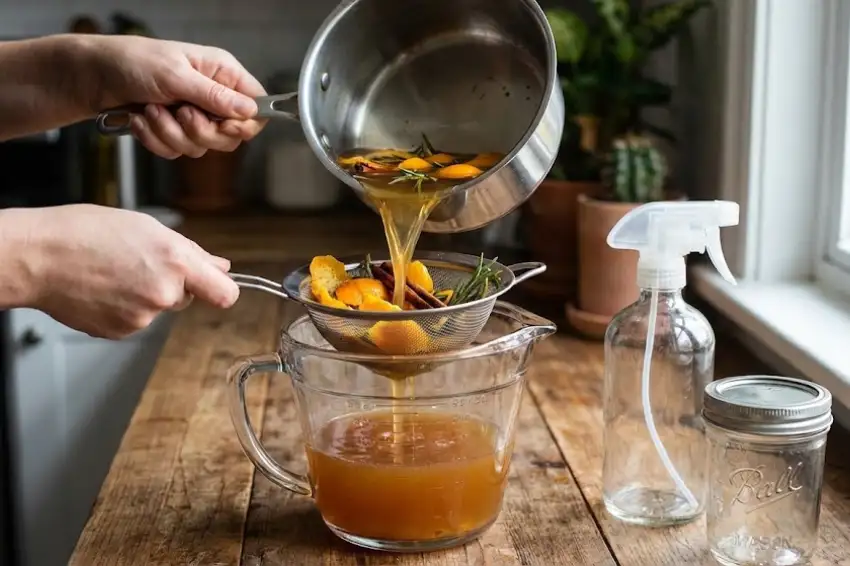
Let the liquid cool completely before handling. Pour it through a fine-mesh strainer into a clean jar or spray bottle. Remove all solid peels and herbs—they’ll mold quickly if left in stored liquid.
Pro-Tip: Never strain hot liquid into plastic spray bottles—heat can warp plastic and create pressure. Always cool completely first to avoid leaks and damage.
Step 7: Label, Store, and Refresh Regularly
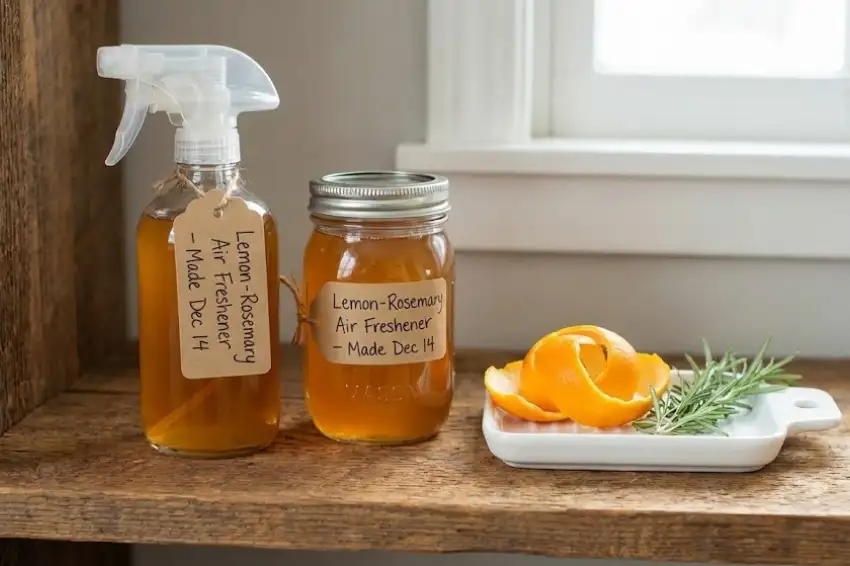
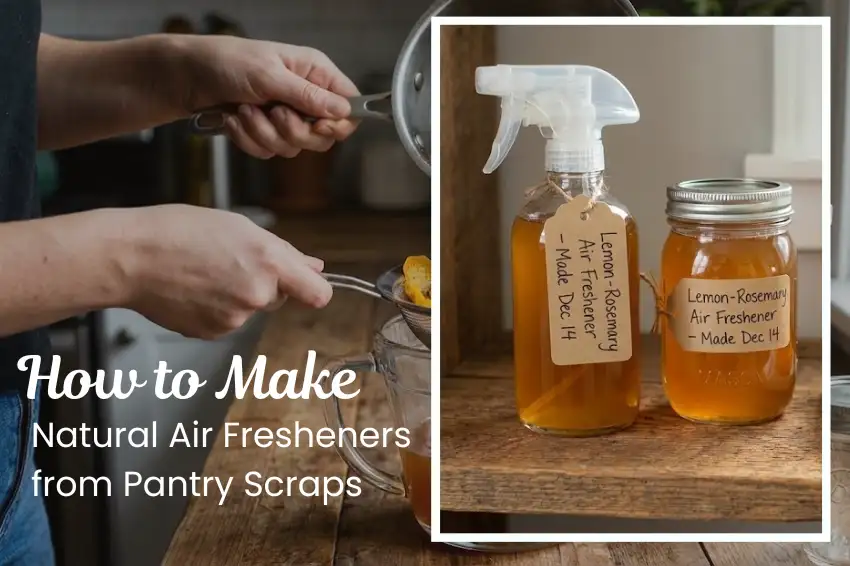
Write the date on your containers using a label or piece of masking tape. Store spray versions in the refrigerator and use within 1-2 weeks. Discard immediately if you notice cloudiness, off-smells, or visible mold growth.
Pro-Tip: Stovetop batches are best as single-day use. For longer storage, always refrigerate and remove all solid ingredients to prevent bacterial growth.
3 Ways to Customize Your Natural Air Freshener
1. Bright Kitchen Citrus Clean Blend
Perfect for kitchens and bathrooms where you want a crisp, clean scent. Use peels from 2-3 lemons or oranges, add 1-2 bay leaves, and a sprig of fresh rosemary or thyme. Optional: Add 1-2 slices of fresh ginger for a subtle warming note.
2. Cozy Spiced Orange Comfort Blend
Ideal for living rooms and bedrooms during fall and winter. Use peels from 2 oranges (or mix orange and mandarin), add 2-3 whole cloves, 1 cinnamon stick, and ½ teaspoon vanilla extract. This smells like a holiday candle without the artificial fragrance.
3. Herb Garden Lemon Fresh Blend
Best for entryways and home offices where you need energizing freshness. Use peels from 2 lemons (or lemon-lime mix), add a handful of fresh mint leaves, 1-2 sprigs of basil or rosemary, and 1 tablespoon white vinegar if making a spray version.
Troubleshooting (Common Mistakes)
Problem: The scent is too weak or disappears quickly.
Your room might be too large, or you didn’t use enough citrus oils. Add more peels to your next batch and lightly crush them with the back of a spoon before simmering to release more oils. Keep the water level just above the scraps—too much water dilutes the fragrance. Move the pot closer to the area you want to scent.
Problem: It got cloudy or moldy in the jar.
You left solid peels in the water for too long at room temperature. Always strain out all herbs and peels if storing for more than 24 hours. Use distilled or previously boiled water for spray versions, store in the refrigerator, and discard at any sign of color change, off-smell, or visible growth.
Problem: The water evaporated or the pot scorched on the stove.
Your heat was set too high or you left it unattended too long. Keep the burner at the lowest setting where you still see occasional bubbles. Set a 15-20 minute timer on your phone to remind you to check and top up with warm water. If scorching happens, discard the batch—burnt scent lingers and ruins the fresh fragrance.
Conclusion
Making natural air fresheners from pantry scraps is the easiest zero-waste win you’ll find—no special ingredients, no complicated steps, just better-smelling rooms for free. Start saving those citrus peels today and never buy synthetic sprays again.
Check out our Zero-Waste Home Projects category for more budget-friendly ideas that turn trash into treasure.