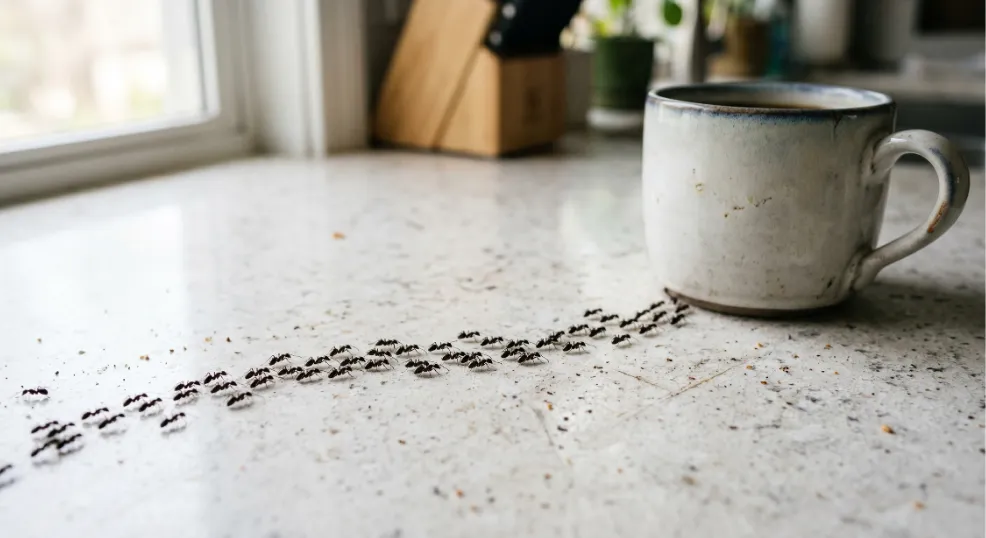
Look, we have all been there. You are making coffee one morning, and suddenly there is an ant highway across your kitchen counter. Or you flip on the bathroom light at 2 AM and a roach scurries under the baseboard.
My first instinct used to be grabbing the strongest chemical spray I could find at the hardware store. But after learning what is actually in those products, I knew there had to be a better, safer way. I was not about to let my rescue dog or my family breathe in toxic fumes just to kill a few bugs.
Natural pest control is about being smart with your budget and your home environment. Why expose your household to harsh chemicals when your pantry already holds powerful pest-fighting ingredients? I have spent the last few years testing every natural method to see what actually works.
Some of these solutions surprised me with their sheer effectiveness. Others required a bit of DIY tweaking to get right. Get ready to reclaim your space and keep your home pest-free without the toxic chemical cocktail.
Understanding Natural Pest Control
Traditional pesticides work by poisoning pests, which sounds great until you realize that poison does not discriminate. It can affect your pets, your indoor air quality, and even beneficial garden insects like bees. We need a smarter, more targeted approach to home maintenance.
Natural pest control uses substances that pests hate but that are completely safe for humans and animals. You are essentially making your home so unwelcoming to bugs that they choose to pack up and leave. No casualties required.
This approach also saves you a massive amount of money over time. A standard professional exterminator visit can easily run you $150 to $300 USD per treatment. If you are on the fence about switching, a deep dive into natural versus chemical pest control shows how eco-friendly methods protect your household while keeping your budget intact.
Setting Realistic Expectations
Patience is the biggest difference between chemical sprays and natural alternatives. Chemical aerosols kill instantly on contact, whereas natural methods work by gradually making your home inhospitable. You are tackling the root cause rather than just applying a temporary band-aid.
Ants usually respond to natural barriers within 3 to 7 days. Mice will avoid strong deterrents immediately, but humane trapping can take a couple of weeks to clear a family. Stick with your chosen DIY method for at least two solid weeks before deciding to switch tactics.
15 Natural DIY Pest Control Methods You Can Start Using Today
I have broken down my absolute favorite eco-friendly pest solutions below. These are the tried-and-true methods I use in my own home year-round.
1. Diatomaceous Earth: Your Secret Weapon
If I could only recommend one natural pest control product for your DIY toolkit, this would be it. Diatomaceous earth is a powder made from fossilized algae that feels like baking flour to us. However, it acts like microscopic broken glass to insects, cutting their exoskeletons and dehydrating them.
Sprinkle a paper-thin line of food-grade diatomaceous earth along baseboards, under appliances, and around exterior entry points. I like to upcycle an old ketchup squeeze bottle to puff it into tight cracks. This stuff works absolute wonders for ants, roaches, fleas, and silverfish.
Make sure you always buy food-grade diatomaceous earth, never the pool filter variety. Wear a basic dust mask when applying it so you do not irritate your lungs with the fine dust.
2. Peppermint Oil: The Mouse Deterrent
Who knew that the refreshing scent we love would send rodents running for the hills? Mice absolutely hate peppermint oil because it overwhelms their sensitive olfactory systems. I have tested this extensively in old, drafty houses with massive success.
Instead of wasteful cotton balls, cut up scrap fabric from old t-shirts into 2-inch (5 cm) squares. Soak these scraps in pure peppermint essential oil and tuck them near baseboards and inside dark cabinets. If you have cats, place these soaked scraps deep inside upper cabinets because concentrated essential oils can be toxic to felines.
3. Vinegar Solution: The Ant Eraser
White vinegar is pure kryptonite to ants invading your kitchen. It completely disrupts their pheromone scent trails, which is how they communicate and navigate. Without that trail, you get confused, lost ants who cannot find their way back to the colony.
Mix equal parts white vinegar and tap water in a 16 oz (473 ml) glass spray bottle. I always add about 10 drops of lemon essential oil to boost the effectiveness and cut the strong vinegar smell.
Spray this directly on ants to scatter them, then aggressively wipe down all surfaces where you saw activity. Pay special attention to windowsills, doorframes, and sticky countertops.
Read Next: How to Make Natural Ant Baits That Cost Pennies
4. Boric Acid Bait Stations
Boric acid is a naturally occurring mineral compound that is significantly safer than commercial roach aerosol sprays. Roaches simply cannot resist it, and they carry it back to wipe out the rest of their nest.
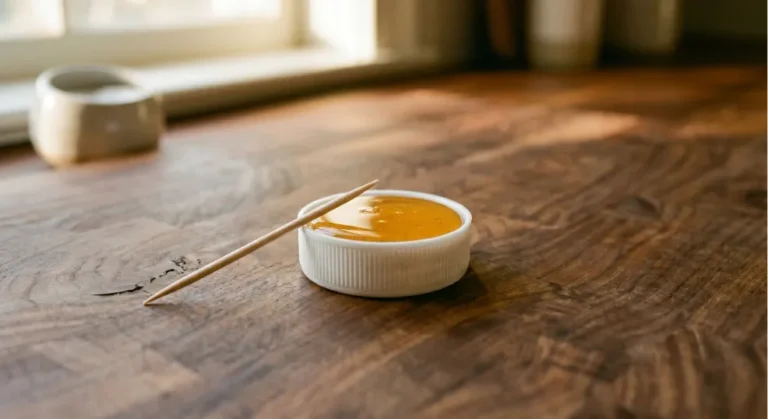
Mix 1 part boric acid powder with 1 part white sugar. Add just enough water to make a thick, spreadable paste. Smear pea-sized amounts onto upcycled thrifted bottle caps or scrap cardboard squares.
Place these DIY bait stations under sinks, behind the stove, and in deep bathroom cabinets. While low-toxicity to humans, keep these stations completely out of reach of curious dogs and cats.
5. Cucumber Peels: The Surprising Repellent
This one sounds a little crazy, but ants absolutely despise cucumbers. Bitter cucumber varieties contain compounds that naturally repel crawling insects. I discovered this trick while meal prepping when I noticed ants strictly avoiding my compost pile scraps.
Place fresh cucumber peels directly over known ant entry points along your floorboards. Replace them daily as they dry out and lose their potent scent. You can toss the old peels straight into your compost bin for zero waste.
6. Citrus Peel Spray
Do not throw away those leftover orange and lemon peels. They contain d-limonene, a natural compound that repels and kills many insects on contact. This is a brilliant scrap-busting project for your kitchen.
Steep your leftover citrus peels in a mason jar filled with white vinegar for two full weeks. Strain the liquid, then dilute it with equal parts water into a spray bottle. Spray this mixture around baseboards and anywhere spiders or ants like to enter.
7. Bay Leaves: The Pantry Protector
My grandmother swore by this old-school trick, and it has never failed me. Bay leaves naturally repel pantry pests like weevils, moths, and flour beetles.
Tuck whole dried bay leaves directly into your flour canisters, rice bags, and dry good storage bins. I also tape a few to the inside walls of my pantry cabinets. They last for several months before they lose their aromatic oils and need replacing.
8. Sticky Traps: The Simple Solution
Sometimes the simplest, low-tech ways are the absolute best for your budget. Sticky traps are non-toxic, highly affordable, and work around the clock to monitor flying pests.
Place them near your fruit bowls for fruit flies and along dark baseboards to catch roaming spiders. You can even make a DIY version by coating yellow scrap cardboard with a thin layer of corn syrup.
These traps serve as a fantastic early warning system for your home. If your trap suddenly fills up overnight, you know you need to seal up a new entry point.
9. Coffee Grounds: Outdoor Perimeter Defense
Used coffee grounds are the ultimate eco-friendly multi-tasker for your yard. They repel pesky outdoor bugs while simultaneously adding rich nitrogen back into your soil. I grab free bags of used grounds from my local coffee shop every week.
Sprinkle these dried coffee grounds around the entire exterior perimeter of your foundation. You can also dump them heavily into your garden beds and around patio seating areas. The strong caffeine scent masks the odors that normally draw pests to your home.
10. Neem Oil: The Garden Guardian
If you are dealing with aphids or spider mites on your house plants, neem oil is mandatory. It is derived from neem tree seeds and naturally disrupts the insect life cycle. Best of all, it will not harm beneficial pollinators like bees or ladybugs.
Mix neem oil concentrate with water in a 1 gallon (3.7 liters) garden sprayer according to the label. Spray it generously on plant leaves, around window screens, and on outdoor patio surfaces. Apply it consistently once a week during peak summer bug season.
11. Catnip: Cockroach Kryptonite
Scientific research shows that catnip is actually exponentially more effective at repelling cockroaches than synthetic DEET. It is an incredible natural deterrent that you can easily grow on your own windowsill.
Grow catnip plants in scrap-wood planters right next to your exterior doors. You can also steep dried catnip in hot water to create a potent bug-repelling room spray. Just be aware that your feline friends might roll all over your freshly treated baseboards.
12. Soap Spray: The Gentle Eliminator
A basic soap and water mixture breaks down the protective waxy coating on soft-bodied insects. I keep a bottle of this mixed up under my sink for immediate action when I spot stray bugs.
Mix 1 tablespoon of liquid castile soap with 1 quart (0.9 liters) of warm water. Pour it into a reusable spray bottle and shake gently. Spray this directly onto aphids, spider mites, or stray ants for immediate results.
13. Mosquito Dunks: The Standing Water Fix
Mosquitoes breed rapidly in standing water like bird baths, clogged gutters, and rain barrels. Mosquito Dunks are small rings of natural bacteria that kill larvae but remain 100 percent safe for birds and pets.
Simply drop one dunk into any area where rainwater collects around your property. Each organic dunk treats the water for about 30 days. Stopping mosquitoes at the source prevents hundreds of eggs from hatching in your backyard.
14. Caulk and Steel Wool: Entry Point Sealing
The absolute most effective pest control is physically locking them out of your house. Weatherproofing your home saves you money on heating bills while keeping the bugs outside where they belong.
Grab a caulking gun and walk around your exterior looking for foundation cracks or gaps around pipes. Stuff coarse steel wool tightly into any holes larger than 1/4 inch (6 mm) because mice cannot chew through metal. Seal over the steel wool with outdoor-grade silicone caulk to make it permanent.
15. Humane Traps: Catch and Release
For those of us who prefer not to harm local wildlife, humane traps are the perfect ethical solution. These small plastic chambers let you catch mice safely without dangerous spring mechanisms.
Bait the trap with a dab of peanut butter and check it twice a day. When you catch a mouse, drive it at least 1 mile (1.6 km) away from your house before releasing it. If you release them in your own backyard, they will beat you back to your kitchen.
How to Layer Your Pest Control Methods
Layering your DIY methods strategically is the absolute best way to protect your home. Creating distinct defense zones works much better than randomly throwing ingredients everywhere.
Always start with physical barriers first by sealing gaps with caulk and steel wool. Next, apply persistent deterrents like bay leaves in the pantry or diatomaceous earth behind the stove. Finally, use active liquid deterrents like citrus spray or vinegar for spot treatments on active bugs.
Make sure your methods do not cancel each other out. For example, never spray wet liquid deterrents over your diatomaceous earth. The moisture will cause the powder to clump up and become totally useless.
When to Call a Professional
DIY natural methods work incredibly well for early-stage problems and seasonal prevention. I have handled countless ant invasions and minor mouse problems entirely on my own using these exact techniques. However, there are times when you need to call for backup.
You should definitely call a professional if you start seeing nocturnal pests out during the daytime. You also need an expert for structural threats like termites or complex infestations like bed bugs. DIY is your first line of defense, but there is no shame in calling a pro for the heavy lifting.
Conclusion
Taking the natural route for pest control does not mean you have to sacrifice effectiveness. It simply means you are tackling the root causes of the infestation instead of just masking the problem with toxic sprays. The DIY methods we covered are significantly gentler on your family, your pets, and your local ecosystem.
Start by deep cleaning your space, sealing up those drafty entry points, and testing two or three of these natural deterrents. Staying consistent is the true secret to keeping the bugs out for good. Roll up your sleeves, prep your spray bottles, and enjoy the peace of mind that comes with a naturally pest-free home.