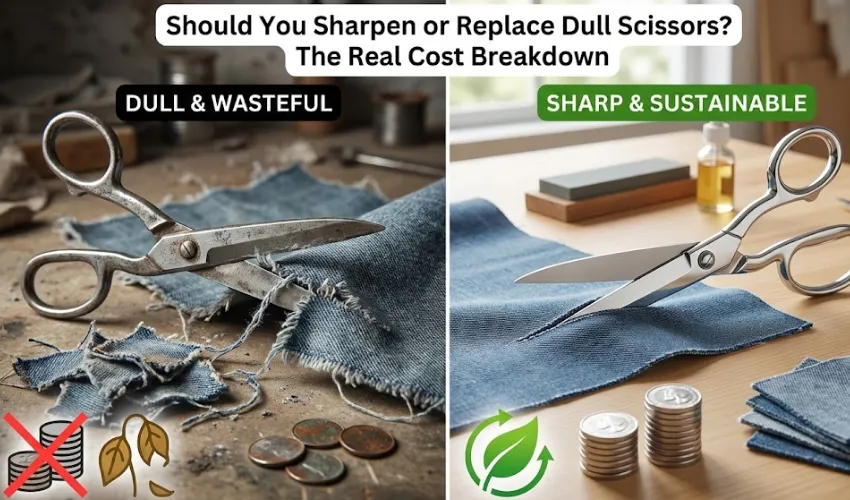
You’re mid-project when your scissors start chewing fabric instead of cutting it cleanly. Now you’re staring at a $15 sharpening quote and wondering if you should just grab a new pair for $8 instead. The math feels confusing, and you’re worried about wasting money either way.
This guide breaks down exactly when sharpening makes financial and practical sense versus when replacement is smarter. You’ll learn how steel quality, usage patterns, and environmental impact change the equation—so you can stop second-guessing and make the right call for your craft budget.
When Sharpening Actually Saves You Money
Mid-Range Tools Pay Off. If your scissors originally cost $30 or more, professional sharpening at $5–15 typically costs less than half of replacement. Quality sewing shears or fabric scissors fall into this sweet spot where maintenance beats buying new.
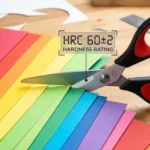
High-Quality Steel Matters. Scissors made from hardened stainless steel (around 58–60 HRC on the Rockwell scale) are specifically engineered for repeated sharpening. These blades can be restored 5–10 times over a 10–20 year lifespan without losing structural integrity.
Not all stainless steel is created equal. To ensure you’re buying tools that last, check out our guide on the best steel types for craft scissors that stay sharp longer.
Frequent Use Changes Math. Tools you reach for weekly—tailoring shears, dedicated craft scissors, kitchen shears—accumulate enough value over time that sharpening becomes clearly cheaper than serial replacement. A $40 pair sharpened three times costs roughly $85 total over 15 years, versus buying four $30 replacements at $120.
The Separable-Blade Advantage. Scissors with screw pivots (not rivets) can be fully disassembled for thorough sharpening along the entire edge. This design feature signals long-term serviceability and dramatically extends useful life compared to permanently assembled budget models.
When Replacement Makes More Sense
Ultra-Cheap Tools Hit Limits. Multipacks of plastic-handled office scissors priced at $3–5 per pair typically cost less than professional sharpening. If the scissors were only designed for occasional paper cutting, replacement is the pragmatic choice.
Structural Damage Ends Viability. Bent blades, loosened pivots, chips in the cutting edge, or visible cracks mean the tool has reached end-of-life. Sharpening can’t fix mechanical failures—you’re paying to restore a fundamentally compromised tool.
Soft Steel Refuses Edges. Lower-grade scissors using softer alloys (mid-50s HRC or below) dull rapidly and may deform during use. Even after professional sharpening, these blades lose their edge within weeks under fabric or cardboard stress, making repeated service pointless.
Local Access Problems. If professional sharpening requires shipping scissors both ways, you’re adding $8–12 in postage to a $10 service fee. For anything except premium tools, that logistics cost tips the balance toward local replacement.
The Cost Reality: Side-by-Side Comparison
| Factor | Sharpen Existing | Buy New |
|---|---|---|
| Upfront Cost | $5–15 per sharpening session | $3–8 (basic) / $30–150+ (quality) |
| Long-Term Value | Quality steel can be sharpened 5–10 times over 10–20 years | Cheap scissors may last 6–18 months; quality scissors match sharpened lifespan if maintained |
| Durability | Restores performance without removing much material when done correctly | Cheap steel loses edge quickly; premium steel offers long service if user maintains it |
| Eco-Impact | Reduces waste and manufacturing burden; cuts carbon footprint per use by ~20% | Frequent replacement increases metal consumption and landfill waste |
| Skill Required | Needs competent service or proper DIY tools and technique knowledge | Simple purchase decision; no technical skill beyond selection |
The Hidden Traps Most Crafters Miss
Bad Sharpening Ruins Tools Forever. Not all sharpening services understand scissor geometry. Knives and scissors require different angles and blade “set” (slight overlap). Generic knife sharpeners can grind away factory bevels, remove micro-serrations on specialty blades, or destroy alignment—permanently degrading performance worse than dullness.
The “Cheap But Often” Fallacy. Repeatedly buying $5 scissors every 8 months feels affordable in the moment, but totals $30 over four years. A single $35 pair with one $10 sharpening at year three costs $45 total—and you still own a functional tool. The psychology of small purchases masks the cumulative waste.
Ignoring Steel Quality Labels. Most packaging doesn’t advertise Rockwell hardness, but phrases like “high-carbon stainless steel” or “Japanese steel” signal better alloys. Conversely, unlabeled “stainless steel” on $4 scissors usually means soft metal that won’t hold edges regardless of sharpening frequency.
Budget vs. Longevity: The Final Verdict
For Immediate Budget Relief. Replace ultra-cheap, lightly-used scissors when sharpening would cost equal to or more than a new pair. If you’re cutting paper twice monthly with $3 office scissors, replacement at 18 months is rational.
For Long-Term Savings and Craft Performance. Sharpen any mid-range or better scissor ($25+) that still has solid pivot mechanics and straight blades. Quality steel sharpens cleanly, holds edges longer, and amortizes cost over years—typically saving 40–60% compared to serial replacement.
For Environmental Responsibility. Extending tool life through sharpening dramatically cuts manufacturing impacts. Producing cutting tools requires energy-intensive steel extraction and processing. Life-cycle assessments show repairable scissors reduce per-use carbon footprint by roughly one-fifth compared to disposable approaches.
Pro Tips From Materials Science
Test the Pivot First. Before paying for sharpening, open and close the scissors while watching the blades near the pivot point. They should glide smoothly without wobble or gaps. Loose pivot = sharpening won’t restore cutting performance.
Dedicate Scissors by Material. Keep separate pairs for fabric, paper, and tough packaging materials like cardboard or plastic. This single habit slows dulling on your expensive fabric shears by 60–70%, drastically reducing sharpening frequency and extending lifespan.
Look for Screw Pivots. When buying new scissors, choose models with visible screw assemblies rather than rivets. Separable blades allow full-length sharpening, proper cleaning, and realignment—turning a $40 purchase into a 15-year investment instead of a 3-year consumable.
Hardness Sweet Spot. For home and craft use, seek scissors in the 58–60 HRC range. Softer than 56 HRC dulls too quickly. Harder than 62 HRC becomes brittle and chips easily unless you’re doing professional work with controlled materials.
Conclusion
The Verdict. Sharpening wins for any scissors that originally cost more than double the sharpening fee, have solid mechanical structure, and see regular use. Replacement makes sense for structurally damaged tools, ultra-cheap office scissors, or situations where sharpening logistics cost more than buying local.
Your Next Step. Audit your scissor drawer right now: separate the quality tools worth maintaining from the disposable-grade ones. Invest sharpening budget in your best pairs, and replace the cheap ones guilt-free when they fail.
Keep Making. Still working on building your craft toolkit smartly? Check the Budget-Friendly Craft Tools section for more cost-effective material strategies that balance performance with long-term value.