
What Most Buyers Miss Before Clicking “Buy Now”
The Problem. You’ve fallen in love with that chunky jute rug or woven seagrass basket online, convinced it’s the healthier, eco-friendly choice over synthetic decor. But scroll through reviews and you’ll find horror stories: mold blooms after a single spill, mystery odors in humid months, allergy flare-ups despite promises of “hypoallergenic” fibers. The marketing says “natural equals safe,” yet something doesn’t add up.
The Promise. This guide cuts through the greenwashing to reveal exactly what makes natural fiber decor genuinely safe—and where it becomes a liability. You’ll learn which fibers handle moisture, stains, and indoor air quality best, why “natural” doesn’t always mean chemical-free, and how to choose pieces that won’t sabotage your health or wallet within six months.
What Actually Makes Natural Fibers “Safe” (And What Doesn’t)
Low VOC baseline—with major exceptions. Plant fibers like sisal, jute, seagrass, and coir naturally emit almost zero volatile organic compounds, making them vastly superior to petroleum-based synthetic carpets that off-gas for months. But here’s the catch: manufacturers often coat these fibers with stain guards, fire retardants, or UV sealants (like “sisal guard”) that reintroduce chemicals and reduce biodegradability. A truly non-toxic natural fiber rug will explicitly state “no added treatments” on the label.
Wool stands alone in the safety hierarchy. Unlike plant fibers, wool actively resists dust mites, bacteria, and mold thanks to its internal moisture-buffering structure and residual lanolin. Studies confirm wool rugs function as passive air filters, trapping airborne allergens in their fibers rather than releasing them back into the room. Wool is also self-extinguishing in fire—it chars instead of melting or dripping toxic fumes—without needing chemical flame retardants.
The backing matters more than the face fiber. A 100% jute or sisal rug sounds clean until you flip it over and discover synthetic latex adhesive, PVC backing, or mystery bonding agents. These components are the primary VOC sources in “natural” products. Look for jute, cotton, or natural latex backings to keep the entire system breathable and low-toxin.
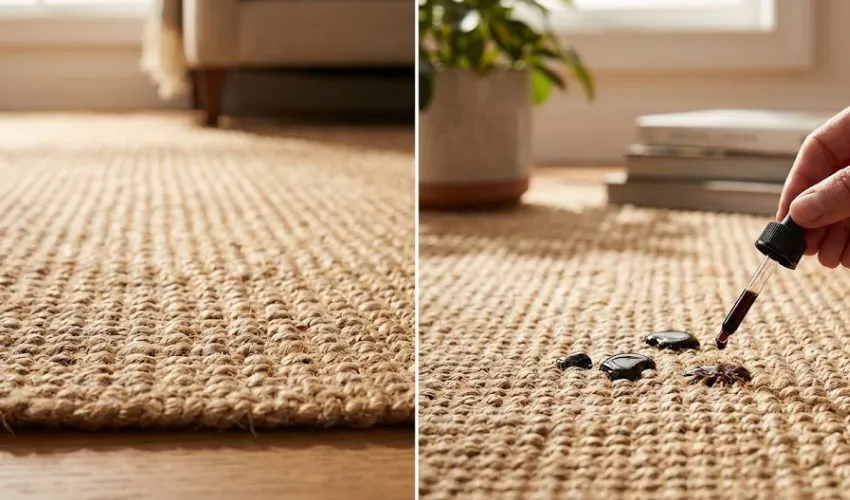
Moisture is the Achilles’ heel. All plant fibers—jute, sisal, coir, seagrass—absorb water readily. In bathrooms, basements, or humid climates above 50% relative humidity, they shrink, warp, and become mold incubators within weeks. This isn’t a defect; it’s botanical reality. Even wool, which handles moisture better, requires prompt drying after spills to avoid mildew in its backing layer.
The Fiber Comparison: Strengths, Weaknesses, and Real-World Costs
| Fiber Type | Durability (Years) | Cost (USD/ft²) | Water Resistance | Stain Resistance | Best Use Case |
|---|---|---|---|---|---|
| Jute | 5–10 | $2–5 | Poor (high absorption) | Low (sheds, stains easily) | Low-traffic bedrooms, layering rugs |
| Sisal | 10–15 | $3–7 | Moderate (still absorbent) | Moderate (coarse texture traps dirt) | High-traffic hallways, living rooms |
| Seagrass | 8–12 | $4–6 | High (non-porous surface) | High (naturally stain-resistant) | Kitchens, mudrooms, coastal homes |
| Wool | 20–50+ | $8–20+ | Moderate (buffers moisture) | Very High (lanolin repels liquids) | Any room; ideal for allergies & longevity |
| Coir | 5–10 | $2–4 | Moderate (coarse, drains fast) | Low (rough texture, hard to clean) | Entryways, outdoor-adjacent spaces |
Jute shines in temporary, dry applications. Its soft sheen and budget price ($2–5/ft²) make it perfect for layering under other rugs or decorating guest rooms. But expect shedding, water stains, and replacement within 5–10 years—not a “buy it for life” fiber.
Sisal balances durability and eco-credentials. At $3–7/ft², it outlasts jute by several years and handles foot traffic better. The coarse texture resists crushing but also traps crumbs and pet hair, demanding frequent vacuuming. Avoid sisal anywhere spills are routine.
Seagrass defies the “natural fiber = fragile” stereotype. Its smooth, non-porous surface naturally repels liquids and stains, making it the only plant fiber truly suitable for kitchens or kid zones. The trade-off: limited color options (always natural tan/green) since seagrass cannot be dyed.
Wool justifies the premium with decades of service. Yes, $8–20/ft² stings upfront, but wool rugs routinely last 20–50 years with proper care. The lanolin coating passively resists stains, the fiber self-extinguishes in fire, and its dust-mite resistance makes it the gold standard for asthma or allergy sufferers.
Three Myths That Trick Even Eco-Conscious Buyers
Myth #1: “Natural fiber automatically means hypoallergenic.” Any rug—natural or synthetic—becomes an allergen reservoir if you ignore cleaning and humidity control. Wool’s tight weave and anti-microbial properties do limit dust mites better than loose-weave jute, but a jute rug in a dry, vacuumed-weekly room outperforms a wool rug left damp in a 60% humidity basement. Fiber alone doesn’t override maintenance.
Myth #2: “All natural fiber decor is chemical-free.” Marketing loves the word “natural,” but dig into product specs and you’ll find synthetic latex backings, stain-proof coatings, and mothproofing insecticides. Brands like Armadillo & Co. and The Citizenry specifically advertise VOC-free, untreated sisal and seagrass—proof that such products exist but aren’t the industry default. Always check labels for backing material and treatment disclosures.
Myth #3: “Natural fiber rugs are fire hazards near fireplaces.” The opposite is true. Jute, sisal, seagrass, and wool all have inherently low flammability—they char or smolder rather than igniting into open flame. Synthetics like polypropylene or nylon melt at low temperatures and drip flaming plastic, making them far riskier around hearths. Standard precautions (fireplace screens, 3-foot clearance) make natural fibers perfectly safe.
When Natural Fiber Becomes a Mistake (And What to Use Instead)
High-moisture zones demand synthetic alternatives or seagrass only. Bathrooms, laundry rooms, and coastal basements will destroy jute or sisal within months. If you’re committed to the natural aesthetic, seagrass handles moisture best among plant fibers. Otherwise, “sisal-look” synthetic weaves from brands like Ruggable or Dash & Albert mimic the texture while tolerating spills, machine washing, and humidity without mold or warping.
Homes with severe allergies or asthma need wool—or nothing. Wool’s unique structure traps allergens instead of releasing them, functioning as a passive air purifier. For severe sensitivities, pair a 100% wool rug with jute or cotton backing (never synthetic latex) and vacuum twice weekly with a HEPA filter. If wool isn’t an option, skip rugs entirely in bedrooms and opt for hardwood or tile that can be damp-mopped daily.
Renters and pet owners should prioritize cleanability over eco-purity. Natural fibers stain permanently and cannot be steam-cleaned or machine-washed. A high-quality synthetic rug with recycled content (like FLOR carpet tiles) offers better spill management and can last 10+ years with pets, arguably matching the eco-footprint of a 5-year jute rug that ends up in a landfill after one red wine incident.
The lifespan loophole in “eco-friendly” claims. A heavily treated, short-lived jute rug marketed as “sustainable” often has a worse environmental profile than a 20-year wool rug, even if the wool required more energy to produce initially. Longevity multiplied by chemical load equals true eco-impact—not just the fiber source.
Eco-Impact Reality Check: When “Natural” Doesn’t Mean Green
Biodegradability hinges on treatments, not just fiber origin. Untreated sisal, jute, and wool decompose fully in 1–5 years in compost or landfill. Apply stain guards, fire retardants, or synthetic backings, and you’ve created a hybrid product that won’t biodegrade cleanly. Manufacturers rarely disclose treatment chemicals because they’re considered trade secrets—your clue is marketing language like “performance finish” or “spill-proof technology.”
Carbon footprint varies wildly by sourcing and transport. Jute grown in Bangladesh and shipped globally has a different footprint than wool from a regional farm 200 miles away. Seagrass harvested sustainably from coastal wetlands supports ecosystem health; sisal monocultures in East Africa can deplete soil if not rotated properly. “Natural” doesn’t automatically equal low-impact—supply chain transparency matters.
Disposal dilemmas at end-of-life. That “100% wool” rug with synthetic latex backing can’t go in compost or recycling. Most curbside programs reject textile blends, forcing disposal into general waste. Truly circular natural fiber products use compostable backings and zero treatments, allowing you to literally bury them in your garden when worn out. This level of purity is rare and expensive but represents the true eco-ideal.
Budget Reality: What You Pay Now Versus Five Years From Now
The $200 jute rug might cost $1,000 over a decade. At $2–5/ft², jute tempts budget shoppers—but replacing it every 5 years in a high-traffic room means buying two or three rugs over the lifespan of one $600 wool rug. Add in the frustration of permanent stains and mold remediation, and the “cheap” option often becomes the expensive mistake.
Wool is the BIFL (Buy It For Life) investment. Quality wool rugs from brands like Restoration Hardware, Hook & Loom, or vintage Moroccan sources cost $8–20/ft² but last 20–50 years with basic care (vacuum weekly, spot-clean immediately, professional deep-clean every 3–5 years). Amortized over decades, wool often costs less per year than replacing synthetic or jute rugs repeatedly.
Seagrass offers the best performance-per-dollar in plant fibers. At $4–6/ft² with 8–12 year lifespans, seagrass bridges the gap between jute’s fragility and wool’s premium. It’s the smart middle ground for families wanting natural aesthetics without wool’s upfront cost or jute’s maintenance headaches.
Hidden costs in “cheap natural fiber” products. Heavily coated sisal or jute rugs priced suspiciously low often use the cheapest stain guards and synthetic backings, which off-gas VOCs and fail within 2–3 years. You’re paying for chemicals that undermine the health benefits you bought natural fiber to achieve. Better to spend $50 more on verified untreated fiber than save money on a toxic hybrid.
Key Takeaways: Your Natural Fiber Decision Matrix
Choose wool if: You have allergies, asthma, or young children; you want a 20+ year investment; your home stays under 60% humidity; you value fire safety and air quality above all else.
Choose seagrass if: You need natural aesthetics in kitchens, mudrooms, or coastal areas; you want stain resistance without chemicals; you’re okay with limited color choices (natural tan/green only).
Choose sisal if: You have dry, high-traffic areas like hallways or living rooms; you vacuum religiously; you want the look of natural fiber at mid-range prices and are prepared for coarse texture.
Choose jute if: You’re layering rugs, decorating temporary spaces, or want soft texture in low-traffic bedrooms; you accept 5–10 year lifespans and avoid liquids entirely.
Skip natural fiber if: Your home has chronic moisture issues (basements, bathrooms); you have pets that vomit or have accidents; you rent and need machine-washable options; you prioritize stain removal over eco-credentials.
The expert label-reading hack. Flip the rug over or check the product page for three details: face fiber (100% wool/sisal/jute), backing material (jute, cotton, natural latex—not synthetic), and treatment disclosures (look for “no added stain guards or flame retardants” or eco-certifications like GOTS or OEKO-TEX). If any of these are vague or missing, assume chemical treatments and synthetic components that undermine both health and biodegradability claims.
The Verdict: Natural Fiber Is Safe—When Matched to Reality
Natural fiber home decor delivers on its safety and eco-promises only when you match the fiber to your environment and lifestyle. Wool earns its reputation as the healthiest, most durable option for most homes, justifying premium prices through decades of service and genuine allergen resistance. Seagrass offers the best plant-fiber performance in moisture-prone or high-spill areas. Jute and sisal shine in dry, low-traffic spaces but become liabilities in humid or active households.
The real danger isn’t the fiber—it’s the mismatch. A jute rug in a basement bathroom isn’t “unsafe” because jute is toxic; it’s unsafe because mold growth in absorbent fibers creates respiratory hazards. A heavily treated “stain-proof” sisal rug isn’t eco-friendly just because sisal is a plant; the chemical coatings negate the natural fiber’s benefits.
Smart buying means reading labels, managing moisture, and thinking in decades, not décor trends. A $600 wool rug you vacuum weekly and keep dry will outlast and outperform three $200 jute rugs destroyed by spills and humidity. That’s not just better for your health and budget—it’s genuinely more sustainable.
Still weighing your options? Explore our Green Home Decor section for step-by-step guides on maintaining natural fiber textiles, identifying truly non-toxic certifications, and styling eco-materials in every room of your home without compromising function or budget.