
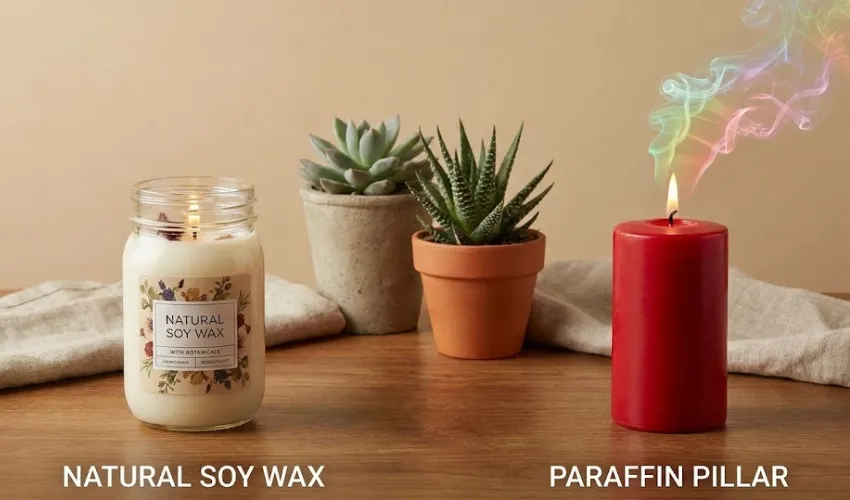
The confusion is real. You’re standing in the craft aisle, staring at two bags of wax, wondering if the extra $2 per pound for soy is worth it—or if it’s just clever marketing. YouTube gurus swear soy burns “cleaner,” but your neighbor’s paraffin candles smell incredible and cost half as much. Which one actually deserves your time and money?
Here’s the truth: Soy wax does offer legitimate eco-advantages over paraffin through renewability and biodegradability, but the “cleaner burn” claim is wildly overstated. Both waxes emit similar volatile organic compounds (VOCs) when properly wicked, and soy’s production carries hidden environmental costs like deforestation and pesticide runoff. This guide cuts through the greenwashing to show you exactly when each wax wins—and where the industry has been lying to you.
What Actually Makes Soy Wax “Eco-Friendly” (And Where It Falls Short)
Renewable Source. Soy wax comes from hydrogenated soybean oil, making it a plant-based, annually renewable resource rather than petroleum-dependent. This biological origin allows it to biodegrade in soil within weeks compared to paraffin’s decades-long persistence.
Lower Lifecycle Carbon—With Caveats. Soy cultivation does sequester carbon during growth, giving it a theoretical edge over paraffin’s fossil fuel extraction. But here’s the catch: industrial soy farming drives deforestation in South America, and conventional crops rely heavily on glyphosate pesticides and synthetic fertilizers that contaminate waterways.
The Soot Myth Debunked. Laboratory testing shows both soy and paraffin produce black carbon particulates when burned. The difference? Properly wicked paraffin candles emit identical VOC levels to soy—the real culprit is oversized wicks, not the wax itself. That “black smoke” you’ve seen from cheap paraffin candles comes from poor wick selection, not inherent toxicity.
Biodegradability Advantage. Spill soy wax on your tablecloth? Hot water and soap remove it completely because plant oils break down naturally. Paraffin requires solvents or scraping, and its microplastic residues persist in landfills indefinitely.
Cost Reality: Why Paraffin Dominates Mass Production
Price Gap You Can’t Ignore. Paraffin costs $1-2 per pound wholesale, while soy ranges $2-4 per pound—a 50-100% markup that compounds rapidly for small-batch makers. For a 100-candle production run, you’re looking at $100-150 in material costs for paraffin versus $200-300 for soy.
Production Efficiency. Paraffin’s petroleum refining infrastructure has been optimized for over a century, delivering consistent quality at scale. Soy wax requires agricultural land, seasonal harvest cycles, and hydrogenation processing that inherently costs more energy and resources per pound.
The Premium Positioning Trade-Off. Soy’s higher cost forces you into premium pricing ($15-25 per candle), which works brilliantly for eco-conscious markets but alienates budget shoppers. Paraffin allows $8-12 retail prices that move faster in mass-market channels.
Performance Breakdown: Scent Throw vs Burn Time
Fragrance Load Capacity. Paraffin accepts 10-12% fragrance oil loads without sweating or separation, delivering that powerful “walk into the room” scent throw customers crave. Soy maxes out at 6-10% before oils pool on the surface, resulting in subtler fragrance diffusion.
Burn Duration Winner. An 8-ounce soy candle burns 40-50 hours compared to paraffin’s 35-45 hours—a 15-30% longevity advantage that justifies higher upfront costs when you market it correctly. Soy’s lower melting point (120-130°F vs paraffin’s 130-150°F) creates slower, more complete wax consumption.
Cure Time Frustration. Soy demands 1-2 weeks of curing for fragrance molecules to fully bind with wax polymers, while paraffin is shelf-ready in 24-48 hours. This delays inventory turnover and complicates made-to-order craft sales.
Temperature Stability. Paraffin maintains shape in hot climates where soy softens or collapses. If you’re shipping candles to Arizona in July or selling at outdoor summer markets, paraffin’s structural integrity prevents customer complaints.
The Hidden Challenges: Frosting and Wick Discipline
Soy’s Aesthetic Flaw. Those white crystalline spots (frosting) appear on soy candles due to natural polymorphism in soybean oils—the wax re-crystallizes as it cools, creating texture that looks like mold to uninformed customers. It’s completely harmless but ruins the premium appearance you’re charging extra for.
Preventing Frosting Requires Expertise. You’ll need to control pour temperature (110-120°F), add stabilizing additives like vybar, or blend 20-30% paraffin to minimize crystallization. Beginners who skip these steps end up with unsellable inventory.
Paraffin’s Wick Trap. The “toxic paraffin” narrative stems from overwicked candles producing incomplete combustion byproducts like toluene and benzene. Use the correct wick size for your vessel diameter, and paraffin’s emissions match soy’s—but the damage to paraffin’s reputation has already been done by decades of misinformation.
Soy’s Wick Finickiness. Soy’s softer composition requires precise wick testing across every fragrance oil blend. A wick that works perfectly in unscented soy might tunnel or mushroom when you add vanilla fragrance at 8% load. Paraffin forgives wick mistakes more readily.
Key Takeaways: Comparison Matrix for Candle Makers
| Factor | Soy Wax | Paraffin Wax |
|---|---|---|
| Cost | $2-4/lb; premium positioning required | $1-2/lb; mass-market pricing enabled |
| Burn Duration | 40-50 hours per 8oz; 15-30% longer | 35-45 hours per 8oz; faster consumption |
| Scent Throw | 6-10% fragrance load; subtle diffusion | 10-12% fragrance load; powerful room-filling scent |
| Eco-Credentials | Renewable, biodegradable; BUT deforestation/pesticide concerns | Petroleum-based, non-biodegradable; refined efficiently at scale |
| Cure Time | 1-2 weeks for optimal scent binding | 24-48 hours; faster production cycles |
| Temperature | Softens in heat; poor for hot climates/shipping | Maintains structure in high temps |
| Beginner-Friendly | High learning curve; frosting issues, wick sensitivity | Forgiving; consistent results with basic technique |
| Consumer Appeal | “Natural” label commands 30-50% price premium | Budget-friendly; strong scent drives repeat purchases |
When to Choose Soy: Eco-Branding and Longevity
Container Candle Perfection. Soy’s excellent glass adhesion prevents pull-away as the candle cools, making it ideal for mason jar candles, vintage teacups, or any vessel where wax-to-container contact matters. Paraffin often separates from glass sidewalls, creating unsightly gaps.
The “Natural” Marketing Edge. If your brand identity centers on sustainability—think farmers’ market booths, eco-gift shops, or Instagram accounts with #zerowaste hashtags—soy justifies premium pricing through authentic green credentials. Customers paying $22 for a candle expect plant-based ingredients.
Longer Burn = Better Value Story. Market soy’s 40-50 hour burn time as “50% more candlelit evenings per purchase.” This reframes the higher price as superior value rather than expense, especially for gift-buyers seeking quality over quantity.
Fragrance-Forward Crafts. Despite lower scent throw, soy excels with essential oil blends where subtlety is preferred—lavender for bedrooms, eucalyptus for spas. The gentler diffusion feels more “natural” and less chemically overwhelming than paraffin’s aggressive throw.
When to Choose Paraffin: Budget and Performance
Mass Production Scalability. If you’re supplying candles to 20+ retail locations or running high-volume holiday craft fairs, paraffin’s lower cost and faster cure time enable profitable scaling that soy’s economics can’t match.
Scent Maximization Projects. Votives, tealights, and small-format candles need concentrated fragrance in limited wax volume. Paraffin’s 10-12% load capacity delivers the “wow” factor that makes customers buy three scents instead of one.
Hot Climate Logistics. Shipping candles to Florida, Texas, or international warm-weather markets? Paraffin withstands transit temperatures that would liquify soy. This eliminates costly replacements and negative reviews.
Beginner-Friendly Learning. New candle makers should master paraffin’s forgiving nature before tackling soy’s cure times and frosting issues. The lower material cost cushions expensive beginner mistakes.
Eco-Impact: The Uncomfortable Truth About “Green” Wax
Soy’s Deforestation Problem. Global soy demand has cleared millions of acres of Amazon rainforest and Cerrado savanna. Unless your supplier certifies deforestation-free sourcing (rare in craft-grade wax), your “eco-friendly” candles contribute to habitat destruction and carbon release that negates their renewable advantage.
Pesticide Runoff Reality. Conventional soy production uses neonicotinoid pesticides linked to bee colony collapse and atrazine herbicides that contaminate drinking water. Only USDA Organic certified soy wax avoids these impacts—and it costs $5-7 per pound, pricing most crafters out entirely.
Paraffin’s Efficient Refinement. Modern petroleum refining captures 99.5% of process emissions, and paraffin represents upcycling of crude oil byproducts that would otherwise go to lower-value uses. The “drill-refine-ship” supply chain is energy-intensive but logistically streamlined.
The Hybrid Solution. Many commercial candle makers blend 70% soy with 30% paraffin to capture soy’s marketing appeal and burn time while improving scent throw and reducing frosting. This compromise satisfies eco-conscious buyers without sacrificing performance.
Budget Reality: What the Price Difference Actually Means
Break-Even Analysis for Small Batches. A 100-candle production run costs $100 in paraffin wax versus $300 in soy. To maintain 60% profit margins, you’d price paraffin candles at $10 retail and soy at $18—but can your local market support that $8 gap?
The Premium Positioning Requirement. Soy forces you into boutique markets where customers value sustainability narratives over price. This works beautifully at yoga studios and eco-boutiques but flops at craft fairs where shoppers comparison-shop on price alone.
Material Cost as Percentage of Retail. Professional candle makers target 20-25% material costs (wax, fragrance, vessel, wick, label). Soy’s higher wax cost pushes you toward 30-35% unless you raise prices—squeezing profit margins or requiring higher sales volume to compensate.
The Longevity Offset. Soy’s 40-50 hour burn time lets you market “costs less per hour of use” even at higher price points. A $20 soy candle burning 45 hours costs $0.44/hour versus a $12 paraffin candle burning 38 hours at $0.32/hour—not as dramatic as sticker price suggests.
Professional Techniques: Hydrogenation Levels and Wick Mastery
Iodine Value Matters. Fully hydrogenated soy wax (Iodine Value 10-20) resists frosting and softening far better than partially hydrogenated varieties (IV 30+). Check technical data sheets before bulk purchasing—low-IV soy eliminates beginner headaches.
The 8% Fragrance Load Sweet Spot. Soy performs optimally at 8% fragrance oil by weight. Lower loads underwhelm; higher loads cause sweating and wick clogging. Paraffin tolerates 10-12% consistently, giving you more creative freedom with complex scent blends.
Wick Testing Protocol. Burn test every wax-fragrance-vessel combination for 4+ hours. Soy needs cotton or wood wicks sized down from paraffin recommendations; zinc-core wicks often cause tunneling in soy but work perfectly in paraffin.
Temperature Control Precision. Pour soy at 110-120°F to minimize frosting and adhesion problems. Paraffin tolerates 150-170°F pours without issue. This means soy requires more attentive thermometer monitoring during production.
The Honest Verdict: Matching Wax to Your Craft Goals
Choose Soy If: Your brand identity emphasizes sustainability, you’re targeting eco-conscious consumers willing to pay premium prices, or you value longer burn times for gift-quality candles. The higher upfront cost pays off when your marketing leverages “plant-based” and “biodegradable” messaging that resonates with your audience.
Choose Paraffin If: You prioritize strong scent throw, need budget-friendly production for high-volume sales, or ship candles to warm climates. The cost efficiency enables competitive pricing that captures mass-market sales, and the forgiving nature speeds up your production learning curve.
The Hybrid Strategy. Blend 70-80% soy with 20-30% paraffin to split the difference—you preserve “soy candle” labeling (most regions allow blends up to 51% soy), reduce frosting, improve scent throw, and cut material costs by 15-20%. This pragmatic approach satisfies both performance and positioning needs.
Bottom Line. Soy wins longevity and consumer perception for eco-crafts if you’re prioritizing marketing and burn time over pure performance. Paraffin dominates on cost, scent strength, and beginner accessibility. Neither is “toxic” when properly wicked—the “clean burning” debate is 90% marketing and 10% measurable difference. Your choice should align with your target customer’s values and willingness to pay, not absolutes about environmental virtue.
Still exploring sustainable craft materials? Check out our Eco-Friendly Craft Supplies collection for natural wick alternatives, upcycled vessels, and organic fragrance oils that complete your green candle-making setup—or browse Budget DIY Hacks if you’re ready to master cost-effective production techniques that work with either wax type.