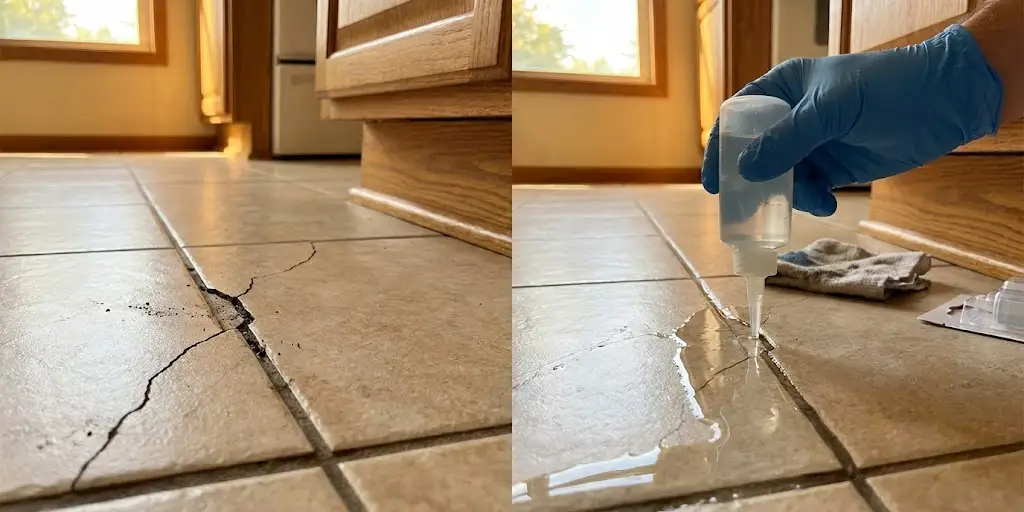
The Panic Moment. You’re staring at a cracked tile in your bathroom or kitchen, calculator in hand, dreading the contractor estimate. The internet promises “$5 fixes” with mystery fillers, but you’re wondering: will these cheap solutions release toxic fumes? Will they crumble in a week? Could they actually make things worse?
Here’s What You’ll Learn. This guide cuts through the marketing hype to reveal exactly which budget crack fillers are genuinely safe for indoor use, which ones require serious precautions, and when a cheap cosmetic patch becomes a legitimate safety hazard. We’re talking real VOC data, curing requirements, and the hidden substrate problems that no filler can solve.
What Makes Tile Crack Repair “Safe” (Or Dangerous)
VOC Levels Are Your First Checkpoint. Volatile Organic Compounds determine how much chemical off-gassing you’ll breathe during and after application. Many budget crack fillers marketed for concrete and cementitious surfaces are water-based with very low VOC ratings, making them safer for small spaces with limited ventilation. In contrast, some epoxy systems advertise “0 g/L VOC” because they’re 100% solids formulations—no solvents evaporating into your air.
Chemical Composition Demands Protection Regardless. Even zero-VOC products aren’t harmless. Epoxy hardeners typically contain amines and related compounds that cause skin burns and eye irritation on direct contact. Water-based crack pastes, despite their eco-friendly labels, still require rubber gloves and safety goggles according to technical safety sheets. The “low-VOC” label addresses air quality, not skin safety.
Working Conditions Create the Real Risk Profile. Epoxy repair resins typically require temperatures between 10°C–35°C (50°F–95°F) for proper curing, with working times of just 15–20 minutes before they become unworkable. Poor ventilation during this window concentrates any fumes, while rushing the process without eye protection invites chemical splashes. Light foot traffic is usually safe after 4–6 hours at 75°F, but full chemical cure takes longer.
The Three Main Budget Filler Categories (And Their Trade-Offs)
Epoxy Repair Resins & Putties
Maximum Durability, Maximum Precautions. These are 100% solids formulations designed for structural concrete repairs that also work brilliantly on ceramic tile cracks. They’re non-porous, resist shrinkage, and handle chemical exposure and moisture better than any alternative—making them ideal for wet areas like bathrooms and kitchens.
The Safety Reality. While VOC levels hit 0 g/L in many formulations, the hardener component contains aggressive amines. You absolutely need:
- Chemical-resistant gloves (nitrile minimum)
- Safety goggles with side shields
- Adequate cross-ventilation during mixing and application
- Strict adherence to 15–20 minute working windows
Best For: Stable, well-bonded tiles in high-moisture or heavy-traffic zones where long-term performance justifies the handling precautions.
Water-Based Crack-Fix Pastes (Cement-Acrylic Hybrids)
Flexibility Meets Lower Toxicity. Marketed as flexible, UV-resistant solutions for cementitious cracks, these pastes accommodate minor substrate movement that would crack rigid epoxies. Their water-based formulation earns “very low VOC” and “eco-friendly” labels that reflect genuine improvements in indoor air quality during application.
The Catch. Lower chemical aggression doesn’t mean zero precautions—rubber gloves and goggles remain mandatory. More critically, these pastes are designed for slight movement in cement-based layers, not for bridging major structural gaps or bonding debonded tiles back to subfloors.
Best For: Hairline cracks in stable ceramic tiles over solid substrates, especially in homes with children, pets, or ventilation challenges.
Cement or Cement-Grout Based Fillers
Rock-Bottom Pricing, Ongoing Maintenance. Standard cement grouts cost less than specialized fillers but arrive with porosity problems. They absorb water, stains, and moisture unless sealed—a critical issue in wet areas where hygiene matters and where moisture infiltration can damage substrates beneath the tile.
The Maintenance Tax. Budget cement fillers typically require resealing every 1–2 years to maintain water and stain resistance. Skip this maintenance, and you’re inviting discoloration, mildew growth, and potential substrate damage that costs far more than the initial savings.
Best For: Dry-area cosmetic repairs where you’re planning a full renovation within 2–3 years anyway.
Key Takeaways: Comparison Table
| Filler Type | VOC Level | Durability | Moisture Resistance | PPE Required | Best Use Case |
|---|---|---|---|---|---|
| Epoxy Resins | 0 g/L (100% solids) | Excellent | Excellent (non-porous) | Gloves, goggles, ventilation | Wet areas, high-traffic floors |
| Water-Based Pastes | Very Low | Good | Moderate (needs sealing) | Gloves, goggles | Hairline cracks, sensitive spaces |
| Cement Grouts | Low | Fair | Poor (highly porous) | Gloves recommended | Dry areas, temporary fixes |
When “Cheap” Becomes Actually Dangerous
Cosmetic Fixes Don’t Address Structural Problems. If your tile sounds hollow when tapped, moves underfoot, or sits over a flexing substrate, no filler—cheap or expensive—will solve the underlying issue. Filling visible cracks in debonded or hollow tiles creates a false sense of security while the real problem worsens beneath the surface.
Tripping Hazards From Failed Patches. Rigid epoxy patches applied over moving substrates will eventually crack and break loose, creating sharp edges that pose legitimate injury risks. Professional guides explicitly warn that crack fillers are “appearance repairs” only—they don’t rebond tiles or stabilize substrates.
The Substrate Investigation. Before applying any filler:
- Tap the Tile. A hollow sound indicates debonding from the subfloor
- Check for Movement. Press firmly—stable tiles shouldn’t flex or shift
- Inspect Adjacent Tiles. Multiple cracks suggest substrate settlement or structural issues
If you detect any of these problems, a cosmetic crack fill becomes a Band-Aid on a wound that needs stitches.
Budget Reality: Matching Material to Problem
Hairline Cracks on Stable Tiles (Under $10 Solution). Water-based cement-acrylic pastes offer the best safety-to-performance ratio for minor cosmetic repairs. Their flexibility accommodates the slight thermal expansion differences between ceramic glazing and cement substrate without re-cracking, while low VOC formulations protect indoor air quality in smaller homes.
Working Cracks in Wet Areas ($15–$25 Solution). Targeted 100% solids epoxy kits with detailed cure schedules and chemical resistance data balance durability with indoor air quality concerns when used with proper PPE. The 0 g/L VOC rating addresses air pollution, while gloves and goggles handle the contact hazards from amine-based hardeners.
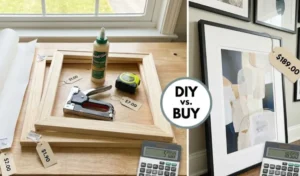
The Real Cost Calculation. A $5 cement grout filler requiring $8 sealer reapplication every 18 months costs more over five years than a $20 epoxy application that lasts the lifetime of the floor. Factor in your time, the hassle of repeat repairs, and potential moisture damage from failed seals.
Eco-Impact & Indoor Air Quality Truth
“Zero-VOC” Doesn’t Mean “Zero-Chemical.” Marketing teams love the eco-friendly angle, but technical reality is more nuanced. A 100% solids epoxy releases no solvents into your air (0 g/L VOC), yet the hardener chemistry remains aggressive enough to burn skin on contact. Conversely, water-based pastes with “very low VOC” ratings still contain chemical irritants requiring gloves.
Ventilation Strategy Matters More Than Label Claims. For any crack filler application:
- Cross-Ventilation. Open windows on opposite sides of the room during application and initial cure (first 4–6 hours)
- Mechanical Assistance. A box fan exhausting out a window accelerates air exchange in bathrooms or small spaces
- Timing. Apply fillers when you can vacate the space for 6+ hours, especially with pets or children in the home
Disposal Considerations. Epoxy waste is hazardous—hardened materials go to household hazardous waste facilities, not regular trash. Water-based pastes typically allow cleaned tools to go down the drain while wet, but check local regulations.
The Myths Costing You Money and Safety
Myth 1: Any General Epoxy Works the Same. Hardware store “5-minute epoxy” isn’t formulated to bridge working cracks or bond long-term to ceramic and cementitious surfaces. Structural or deck epoxies are specifically engineered to fill, bridge, and seal small moving cracks in stone, concrete, and masonry—the chemistry is fundamentally different.
Myth 2: A Good Fill Fixes the Problem Permanently. If the tile is hollow, debonded, or the substrate is moving, filling the visible crack addresses aesthetics, not the cause. Professional repair guides explicitly classify these as “appearance repairs” where the tile or floor eventually needs rebonding or replacement.
Myth 3: Low-VOC Means No Safety Gear Needed. Water-based, low-VOC crack pastes earn their eco-friendly labels through reduced air pollution, yet technical sheets still mandate gloves and safety goggles. These are chemicals engineered to bond tenaciously to mineral surfaces—treat them with appropriate respect, not as harmless craft materials.
Conclusion: The Verdict on Safe Budget Repairs
Hairline and Small Cracks Are Safely DIY-able. Clear epoxy or water-based tile repair fillers can stabilize minor cracks effectively and safely when you use gloves, eye protection, ensure ventilation, and respect curing times. The key word is “stabilize”—you’re preserving the current state, not reversing substrate problems.
Substrate Issues Require Professional Assessment. Structural or wide cracks, especially in floor tiles showing movement or hollow sounds, indicate problems no filler can solve. Cosmetic patches in these situations waste money and potentially create tripping hazards when they inevitably fail.
The Budget Sweet Spot. For most indoor DIY repairs in sensitive spaces, low-VOC water-based crack pastes for cementitious surfaces offer the best balance of safety, cost, and performance. They’re designed for flexibility with very low VOC and good UV resistance, making them ideal budget choices for interior patch jobs with only slight movement. For wet areas or high-traffic zones over stable substrates, invest in targeted 100% solids epoxy kits with proper PPE—the durability justifies the extra cost and precautions.
Ready to Tackle More Home Fixes? Check our DIY Home Repairs category for practical projects that stretch your budget without compromising safety or quality.