A drink tips over, and your shirt takes the hit. The next few minutes decide whether that mark washes out or stays forever. These DIY stain removal methods use cheap household items from your kitchen and laundry room. Each technique relies on basic chemical reactions to break down dirt without ruining your favorite garments.
Four Ground Rules for Fabric Care
Every spot treatment requires a safe approach to protect the material. Skip these guidelines and you risk spreading the mess or permanently damaging the threads.
Blot Instead of Rubbing
Friction pushes soils deeper into the garment fibers. Rubbing also damages the texture and fuzzes the fabric surface. Always press down gently to lift the moisture away.
Use a Clean White Cloth
Colored rags can transfer loose dye onto the exact spot you want to clean. A plain white towel guarantees no accidental color bleeding happens during the process.
Test a Hidden Area First
Dab your chosen cleaning solution on an inside seam before applying it to the main fabric. Wait a few minutes to check for any unexpected color fading or physical damage.
Keep Heat Away
Heat sets stains permanently into the material. Keep irons and clothes dryers far away until the fabric looks completely clean.
Your Quick Reference Spot Treatment Table
Different household cleaners target specific types of spills. Match the cleaning agent to the stain type rather than guessing.
| Household item | Best for | Avoid on |
| Dish soap | Grease, oil, food, coffee | Nothing in particular, but rinse well |
| Laundry detergent | General pre-treating | Delicates labeled hand-wash only |
| White vinegar (diluted) | Coffee, sweat odor, some drink stains | Natural stone, some delicate fabrics |
| Baking soda | Absorbing oil, light odors, sweat marks | Dark fabrics if left to dry as powder |
| Hydrogen peroxide (3%) | Blood, light-colored fabrics | Colored or dark fabrics, which can fade |
| Club soda | Fresh spills on carpet and clothes | Old, dried stains |
| Salt | Soaking up fresh liquid spills | Wool and silk |
| Enzyme cleaner | Blood, pet urine, sweat, dairy | Silk and wool, unless the label allows it |
12 Proven Hacks for Common Household Stains
Fast action prevents foreign substances from bonding with your clothes and carpets. These steps break down the grime so water can flush it away safely.
1. Apply Dish Soap for Oil and Grease
Dish soap easily breaks apart heavy grease molecules on your clothing. Work a single drop into the affected area with your fingertip. Let the soap sit for a few minutes to loosen the oils. Rinse the spot with cold water and check your progress before washing the garment.
2. Flush Fresh Spills With Cold Water
Cold water safely handles most unknown spills without locking them into the fabric threads. Scrape off any solid pieces with a spoon first. Hold the fabric face down under a running faucet so the water pushes the spill back out the way it entered.
3. Pre-Treat Fibers With Heavy-Duty Laundry Detergent
Liquid detergent features concentrated ingredients designed to lift heavy soil from fibers. Rubbing a small amount directly onto the dirty spot gives those cleaning agents a head start. Let the detergent sit for a few minutes before washing the item according to the care label.
4. Lift Coffee Spills From Clothes and Carpet
Coffee marks disappear much faster when you treat them immediately. Blot up the excess liquid and rinse the fabric with cold water. Work a little dish soap or a diluted white vinegar solution into the fibers before washing. For carpets, blot continuously with a white cloth until no more brown color transfers over.
5. Extract Grease Stains Using Baking Soda
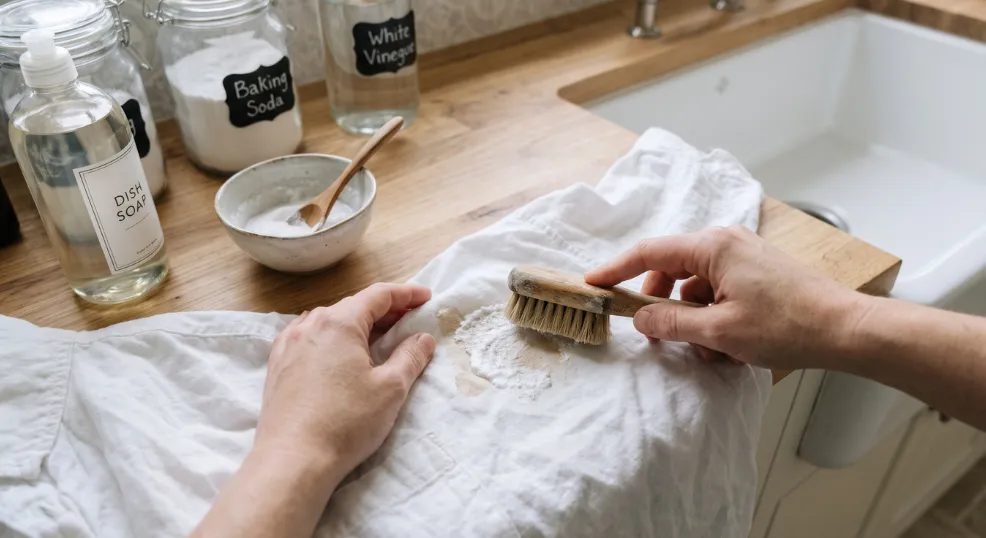
Heavy grease requires you to absorb the moisture before breaking down the residue. Sprinkle baking soda or cornstarch directly onto the spot to pull the oil up from the material. Brush the dry powder away, rub dish soap into the remaining mark, and wash the item normally.
6. Remove Red Wine From Carpet Padding
Never scrub red wine because the pressure forces the liquid deeper into your carpet padding. Press a dry white cloth over the spill to lift the moisture, swapping to clean sections frequently. Dab the area with club soda or cold water, followed by a mild dish soap solution. Wet the carpet fibers as little as possible to prevent a musty smell from developing in the backing.
7. Dissolve Ballpoint Ink With Rubbing Alcohol
Rubbing alcohol quickly loosens ballpoint ink on colorfast fabrics. Place a clean towel directly underneath the fabric so the dissolving ink has a place to drain. Dab alcohol onto the surface with a cotton ball, swapping to a fresh one as it absorbs the dye.
8. Clear Sweat Rings With a Baking Soda Paste
Sweat leaves stubborn protein marks and yellow rings on light-colored shirts. Mix baking soda and water into a thick paste and spread it over the discolored area. Let the paste sit for a while to absorb the grime before washing the garment in cold water. Heavy marks on white cotton may require a dedicated enzyme cleaner to break down the proteins completely.
9. Wash Away Blood Stains With Cold Water
Hot water instantly sets blood into fabric fibers. Always run cold tap water over the spot from the back side of the material until the redness fades. Follow up with a mild detergent or an enzyme cleaner for any lingering shadows. For mattresses, dab the surface with a damp cloth instead of pouring water directly onto the thick padding.
10. Neutralize Pet Urine Odors With Enzyme Cleaners
Press a thick stack of paper towels into the carpet to absorb as much pet urine as possible. Swap the damp towels for dry ones until the area feels barely moist. Apply a pet-specific enzyme cleaner to break down the actual odor source at the chemical level.
11. Brighten White Fabrics Using Hydrogen Peroxide
Standard 3 percent hydrogen peroxide from the drugstore acts as a gentle bleaching agent for white clothes. Dab a small amount directly onto the discoloration and let it work for a few minutes. Rinse the fabric thoroughly with cold water. Never apply peroxide to dark garments because it permanently fades the dye.
12. Treat Light Marks With Diluted White Vinegar
Diluted white vinegar easily cuts through light drink spots and lingering sweat odors. Dab the vinegar solution onto the affected area to break down the residue. Remember that vinegar struggles against heavy oil marks and damages delicate natural stone surfaces.
Common Mistakes to Avoid During Spot Treatment
A few bad habits can easily turn a temporary spill into a permanent disaster. Avoid these missteps to keep your favorite items looking brand new.
Exposing Stains to Heat
Washing blood, sweat, or dairy in hot water cooks the proteins directly into the material. Tossing an unchecked garment into the clothes dryer bakes the remaining residue permanently into the threads. Always stick to cold water and air drying until the fabric is completely clear.
Guessing on Delicate Fabrics
Chemicals like hydrogen peroxide and certain acids easily strip the dye right out of colorful garments. Silk, wool, leather, and expensive upholstery usually require professional dry cleaning. Always test your homemade solutions on a hidden seam before treating the main spill.
Mixing Unknown Cleaners
Combining different cleaning products causes unexpected reactions and damages your textiles. Old, set-in stains often require multiple rounds of treatment to fully lift. Stick to one method at a time and rinse the fabric completely before trying a new approach.
Rescue Your Fabrics Fast
Most spills give you a short time limit to fix the damage. Blot up the mess immediately, flush the area with cold water, and apply the correct household cleaner. Keep all forms of heat away from the fabric until the spot completely disappears. Save this guide in your laundry room so you always know your first move.