Mosquitoes have a talent for crashing the nicest backyard parties. It makes perfect sense that you are hunting for a natural mosquito repellent to reclaim your space. You want something that smells like a summer day at the lake instead of a harsh chemistry lab.
You also want it to be safe for your kids and pets. Most importantly, you need it to actually work so you can enjoy your patio in peace. The good news is that you have highly effective plant-based options if you know exactly what to look for on the label.
The Reality Behind the Natural Label
A natural mosquito repellent is simply a product made with plant-derived or naturally sourced ingredients. This includes oil of lemon eucalyptus, citronella, catnip oil, or various essential oil blends. The word natural only describes where the ingredient comes from, not whether it is gentle or effective.
Poison ivy is entirely natural, but nobody is putting it in a spray bottle. When you shop for bug spray, you need to sort products into two distinct buckets. The first bucket holds EPA-registered plant-based repellents.
The second bucket holds unregistered natural products and essential oil blends. EPA-registered products have submitted data proving they are safe and actually keep mosquitoes away for a specified amount of time. Unregistered products have not been evaluated for effectiveness, meaning you are running a science experiment on your own skin.
Read Next: natural vs chemical pest control
The Best Plant-Based Shield: OLE and PMD
If you want the absolute best natural mosquito repellent on the shelf, look for an EPA-registered product containing oil of lemon eucalyptus (OLE) or para-menthane-diol (PMD). The CDC lists this as the strongest plant-based option available. It is fully DEET-free but still backed by rigorous testing.
Here is the detail where many smart homeowners trip up. The CDC does not recommend using pure lemon eucalyptus essential oil from the apothecary aisle. Registered bug sprays use a refined, tested form of the extract.
The pure essential oil has not gone through the same safety and effectiveness testing for disease prevention. When shopping, check the back label for an EPA registration number alongside the OLE or PMD active ingredient. Depending on the concentration, a 30% OLE spray can give you up to six hours of solid protection.
Protecting Kids and Pregnant Family Members
This is where natural gets highly emotional, because nobody wants to guess with their family. The golden rule is to never use OLE or PMD products on children under 3 years old. For older kids, a grown-up should always apply the spray to avoid getting it on little hands, eyes, or mouths.
If you are pregnant or breastfeeding, the CDC confirms that EPA-registered repellents are safe and effective when used exactly as directed. Do not assume an untested DIY spray is safer for your baby just because it smells nice. When in doubt, lean on lightweight long sleeves, pants, and physical mosquito nets.
Citronella, Essential Oils, and DIY Sprays
Citronella is the undisputed celebrity of the backyard barbecue. It is infused into candles, torches, sprays, and those colorful wristbands you bought on a whim. While citronella can repel some mosquitoes, the protection is highly limited and easily blown away by a gentle breeze.
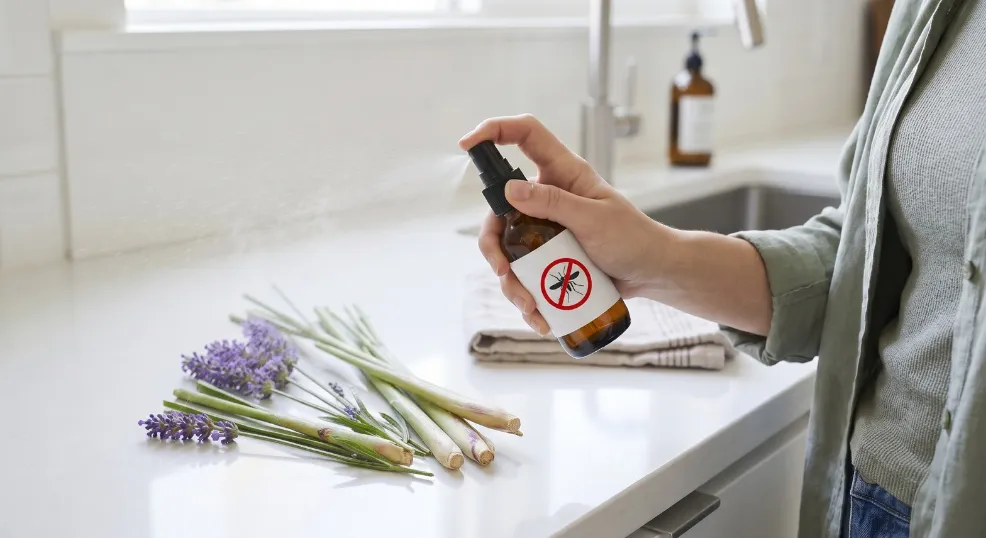
Essential oil blends like lavender and lemongrass feel incredibly wholesome to mix up at home. However, concentrated essential oils can easily irritate your skin if applied undiluted. Because a homemade mosquito repellent is not standardized, nobody can tell you how long a specific batch will protect you.
Use your DIY sprays for low-stakes moments like a quick morning chat on the porch. If you are traveling to an area with mosquito-borne illnesses like Zika or Dengue, leave the DIY spray at home. You need a registered repellent alongside protective clothing and physical screens to genuinely prevent disease.
Read Next: Natural DIY Pest Control Methods
Keeping Your Pets Safe
Your dogs and cats are not tiny humans, and their bodies process plant compounds very differently. Essential oils that smell amazing to us can be highly toxic to animals. Never use a human mosquito repellent on your pets unless the label specifically states it is safe for that species.
Yard Management Over Plant Magic
There is a charming myth that lining your patio with mosquito-repellent plants will create a bug-free force field. Plants like lavender, basil, and live citronella look gorgeous and smell wonderful in your garden. Sadly, simply growing them provides almost zero dependable personal protection unless you are actively crushing the leaves onto your skin.
Instead of relying on plant magic, focus your energy on practical yard management. Mosquitoes need standing water to breed, so thoroughly check your property for hidden puddles. Empty out birdbaths, clogged gutters, and forgotten buckets that hold even a few inches (about 5 cm) of stagnant water.
You can also use budget-friendly physical barriers to your advantage. Mosquitoes are notoriously weak fliers. Setting up a standard $20 (about €18) box fan on your patio creates a powerful wind barrier that physically prevents them from landing on your guests.
The Ultimate Backyard Strategy
You never have to choose between smelling like a pine forest and staying bite-free. You just need to read bug spray labels like a detective rather than a daydreamer. Always look for that crucial EPA registration number and a listed protection time.
Treat unregistered citronella candles and pretty garden plants as lovely mood lighting, not your primary defense. Pair those aesthetic touches with a proven OLE or PMD repellent on your skin. By combining registered plant-based sprays with smart yard management and physical fans, you can finally take your backyard back.