You have a postage-stamp yard or a concrete balcony, and you are convinced real gardening is out of reach. Advanced pallet bed designs flip the script on space limitations to help you grow your own food easily. By mastering vertical stacking and clever soil filling, you can triple your growing capacity without expanding your footprint.
Picking the Perfect Pallet Bed Design for Your Space
Your available square footage and daily sunlight heavily dictate your structural build strategy. These versatile designs maximize every inch of your property while upcycling free materials for an eco-friendly garden.
Corner L-Shape Pallet Bed
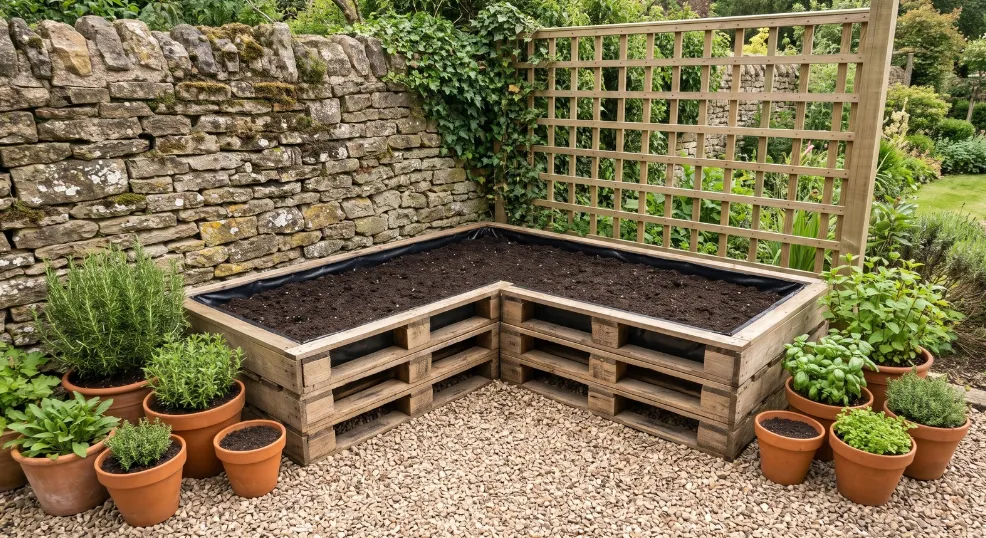
Unused fence corners are absolute gold mines in compact yards. Creating an L-shaped bed from three pallets maximizes these dead zones effortlessly. This setup increases your growing area by up to 30 percent without stealing valuable walkway space.
Position the first pallet flush against your primary fence line. You then butt the second pallet perpendicular to create the L-joint, while the third pallet extends the shorter leg. Secure them all using 3-inch (7.6 cm) deck screws through the overlapping edges.
Corner walls provide natural lateral support so no advanced joinery is required. If you use an existing wooden fence as a back wall, staple a heavy plastic liner against the fence planks first to prevent moisture rot. Line each pallet bay with heavy-duty landscape fabric, stapling it to interior slat edges every 4 inches (10 cm) to prevent soil bleed.
Fill the completed structure with 10 to 12 inches (25 to 30 cm) of garden soil mixed equally with bulk compost. You can also transform the back corner into a vertical garden by securing a fourth pallet upright against the fence. Vertical add-ons save immense ground space, but you must anchor them with heavy-duty brackets to prevent tipping in wind and rain.
Wheeled Mobile Pallet Planter
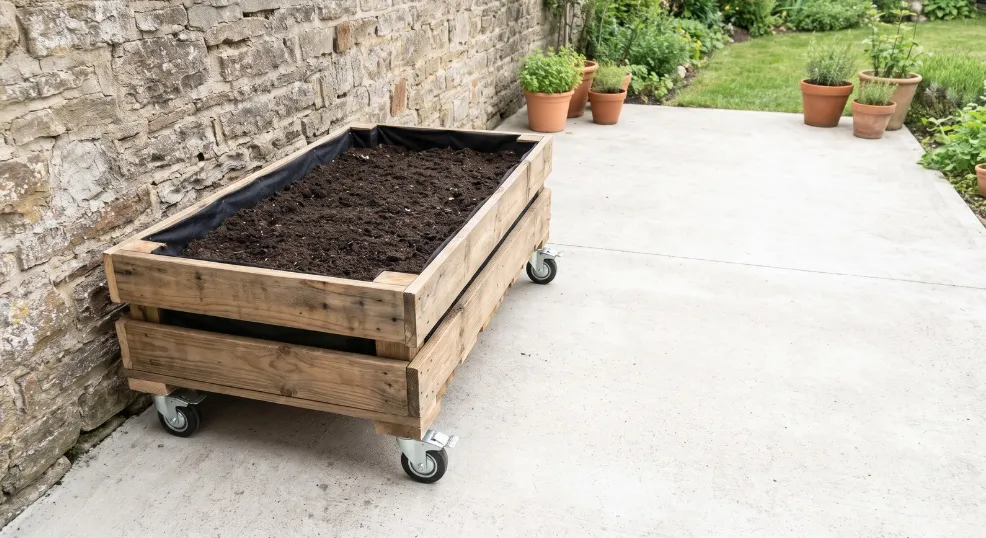
Patios and balconies often shift from blazing sun to deep shade as the afternoon progresses. Wheeled planters solve this environmental challenge by letting you chase optimal light across your concrete space. A single pallet on locking casters creates a versatile 16-square-foot (1.48 sq m) mini bed you can easily reposition.
Wet potting soil is deceptively heavy, averaging 40 lbs per cubic foot (640 kg per cubic meter). Standard furniture wheels will crush under this load, meaning you must install industrial 3-inch (7.6 cm) swivel casters rated for at least 150 lbs (68 kg) per wheel. Bolt these casters directly through the thick perimeter runner boards rather than the thin, fragile deck slats.
Flip the pallet upside-down before attaching the casters so the smooth deck surface becomes your solid planting floor. Line it with landscape fabric and add 15 pounds (6.8 kg) of river rock along the bottom before adding your soil. This rock ballast acts with the locked wheels to prevent the entire unit from tipping over in high balcony winds.
Tiered Stack Pallet Raised Bed
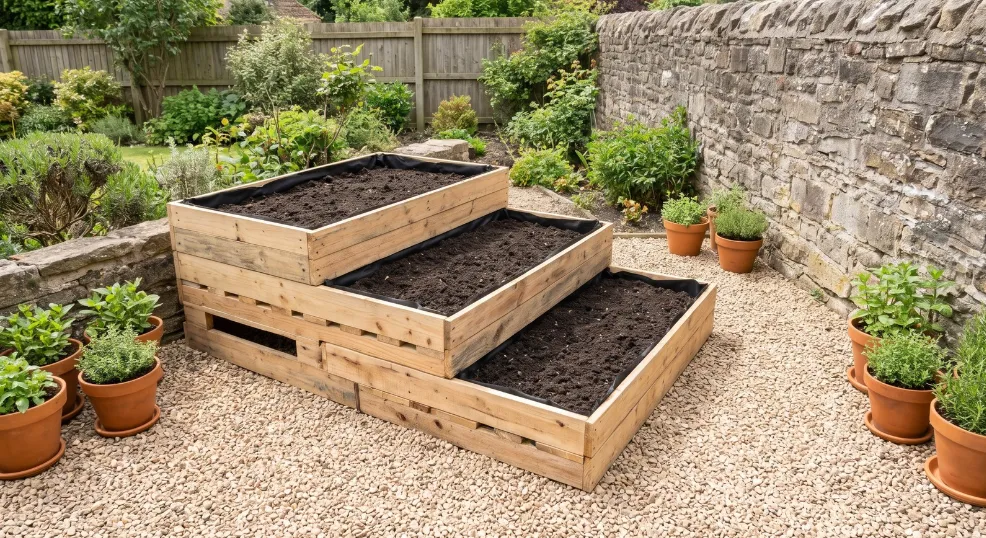
Vertical space is entirely wasted in most small suburban yards. Stacking three pallets in a stair-step formation creates 48 square feet (4.4 sq m) of growing area within a tiny 4×4 foot (1.2×1.2 m) footprint. Each tier sits offset by 12 inches (30 cm), forming cascading beds tailored for different plant heights.
Anchor the bottom pallet to the earth with 18-inch (45 cm) rebar stakes driven through the corner gaps. Stack the second pallet offset 12 inches (30 cm) back, securing it to the bottom frame with 4-inch (10 cm) lag bolts through the rear runner boards. The third pallet offsets another 12 inches (30 cm) and bolts directly to the second tier for ultimate stability.
Poor drainage between levels frequently causes root rot in tiered pallet beds. Before filling, line the bottom of each tier with 2 inches (5 cm) of pea gravel and landscape fabric. Drill drainage holes every 6 inches (15 cm) through the bottom slats, then plant deep-rooted crops on the bottom tier and trailing crops on top.
Narrow Balcony Pallet Bed
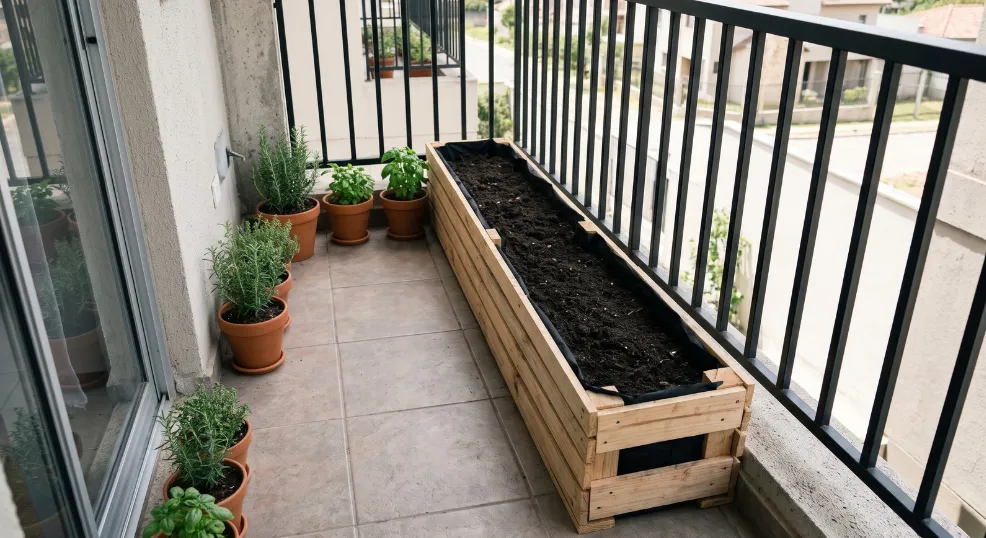
Standard 40-inch (101 cm) wide pallets are simply too deep for apartment balconies where you need clear walking paths. Ripping a pallet lengthwise creates a sleek 18-inch-wide (45 cm) bed that maximizes your railing space without blocking foot traffic. You can easily tuck these narrow builds against walls or railings to create a lush urban perimeter.
Mark a lengthwise cut 18 inches (45 cm) from one edge and use a circular saw set to a 3/4-inch (1.9 cm) depth. Pry off the runner board section with a flat bar, leaving you with a narrow bed and a remainder piece for future scrap-busting projects. Screw a 2×4 rail along the exposed runner to replace the structural support lost during your cut.
Read Next: How to Build No-Cut Pallet Planters for Small Balconies
Balcony wind shear will topple narrow planters easily if they remain unsecured. Anchor the bed directly to your railing posts using adjustable planter brackets or heavy bungee cords looped through the pallet gaps. Staple your landscape fabric taut, leaving bottom drainage holes every 4 inches (10 cm) to prevent muddy soil spills onto your deck.
Sourcing Safe Wood for Edible Gardens
Building a food-safe garden requires strict attention to how your upcycled wood was treated at the factory. Grabbing the first free pallet you see behind a grocery store can accidentally introduce dangerous chemicals into your organic soil.
Reading the Safety Stamps
Every legitimate shipping pallet features an international stamp indicating its treatment history. You must exclusively hunt for pallets stamped with the letters HT, which stands for Heat Treated. This means the wood was kiln-dried to kill invasive pests rather than soaked in toxic chemical baths.
Never use a pallet stamped with MB, which indicates treatment with highly toxic Methyl Bromide. If a pallet lacks a stamp entirely or looks covered in suspicious industrial stains, leave it behind. Your family’s health is never worth saving a few dollars on reclaimed lumber.
Filling Your Pallet Bed on a Budget
You just built an amazing structure, but staring at that empty wooden box can quickly induce budget panic. Most plants only need quality soil in the top 12 to 18 inches (30 to 45 cm) where their roots actively feed. The deep space below is prime territory for free organic matter.
Why Traditional Filling Drains Your Wallet
Bagged soil costs add up brutally fast for deep raised beds. A standard 4×8 foot (1.2×2.4 m) pallet bed sitting 2 feet (60 cm) deep requires roughly 64 cubic feet (1.8 cubic meters) of material. At $4 to $6 per cubic foot, you will easily spend over $250 before planting a single seed.
Bulk delivery minimums often start at 3 cubic yards (2.2 cubic meters), which is far more than one small bed requires. You end up paying disposal fees just to get rid of the massive excess pile sitting in your driveway. There are much smarter, eco-friendly ways to build your soil profile from the ground up.
The Hugelkultur Foundation Strategy
This centuries-old method slashes your filling costs by a massive 80 percent. The strategy involves stacking carbon-rich wood at the bottom, which slowly decomposes and feeds your plants for up to a decade. It also creates a natural sponge that retains moisture during brutal summer heatwaves.
Start by laying rotting logs and branches measuring 2 to 6 inches (5 to 15 cm) in diameter crosswise at the bottom of the bed. Fill the remaining gaps with smaller sticks and twigs to create healthy drainage channels. Pile a thick middle layer of free organic matter over the wood using autumn leaves, grass clippings, and municipal wood chips.
Wet everything down heavily with your garden hose as you build each layer. Dry wood and leaves buried underground can take months to absorb moisture naturally. This creates hydrophobic pockets that repel your watering efforts and leave young roots completely parched.
Mixing Your Top Layer
The top 12 to 18 inches (30 to 45 cm) is the only place you need actual nutrient-dense growing medium. Create a budget mix by blending equal parts bulk compost and bulk topsoil sourced from a local landscape supplier. This might cost a flat delivery fee of $80 to $100, but it easily beats the expensive bagged soil alternative.
Load equal scoops into a wheelbarrow and blend it thoroughly with a heavy-duty garden fork. Smash any clay clods larger than a marble, as these will physically block delicate root systems in shallow environments. Dump the blended soil into your bed, stopping about 3 inches (7.6 cm) below the top wooden rim.
Your soil level will naturally drop up to 30 percent during the first season as the organic layers compress. Starting slightly lower provides a basin effect that prevents mud overflow during heavy spring rains.
The Lasagna Gardening Alternative
If you do not have access to logs, the lasagna method builds rich soil through thin, alternating layers of yard waste. Start by placing plain cardboard directly over the grass to completely smother existing weeds. Wet the cardboard thoroughly before adding any material on top.
Alternate 3-inch (7.6 cm) layers of brown carbon material, like shredded leaves, with green nitrogen material like coffee grounds. Repeat this stacking process until you fill the bottom half of your upcycled pallet bed. Top the entire organic stack with 6 to 8 inches (15 to 20 cm) of your blended compost and topsoil.
Expect dramatic soil loss in the first year with this fluffy method. The layers can compact by half, meaning you must budget to top-dress the bed with fresh compost every single spring.
Materials to Absolutely Avoid
Hidden budget killers will ruin your drainage and permanently poison your edible crops. Never use construction debris like concrete chunks or drywall, as they settle into dense, root-blocking layers. Treated lumber, old railroad ties, and painted deck boards are also entirely non-negotiable.
These painted materials leach toxic heavy metals directly into your food supply. You must also avoid fresh, uncomposted wood chips unless you mix them heavily with a nitrogen source like blood meal. Fresh chips rob vital nitrogen from your soil as they desperately attempt to break down.
Finally, never throw diseased tomato vines or blighted plants into your base layers. These pathogens easily survive the winter underground and will reinfect your next vegetable harvest.
The Best Plants for Shallow Pallet Beds
Depth dictates your entire harvest success in upcycled garden builds. Single-layer pallet beds provide limited soil depth, which is a death sentence for deep feeders but a paradise for shallow-root champions.
Shallow Root Champions
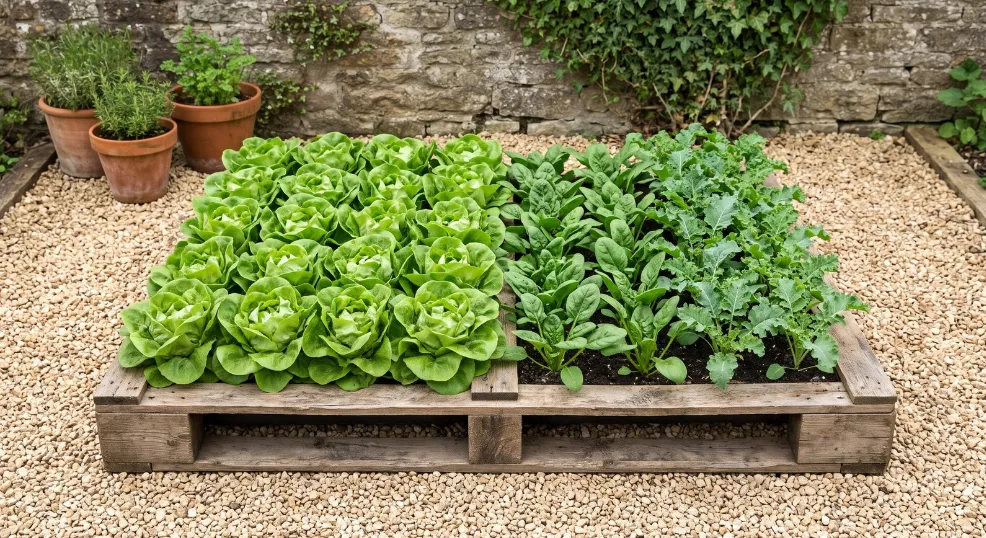
Lettuce is the absolute most valuable player for pallet beds, requiring less than 6 inches (15 cm) of root depth. Plant four heads per square foot, spacing them equidistantly so the mature leaves touch and act as a living mulch. Start new batches every three weeks from March through May to avoid summer heat bitterness.
Spinach and kale laugh at shallow soil, with spinach roots maxing out at 8 inches (20 cm) and kale at 10 inches (25 cm). Space your spinach 3 inches (7.6 cm) apart in rows, and give massive kale leaves a full 12 inches (30 cm) of room. Radishes offer the absolute fastest harvest, going from seed to salad in just 25 days with tiny taproots.
For herbs, basil yields generous cups of leaves weekly if you pinch the top to prevent premature flowering. Thyme survives intense neglect in minimal soil, acting as a beautiful drought-tolerant, weed-suppressing mat. Arugula thrives in fast-draining spring beds where you can cut the roots for continuous harvests.
The Right Fruits and Veggies
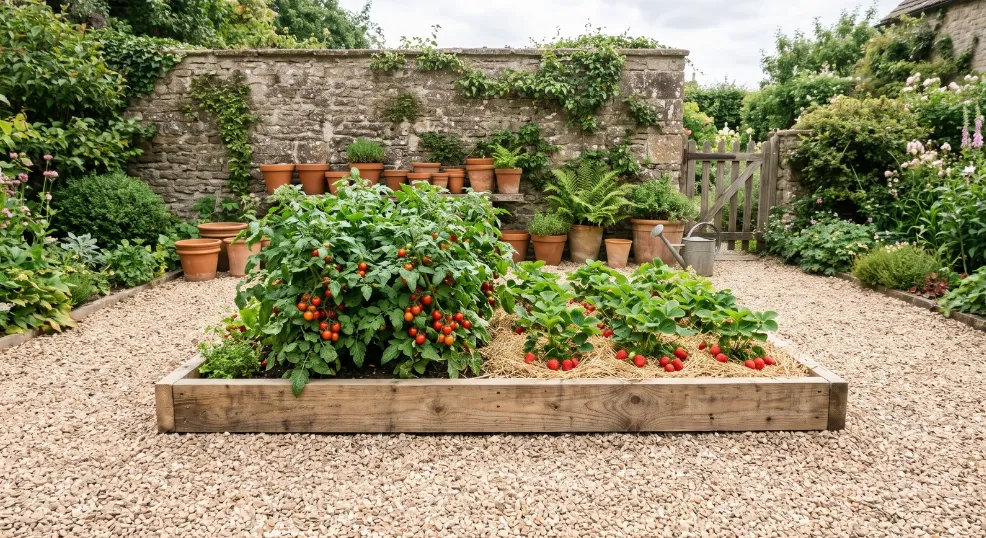
You can definitely grow tomatoes in shallow beds, but you must stick strictly to determinate cherry varieties. Cultivars like Tiny Tim, Patio Princess, or Bush Early Girl max out at 4 feet (1.2 m) tall with compact root systems. These tiny powerhouses easily produce dozens of tomatoes per plant without requiring massive trellises.
Strawberries are essentially meant for pallets, utilizing shallow roots while the raised height keeps the fruit safely away from ground slugs. Plant four to six crowns per square foot and mulch heavily with straw. This prevents wet berries from molding against the soil during heavy rainstorms.
Bush beans stay incredibly compact at 24 inches (60 cm) tall with 10-inch (25 cm) root systems. Plant six beans per square foot in tight blocks to maximize your yield. They fix atmospheric nitrogen through tiny root nodules, naturally enriching the soil for heavier feeders next season.
High-Yield Companion Combos
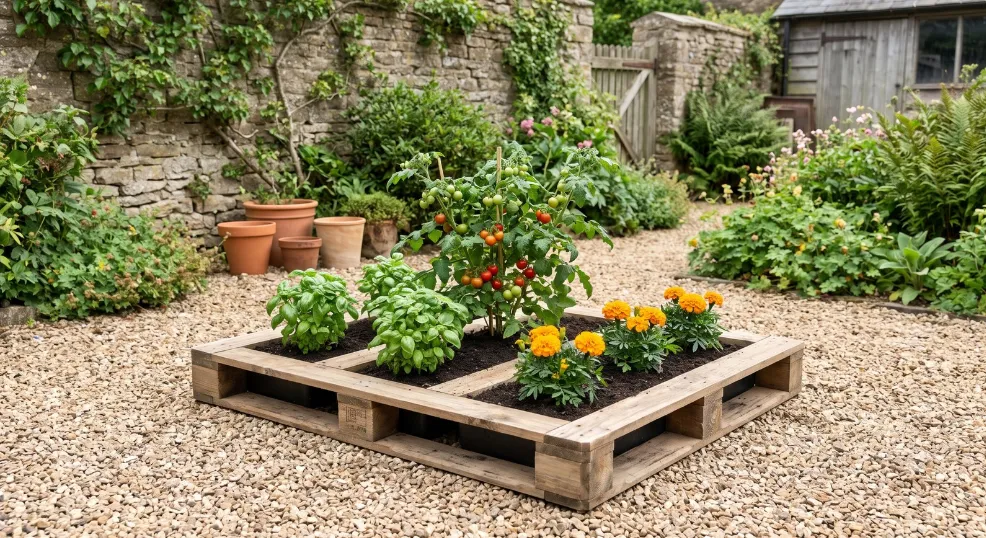
Do not fill your planting grid randomly if you want to maximize your grocery budget. Pairing heavy feeders next to nitrogen-fixers doubles your yield without demanding extra square footage.
For the ultimate protective trio, center one determinate cherry tomato and plant two basil plants in the front-left corner. Add three dwarf marigolds in the front-right to complete the protective circle. The basil repels aphids, the marigolds kill soil nematodes, and the tomato shade prevents the basil from bolting in July heat.
Try intercropping fast radishes directly between your slow-growing lettuce heads. The radishes mature and leave the bed in 25 days, perfectly loosening the soil just as the lettuce roots need room to spread. You can also build a nitrogen-sharing bed by planting bush beans directly behind your spinach rows.
The Spacing and Thinning Rules
Overcrowding your bed is the absolute fastest way to ruin an entire harvest. A standard 4×4 foot (1.2×1.2 m) pallet bed holds 16 square feet (1.48 sq m) of highly valuable planting space. You can fit 64 lettuce heads, 16 basil plants, or just 8 determinate cherry tomatoes in that exact same footprint.
When your delicate seedlings reach 3 inches (7.6 cm) tall, you must ruthlessly thin them out. Cut the weakest seedlings at soil level with sharp scissors rather than pulling them. Pulling them will severely damage the fragile, intertwined root systems of the healthy keepers you want to save.
Crops to Skip Entirely
Save yourself the heartbreak and avoid deep-root crops entirely in single-pallet builds. Carrots, parsnips, and potatoes require up to 24 inches (60 cm) of depth to thrive. Planting them in a shallow pallet guarantees you will harvest deformed, stunted nubs.
Indeterminate tomatoes, bell peppers, and eggplants sprawl massive vines and send roots over two feet (60 cm) deep. They will technically survive in a shallow pallet but produce drastically less fruit than they should. Corn, melons, and pumpkins require massive root structures to support top-heavy weight, making them prone to toppling your entire planter.
Cultivate Your Urban Oasis Today
Building a pallet raised bed proves that a lack of acreage never has to limit your gardening ambitions. With a few free shipping pallets and a strategic soil plan, you can transform the most barren concrete patio into a thriving food forest. Upcycling these materials not only saves you hundreds of dollars but also keeps perfectly good wood out of the local landfill.
Start by hunting down heat-treated pallets and choosing the structural design that best fits your daily sunlight. Layer your free organic yard waste, blend your topsoil, and plant those shallow-root champions with absolute confidence. Your tiny slice of concrete is officially ready to become an incredibly productive, eco-friendly urban oasis.