Waking up to a musty smell or finding fuzzy white soil in your sanctuary is no fun. Bedroom plants mold prevention comes down to managing moisture before it reaches your soil surface, walls, and bedding. You do not need expensive gear or harsh chemical fungicides to fix this indoor gardening hurdle.
A few smart watering habits and some breathing room around your pots will do most of the heavy lifting.
Why Bedrooms Are High-Risk Zones for Plant Moisture
Bedrooms require a different approach to plant care than your main living spaces. These rooms usually have closed doors, heavy curtains, soft furnishings, and much less ambient airflow than open living areas. That makes extra moisture from your indoor jungle far more consequential for your home interior.
Mold needs standing moisture and still air to thrive. When damp soil, overflowing saucers, and humid air meet your drywall, carpets, or favorite quilt, small leaks quickly turn into expensive headaches.
You are managing a delicate micro-ecosystem right next to where you sleep. This system becomes even more delicate if you are raising low-light bedroom plants
that take much longer to dry out between waterings. This system includes pot drainage, tray emptying, your chosen watering method, room humidity, and airflow.
Start With Drainage: Holes, Saucers, and Cachepots
Proper drainage is your absolute first line of defense against fungal growth. If water has nowhere to go, every other moisture control tactic you try will be an uphill battle. Let us look at the foundation of a healthy potted setup.
Drainage Holes Are Not Optional
Containers without a bottom escape route trap water, creating a swamp that leads straight to root rot. Dropping a handful of gravel into the bottom of a closed pot does not create a functional drainage system. It just creates a stagnant puddle closer to the roots.
If you find a gorgeous thrift-store ceramic pot without a hole, use it as a decorative outer cover only. Keep your actual plant in a cheap plastic nursery pot that drains freely. You can also use a masonry drill bit to add your own drainage holes to upcycled containers.
Empty Drainage Trays and Saucers
Leaving a pool of standing water under your plant is a direct invitation for mold and pests. Remove excess water from your saucers about 15 to 30 minutes after you finish watering. Tip out whatever collected into an empty bucket to toss outside, then wipe the saucer completely dry.
If you are on a budget, upcycled plastic takeout lids make excellent, leak-proof saucers under your nursery pots.
The Cachepot and Gravel Trap
Many indoor gardeners drop a nursery pot inside a fancy decorative pot and completely forget about it. Runoff water can quietly pool at the base of the outer pot unseen. This creates a highly saturated pocket of humidity right next to your wooden nightstand or painted wall.
Lift the inner pot out regularly and check for a hidden puddle.
Pick the Right Watering Method for Indoor Environments
How you apply water matters just as much as the amount you pour. Consistently wet potting mix is the exact environment fungus gnats, algae, and surface mold love most. Let the top layer of your soil dry out completely between waterings.
Press your finger about an inch (2.5 cm) into the dirt, and wait a few more days if it still feels damp.
How to Bottom Water Safely
Bottom watering keeps the top of the potting mix much drier, which naturally starves out surface mold. Make sure your inner pot has functional drainage holes before you begin. Set the pot in a simple plastic basin or your bathroom sink filled with a few inches of tap water.
Let the plant soak up moisture from the bottom for up to 60 minutes. Lift it out, let it drain fully over the sink, and dry the saucer before putting it back in your bedroom.
Bottom Watering Is Not a Complete Gnat Fix
Many frustrated houseplant owners report fungus gnats showing up even when they switch to bottom watering. Adult gnats can still fly up through the bottom drainage holes to lay eggs in the moist lower soil layers.
Treat bottom watering as just one tool in your eco-friendly pest control kit. Pair it with strict drying cycles, empty trays, and routine cleanup of fallen dead leaves.
Control Humidity and Airflow in Sleeping Spaces
Environmental agencies recommend keeping indoor relative humidity below 60 percent to prevent structural damage. Aim for a sweet spot between 30 and 50 percent for a healthy bedroom. Sustained high humidity causes window condensation and supports rapid fungal growth on walls.
Elevating your greenery is a great way to boost ambient airflow around your pots, and you can easily hang bedroom plants without drilling to keep both your walls safe and your security deposit intact.
Can Humidifiers Cause Mold Around Plants?
Humidifiers absolutely cause issues if your room stays artificially damp for long, uninterrupted stretches. A humidifier pushes heavy moisture into the air, which inevitably lands and pools on cold walls or nearby window glass.
If you run one for your tropical plants, keep a cheap digital hygrometer on your nightstand to monitor the exact levels. Wipe off any morning condensation with a dry towel and give your plants plenty of space so air can circulate.
Keep Pots Away From Drywall and Bedding
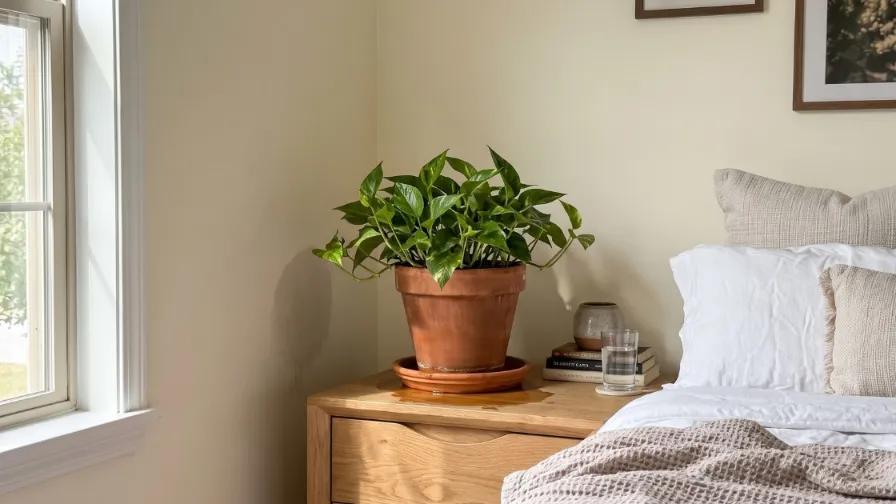
Even a perfectly watered plant can leave a damp, destructive footprint in a tight space. Trapped humidity in a dark corner or crammed behind a headboard is exactly where trouble starts. Leave a breathing gap of several inches (around 10 cm) between your foliage and your walls.
Keep plants entirely off the bed, away from carpet edges, and clear of stacked blankets, though a properly secured plant shelf above your bed can be a fantastic alternative if positioned carefully. If water spills or a saucer leaks, dry the affected flooring or fabric within 24 to 48 hours to prevent spores from settling.
White Fuzz on Your Soil? Do Not Panic
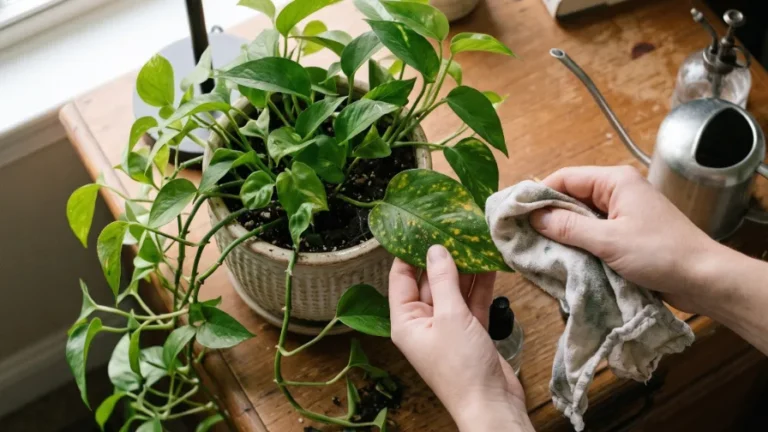
Seeing white fuzz on the soil surface is often just a harmless saprophytic mold breaking down organic matter. It usually points to persistently damp topsoil, an organic-rich potting mix, and poor room ventilation. You do not need to rush into a messy, stressful repotting session right away.
Let the surface dry out completely, scrape off the fuzzy top layer with a spoon, and open a window to improve airflow. You can also sprinkle a light dusting of ordinary kitchen cinnamon over the soil as a natural, budget-friendly fungal deterrent.
FAQ
Managing indoor plant ecosystems always brings up a few specific worries. Here are the fastest ways to troubleshoot your bedroom moisture issues.
Why is my bedroom plant soil growing mold?
Most often, the soil surface stays wet way too long and the ambient air is too still. Dry the top layer thoroughly between waterings and add a small circulating fan to the room.
Does overwatering houseplants cause mold and fungus gnats?
Yes, both pests and fungi thrive in a consistently moist, soggy potting mix. Chronic overwatering also severely raises the risk of fatal root rot for your greenery.
How often should I water bedroom plants to prevent mold?
There is no single schedule that works for every home environment. Water only when the top inch of soil has dried, checking with your finger instead of blindly following a calendar.
Should I empty the water tray under my plant?
Yes, standing water under your pots should never be left in place. Empty out your saucers and cachepots about half an hour after every single watering session.
Can humidifiers cause mold around indoor plants?
They easily can if the room humidity stays continuously high without ventilation. Aim for 30 to 50 percent humidity and always keep it under 60 percent.
Your Quick Moisture Checklist
Keep this basic rundown handy whenever you do your weekly plant maintenance. Following these straightforward steps will protect your bedroom from unwanted dampness.
- Confirm every single pot has clear, working drainage holes.
- Empty saucers and check hidden cachepots for pooled water.
- Let the top layer of the soil surface dry out completely between waterings.
- Use bottom watering in a basin for up to 60 minutes, then drain fully.
- Keep room humidity between 30 and 50 percent using a basic hygrometer.
- Leave a gap of several inches between pots, drywall, and bedding.
Keep Your Bedroom Green and Clean
Transforming your bedroom into a lush retreat should not mean sacrificing your air quality or ruining your walls. By taking a proactive approach to drainage and airflow, you can enjoy all the benefits of indoor nature without the musty side effects. Stick to the finger-test method for watering, keep those saucers bone dry, and let your room breathe.
our plants will grow stronger, your home will stay pristine, and you will sleep much better knowing your indoor jungle is perfectly balanced. Dreaming of a lush, living accent wall that won’t ruin your home with mold? Read our step-by-step guide to building a budget-friendly DIY bedroom plant wall the safe, moisture-controlled way.