
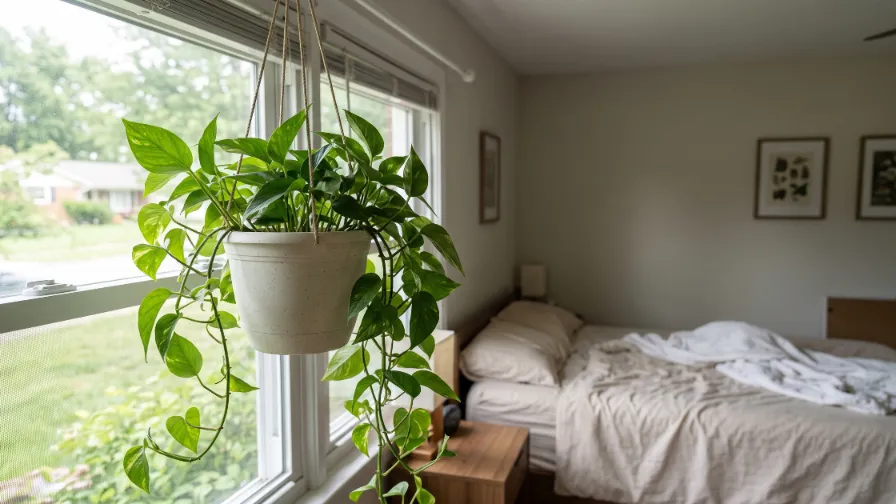
Wondering how to hang plants in bedroom without drilling? You can achieve that lush, layered botanical look while ensuring your security deposit stays entirely intact. The real secret lies in perfectly matching a damage-free hanging method to the saturated weight of your greenery.
This guide walks you through four reliable, renter-safe options and the wall preparations that prevent midnight crashes. You will also find budget-conscious tips to keep your indoor garden affordable and eco-friendly.
Plan Your Load Before You Buy Anything
Every successful hanging setup starts with one crucial number. You must estimate the total weight of the planter immediately after a heavy watering, not when it is dry on the store shelf. A standard 1-gallon (3.7-liter) nursery pot feels incredibly light until you soak the soil.
Once saturated, the weight of the water alone adds significant downward pull. You should always size your chosen hook, rod, or stand for that maximum wet weight. Add a generous safety margin of a few extra pounds just to be secure.
Pick a hanging method with a manufacturer-stated capacity well above your final calculated number. Anything exceptionally heavy, or any planter positioned directly over your bed, absolutely belongs on a sturdy freestanding stand instead of a wall mount.
4 Damage-Free Ways to Hang Plants
Choosing the right approach means trading off between weight capacity, ideal placement, and your overall budget. Each of these four methods shines in a specific renter-friendly scenario.
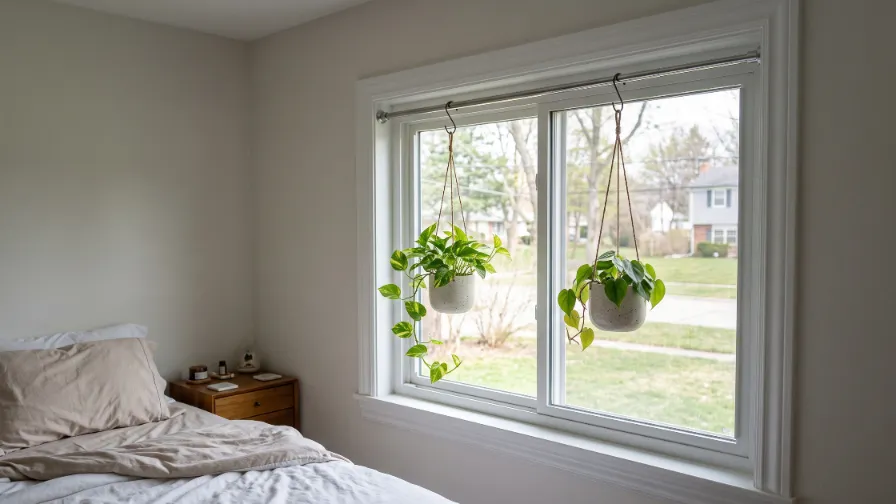
Tension Rods
A heavy-duty tension rod wedges securely inside a window frame, closet opening, or hallway alcove. This method requires zero screws and provides a perfect horizontal space to hang macrame planters using simple S-hooks. You can even upcycle scrap fabric or old cotton t-shirts to braid your own zero-cost hangers.
Capacity varies widely depending on the brand and internal spring strength. Some basic rods hold about 7 lb (3.1 kg), while heavier-duty options can easily support 15 lb (6.8 kg). A 1-inch (2.5 cm) steel tension rod from a hardware store is often rated for up to 25 lb (11.3 kg).
Always check the listed rating before you load it up with trailing ivy. Skip the flimsy, hollow plastic curtain rods if you plan to hang anything beyond a tiny, dry succulent.
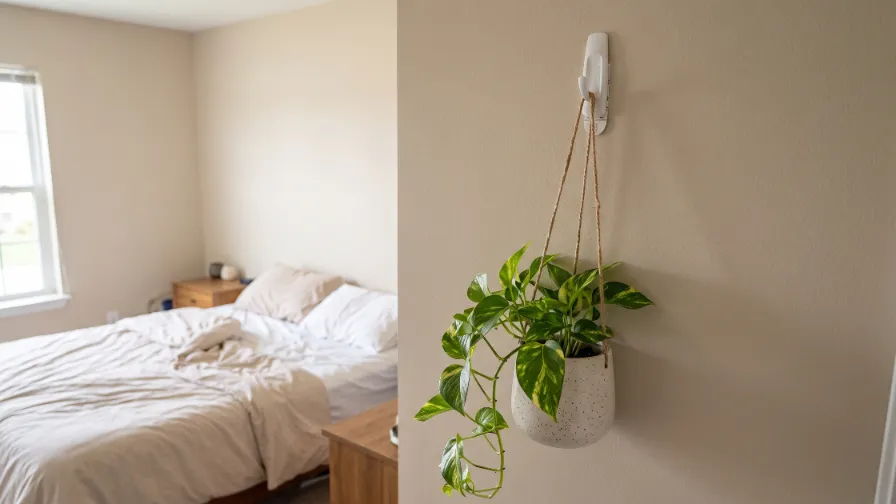
Adhesive Hooks for Lightweight Planters
Adhesive hooks are the absolute fastest weekend DIY option for small, lightweight planters. The holding capacity depends entirely on the specific product line rather than just the brand name. Always check the packaging, as popular brands list capacities ranging from 2 lb (0.9 kg) up to 7.5 lb (3.4 kg).
Heavyweight utility hooks can sometimes support up to 15 lb (6.8 kg) if applied correctly. These hooks perform best on impeccably smooth, clean surfaces. You should completely skip adhesive hooks for any planter you have not thoroughly weighed after watering.
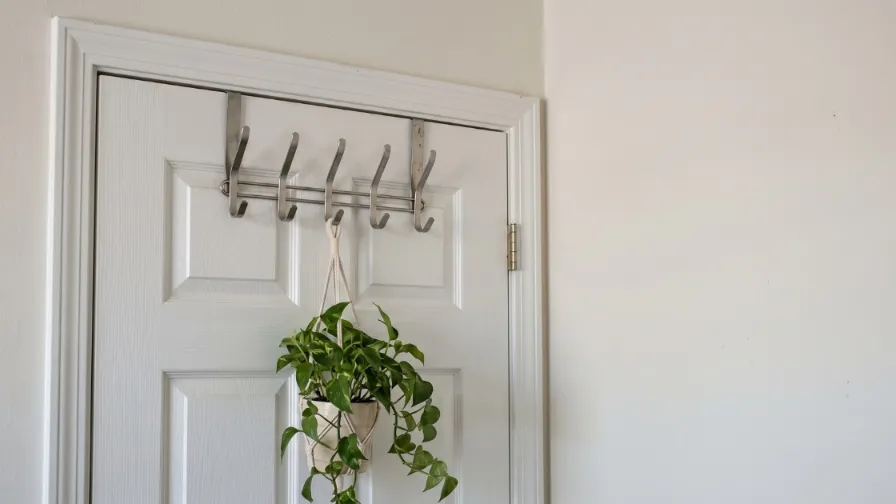
Over-Door Hangers
An over-door hanger simply loops over the top edge of a door and suspends your plant on the other side. It requires absolutely no adhesive and zero wall contact. This makes it an incredibly brilliant solution for rental apartments plagued by heavily textured walls.
Both standard closet doors and solid bedroom doors work exceptionally well for this method. As a smart DIY hack, glue a few pieces of scrap felt to the back of the hanger. This prevents the metal from scratching your landlord’s paint every time the door swings.
Make sure the door still closes smoothly with the metal bracket in place. A beautiful pothos that aggressively bumps the door frame every morning will quickly lose its leaves.
Freestanding Stands
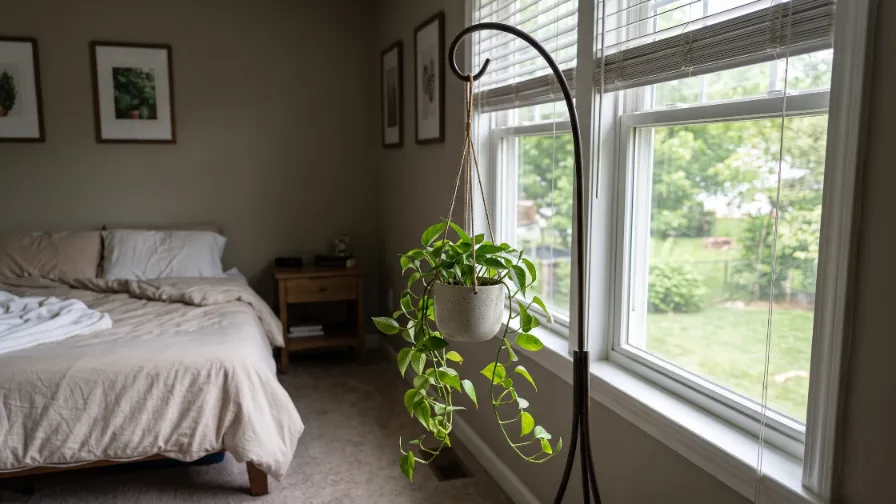
A freestanding plant stand entirely bypasses your landlord’s walls and ceilings. It remains the absolute safest pick for heavy ceramic planters or any greenery situated near your sleeping area. You can look for tiered stands or tall metal hooks that allow your vines to trail beautifully.
Measure your exact ceiling height and available bed clearance before you bring a tall stand home. For a budget and eco-conscious alternative, consider upcycling a thrifted wooden coat rack. A quick sanding and a coat of leftover interior paint can transform a $10 thrift find into a stunning plant tree.
Check Your Surface Before You Stick Anything
When adhesive setups crash down, the failure usually stems from the wall conditions rather than a faulty hook. Residual paint texture, invisible humidity, and improper cure times are your biggest enemies here. Always run through a strict surface checklist before peeling the backing off your adhesive strips.
Use these sticky strips exclusively on perfectly smooth surfaces like painted drywall, glass, tile, or finished wood. You must completely avoid textured walls, delicate wallpaper, rough brick, and fabric surfaces. If your landlord recently touched up the room, wait at least a full week before applying anything to the fresh paint.
Thoroughly clean the exact mounting spot with a simple wipe of rubbing alcohol and let it dry entirely. Be extra cautious with flat paint finishes and humid bedrooms, as moisture causes adhesives to slowly slip. If your wall fails this basic checklist, pivot immediately to a tension rod, over-door hanger, or freestanding stand.
Quick Answers
Here are fast, reliable answers to the specific questions renters ask most about indoor hanging gardens.
How do you hang plants without drilling holes in the wall?
You can easily use a sturdy tension rod, heavyweight adhesive hooks, an over-door hanger, or a freestanding plant stand. Simply match the hanging method to your planter’s wet weight and your specific wall surface texture.
Can Command hooks hold a hanging plant?
Yes, they work wonderfully for lightweight, plastic nursery planters. You must check the exact package rating and compare it directly to your planter’s total weight after a heavy watering.
How much weight can an adhesive hook hold?
The actual capacity depends heavily on the specific product line you purchase. Popular brands list standard hooks at 2 lb (0.9 kg), 3 lb (1.3 kg), and 7.5 lb (3.4 kg). Specialized heavyweight utility options can sometimes reach up to 15 lb (6.8 kg).
What is the best way to hang plants in a rental apartment?
Window tension rods and over-door metal hangers are the most renter-friendly choices because they touch no paint at all. Freestanding plant stands remain the absolute best option for oversized, heavy plants.
How do you hang a plant from the ceiling without damaging it?
For a bedroom environment, you should completely skip ceiling hanging over the bed. Use a tall freestanding stand or an over-door hanger instead to get that elevated look. Heavy, wet plants suspended directly overhead are a safety risk you simply do not need.
Wrapping Up Your Renter-Friendly Indoor Garden
Creating a lush, elevated indoor jungle does not have to cost you your apartment security deposit. By calculating your wet soil weight and matching it to the right hardware, you can hang greenery with total confidence. Tension rods and upcycled coat racks offer endless creative possibilities for the budget-conscious DIYer.
Take a few minutes this weekend to evaluate your bedroom windows, doors, and smooth wall surfaces. A simple $15 (USD) tension rod might be all that stands between you and a gorgeous trailing window display. Gather your lightweight planters, prep your surfaces with rubbing alcohol, and start transforming your rental into a green sanctuary.

