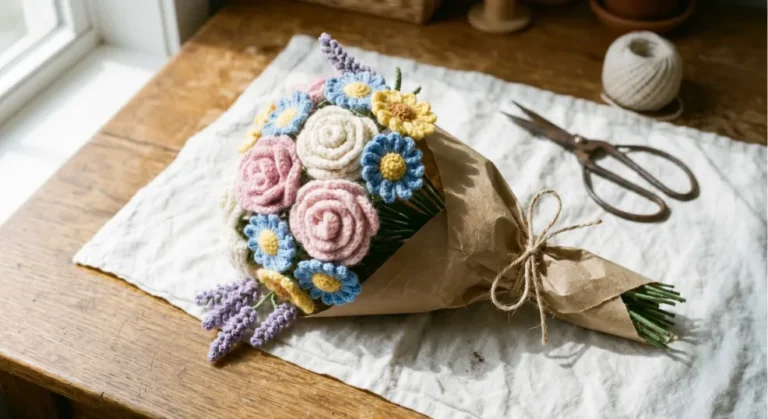
You grabbed a skein in the prettiest dusty rose, crocheted a handful of flowers, and then… they flopped. Or fuzzed out into an indistinct blob. Or the colors just didn’t work together the way you imagined. It happens to almost every beginner, and the good news is the fix isn’t a new pattern — it’s just knowing what to look for in your yarn before you commit.
Why Yarn Choice Trips Up First-Time Bouquet Makers
Most beginners pick yarn by color alone, which is completely understandable. But for crochet flowers, two other factors matter just as much:
- fiber structure (how crisp or fuzzy the strand is)
- weight (how much body a finished petal will have).
A fluffy mohair blend that looks gorgeous on the skein turns into a shapeless cloud once crocheted into a small petal. A slippery acrylic can make stitches slide and lose definition. Getting these two variables right is the difference between a bouquet that photographs like a farmers’ market find and one that looks, well, homemade in the wrong way.
Your Yarn-Vetting Kit (Use What You Already Own)
No need to buy anything new for this test. Pull these from your stash or your craft drawer:
- Two candidate yarn options in similar weights
- Your pattern’s recommended hook (plus one size up and one size down)
- Scissors
- A small bowl of water or a can of spray starch (optional, but useful)
- Good natural light or a lamp — you need to see stitch definition clearly
The 3-Minute Petal Test (Do This Before You Buy a Full Skein)
This short process saves you from frogging an entire bouquet later. Work through all four steps before casting your final vote on a yarn.
1. Hold the Strands Side by Side and Read the Twist
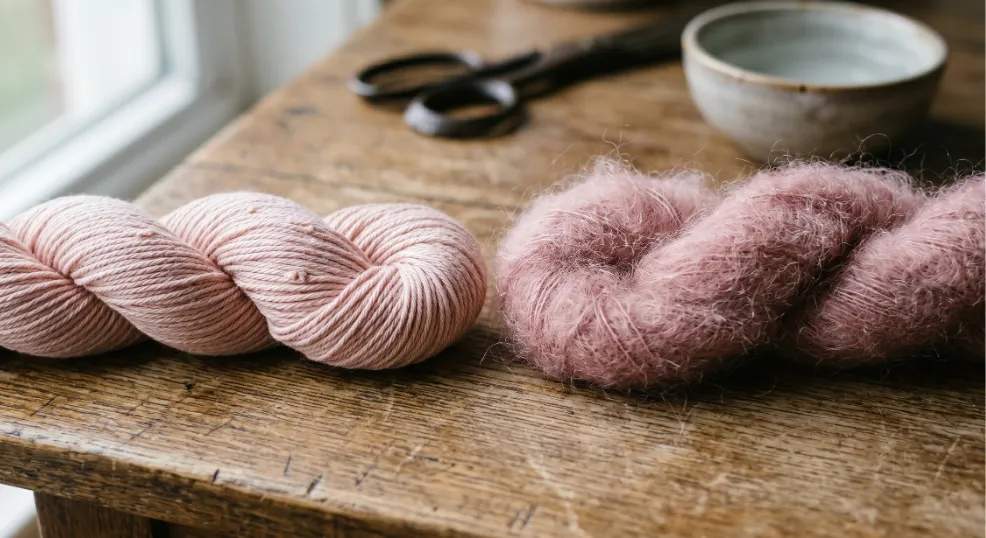
Lay both yarn candidates next to each other in natural light and look at how tightly they’re plied. A smooth, tightly twisted cotton or cotton-blend will show clear stitch definition in petals. A loosely spun or halo-heavy yarn — like a brushed acrylic or mohair — will blur the edges of each chain and double crochet, making the flower’s shape read as soft and undefined from a distance. Pick the strand with the cleaner, more visible twist for your petals.
2. Crochet One Single Petal Swatch
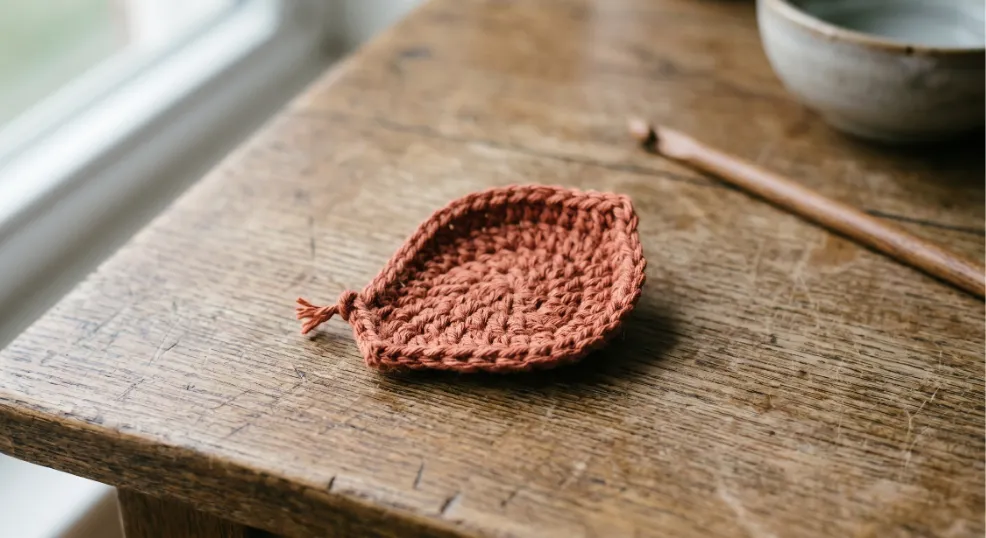
Take your front-runner yarn and your pattern’s hook size. Crochet just one petal — not a full flower, just one. This takes about 90 seconds and tells you everything. When you fasten off and lay it flat, you should be able to see the individual stitches as distinct, intentional shapes. If the petal already looks like the finished thing you imagined, you’re on the right track.
3. Pinch, Bend, and Release
Pick up the swatch and squeeze it firmly between your fingers, then let go. A yarn with enough body for bouquet work will spring back and hold a gentle curve — the kind of three-dimensional shape that makes a petal look like it’s actually reaching outward. If the swatch collapses flat the moment you release it, the yarn is either too lightweight for the pattern or too slippery to grip itself. Try going down one hook size first; if it still flops, switch to the other candidate or try holding two strands together (more on that below).
4. Wet-Shape or Starch the Swatch and Let It Dry
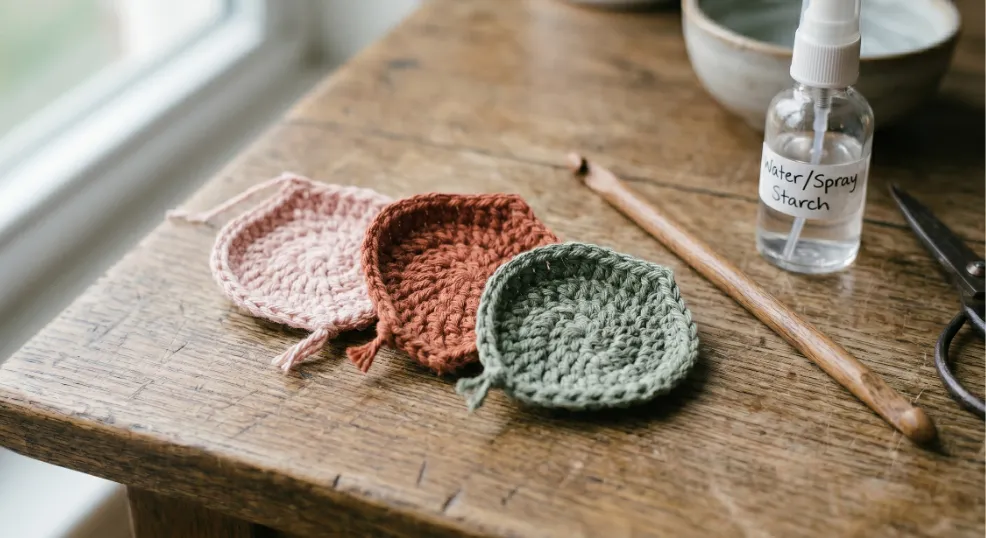
This step is optional but invaluable if you’re on the fence. Dampen the swatch under the tap or spritz it lightly with spray starch, then mold it into your ideal petal curve and let it air dry completely.
Natural fibers — cotton, linen, bamboo blends — respond beautifully to wet-blocking and will hold the shape you give them, which is exactly the behavior you want in a finished bouquet that needs to stay perky on display. If the petal dries crisp and maintains its curve, that yarn will behave well.
This step also reveals whether the color shifts when wet, which matters if you plan to block your entire bouquet before arranging. Knowing how your yarn choice affects the final silhouette will also help when you’re ready to arrange crochet flowers into a bouquet — stem length and petal stiffness work together.
The Double-Strand Trick That Makes Budget Yarn Look Intentional
Here’s something professional crochet designers do quietly and rarely mention: if your yarn feels a little too limp but you love the color, hold two strands together on a hook one or two sizes larger than recommended.
Using two strands of the same color gives petals surprising body and a subtle depth of tone — the slight variation between the two strands as they twist together creates a more organic, less flat look than a single strand.
You can also pair one neutral (like an oatmeal or ivory) with your color strand to soften a shade that’s reading too saturated. Just swatch first with the new hook to confirm your petal size still matches your pattern.
Pick Your Yarn, Start Your Bouquet
With a tested yarn in hand, the rest of the project opens up. For pattern inspiration that’s already matched to beginner-friendly yarn weights, browse 24 Easy Crochet Flower Bouquet Ideas for Beginners — each idea notes the type of yarn that works best, so you can match what you just tested to a style you love.