We’ve all been there—you spray, you wipe, and somehow the mirror looks worse than before. Streaks catch the morning light, cloudy halos ring the windowpanes, and you’re left wondering what went wrong. The fix is simpler than you think, and it’s already sitting in your pantry. Before we mix anything, check out our homemade DIY cleaning supplies for a full breakdown of safe ingredient swaps and recipes worth bookmarking.
Why Your Windows Keep Streaking (And How to Finally Stop It)
The Real Culprit Behind That Cloudy Residue
Commercial glass cleaners often leave behind surfactant residue—especially when applied too generously or wiped with the wrong cloth. Add humidity, direct sunlight baking the solution dry mid-wipe, or a worn-out rag, and you’ve got a recipe for that frustrating haze that no amount of rubbing seems to fix.
What This Two-Ingredient Fix Actually Does
This recipe cuts through grease and film using diluted distilled white vinegar, leaves zero soapy residue, dries almost instantly, and costs pennies per bottle—no harsh chemicals, no mystery fragrances.
Your Glass-Cleaning Rescue Kit
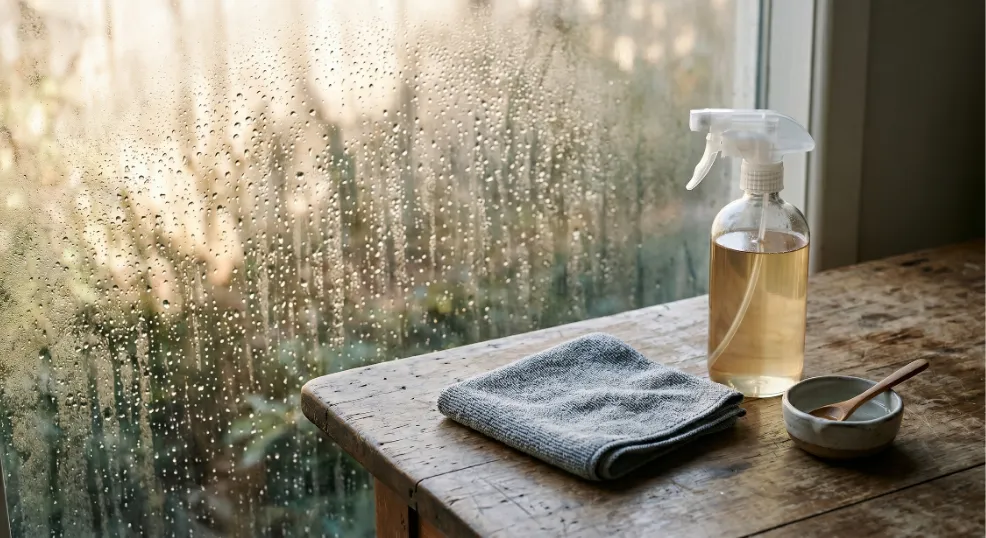
You don’t need a specialty store run for this. Raid your kitchen and linen closet—everything you need is almost certainly already home.
- Distilled white vinegar (standard 5% acidity)
- Distilled or filtered water (tap minerals cause spots)
- A clean spray bottle (16 oz works well)
- Lint-free microfiber cloth or crumpled black-and-white newspaper
- Optional: a small funnel for mess-free pouring
A note on water: Tap water contains minerals that leave deposits as they dry. Distilled water is worth the small cost—a gallon runs under a dollar and makes a noticeable difference on mirrors.
The Streak-Free Method, Step by Step
The sequence here matters as much as the solution itself. Follow the wipe direction carefully—it’s the part most people skip, and it’s exactly why streaks keep coming back.
1. Mix Your Solution
Combine equal parts distilled white vinegar and distilled water directly in the spray bottle, then cap and give it a gentle shake. This 1:1 ratio is the sweet spot for everyday glass—strong enough to dissolve grease and soap film, mild enough not to damage window seals or mirror backing over time.
2. Mist from the Top Down
Hold the bottle 6–8 inches from the glass and apply a light, even mist working top to bottom. Resist the urge to saturate—too much solution pools at the bottom edge and drips down the wall or sill, leaving new streaks before you’ve even started wiping.
3. Wipe Vertically on One Side
Using a clean microfiber cloth or a sheet of crumpled newspaper, wipe the entire surface in straight vertical strokes from top to bottom. The vertical pass lifts and collects the dissolved grime in one direction, preventing it from being smeared back across the glass.
4. Cross-Wipe Horizontally on the Opposite Side
Flip to the other side of the cloth (or use a fresh sheet of newspaper) and wipe in horizontal strokes. This cross-pattern technique is the real trick: any streak you spot now runs in the opposite direction from your first pass, so you can immediately tell which side of the glass it’s on and target it precisely.
5. Buff Dry Immediately
Using a completely dry corner of the cloth or a fresh piece of newspaper, give the surface one final buff using light, quick circular passes. This pulls away any micro-thin film of moisture before it can evaporate and leave a haze—the step that takes ten seconds and makes all the difference.
The “Cloth-First” Polish Move Professionals Swear By
Spray the Cloth, Not the Glass
For mirrors, glass cabinet doors, or any surface where drips are a real problem, skip spraying the glass directly. Instead, mist a small amount of solution onto your microfiber cloth until it’s just barely damp, then work in small circular motions across the surface. Because you control the moisture completely, there’s no risk of over-wetting or dripping onto the frame. Finish immediately with a dry buff—the glass will be crystal clear with zero haze.
When Things Don’t Look Right
- Lint left on the glass: Your cloth is past its prime or was washed with fabric softener (which coats fibers and reduces their grab). Switch to crumpled newspaper—it’s naturally lint-free and slightly abrasive in the best way.
- Stubborn cloudy film that won’t shift: You’re likely dealing with hard water deposits or old product buildup. Mix a stronger solution—2 parts vinegar to 1 part water—and let it sit on the spot for 30 seconds before wiping. Repeat once if needed.
Clear Glass, Every Time
That’s genuinely all it takes. Two pantry ingredients, the right cloth, and a deliberate wipe pattern—and every window and mirror in your home can look professionally cleaned in minutes. Mix up a bottle this weekend and keep it under the sink. You won’t reach for the store-bought stuff again.