Every spring, homeowners drag bags of faded plastic decor to the curb and wonder why they even bother. That cheerful plastic welcome sign will bleach under spring UV rays within weeks, while faux-rattan baskets warp in the first rainstorm. You end up trapped in an exhausting cycle of buying fast decor, watching it fade, and throwing it in the trash.
Your porch is also about to become a magnet for a thick spring pollen cloud. Tufted cushions and heavily textured faux-floral wreaths trap yellow dust, forcing you to scrub them every few days. The eco-luxe solution is to use smooth, sealed natural surfaces that repel pollen and wash clean in the spring rain.
The Three-Zone Porch Framework
Before you buy a single plant or vintage sign, you need to divide your outdoor space into three distinct areas of focus. Nailing the entry statement, the anchor seating, and the textile details ensures your porch feels architecturally designed rather than randomly decorated. Let us break down exactly how to conquer each zone without blowing your seasonal budget.
Zone 1: Your Door Display
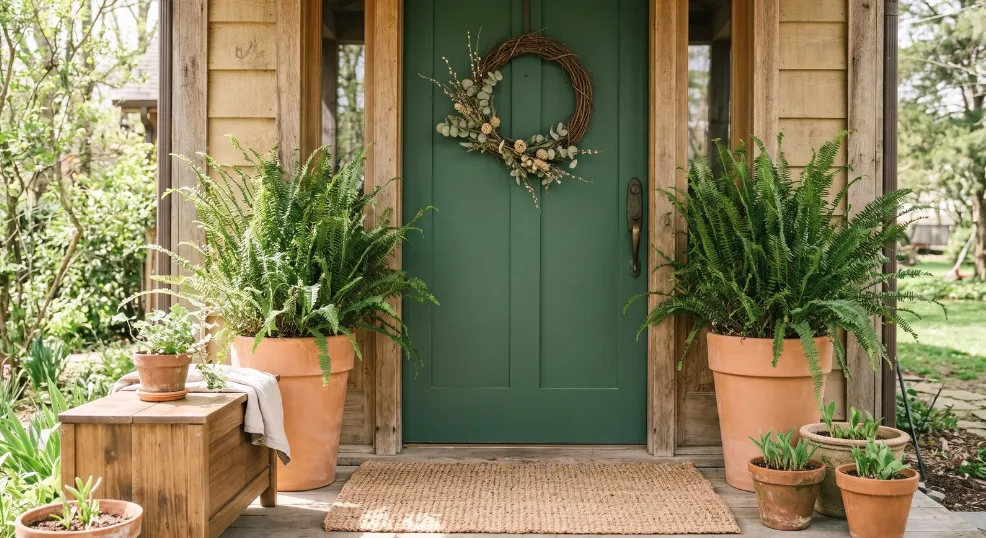
Sometimes the smartest move for a tiny porch is to stop decorating the floor and focus entirely on the door. A 1-quart (0.95 liters) can of exterior paint in a rich botanical shade like deep forest green or warm terracotta creates an instant focal point. Add solid brass hardware and you have a high-impact, permanent upgrade that requires zero seasonal floor space.
Skip the expensive dried floral wreaths from the store and build a barely-there asymmetrical design yourself. Start with a foraged or thrifted exposed grapevine base, adding a few stems of real-touch eucalyptus or dried local clippings. Let a raw jute ribbon or compostable twine trail down one side to create an imperfect, artisan look that costs under $10.
You can completely replace standard metal address plaques with living moss house numbers. This biophilic art piece thrives in spring humidity while bridging green home crafting and modern curb appeal. Simply use a waterproof wood backing, attach preserved sheet moss with outdoor-grade adhesive, and mount your metal numbers directly on top.
Zone 2: Space-Saving Anchors and Seating
If you do not actually sit on your front porch, ditch the standard patio furniture entirely. Standard outdoor sets eat the entire footprint of a small porch, turning a welcoming entryway into a claustrophobic obstacle course. That square footage is better utilized by one dramatic, architectural planter or a functional storage piece.
If you need seating that earns its footprint, build a flush, built-in style secret vault bench against the wall. Using weather-treated reclaimed wood, this bench provides seating while hiding spring clutter like muddy tools or umbrellas inside a lift-top compartment. You can also upcycle a thrifted solid-wood bench or reclaimed wooden pallet for around $30 instead of buying premium plastic chairs.
To weatherproof upcycled wood so it actually lasts, start by sanding with 80-grit paper and finishing with 220-grit for smoothness. Clean the wood with white vinegar to kill mildew spores, then apply two to three thin coats of natural tung oil. Thermally modified or reclaimed teak develops a beautiful silver-gray patina that is enhanced by spring weather rather than destroyed by it.
For a tiny al fresco dining moment, scale down to a pedestal cast iron bistro table paired with tuck-under stools. Cast iron is heavy enough to resist tipping in spring wind gusts, and its patina improves beautifully with age. Keep the stools tucked under the table to maintain a minimal footprint and a clear walkway to your door.
Zone 3: Architectural Planters and Textiles
Two identical oversized terracotta or concrete planters flanking your door will create a visual anchor for the space. This mirrored symmetry makes the entryway feel intentional and wide, instantly reducing the perception of visual clutter. Fill them with tall ferns, structural cordyline, or trailing sweet potato vine for height and dynamic movement.
Glossy painted ceramic pots look cheap after one season, but unglazed, weathered terracotta gets better with age. Top-dress your potting soil with smooth river rocks to retain moisture, suppress weeds, and add heavy visual texture. Concrete planters are also a durable choice because they will not crack through spring rain cycles like cheaper resin alternatives.
Vintage galvanized wash tubs provide a beautiful industrial-farmhouse quality that costs roughly $15 to upcycle. To create an aged texture, mix one part eco-friendly chalk paint with one tablespoon of baking soda. Brush this mixture onto the outside of the tub in loose strokes, drill drainage holes in the bottom, and you have a designer-quality piece.
When your floor space is maxed out, mount a slim cedar trellis flat against the porch wall. Train a climbing jasmine or sweet pea vine up the wood to draw the eye upward and make the ceiling feel twice as high. Ensure you leave a 2-inch (5 cm) gap between the trellis and your siding to prevent moisture buildup and rot.
Your doormat is a highly underestimated design element that can easily ground the entire outdoor space. Layer a thick, hand-loomed natural jute or sisal rug under a smaller textured mat to create high-end visual depth. Natural fiber rugs cost between $20 and $30, photograph beautifully, and will not trap pollen like tufted synthetic mats.
Mastering the Seasonal Transition
You should start decorating your porch with organic modern elements between late February and early March. Because materials like wood, stone, and living greenery are transitional, they will not look out of place before spring officially begins. This extended lifespan gives you two to three extra months of enjoyment from your DIY investment.
Never rush to fill your porch with frost-sensitive plants like ferns during the first warm weekend in March. Hold off on delicate greenery until your local last frost date has safely passed to protect your plant budget. Use cold-hardy herbs like rosemary or upcycled vintage statues as your anchor pieces while the weather stabilizes.
Transition your space from winter to spring using a simple three-step material swap. First, remove and safely store dark textiles and heavy winter evergreens in dry plastic bins for next year. Next, introduce pale-toned textiles and fresh greenery before adding one major focal point like a cluster of galvanized planters.
Wrapping Up Your Eco-Luxe Porch Upgrade
Curating a beautiful spring porch does not require endless trips to the big box store or a massive decorating budget. By focusing on durable natural materials and clever upcycling, you create a sophisticated entry that survives pollen and spring storms. Your front porch will finally look like a cohesive, organic modern retreat rather than a seasonal afterthought.
Take a weekend to evaluate your space, pick your high-impact zone, and start crafting. Grab your sandpaper, hunt for some vintage galvanized tubs, and let nature do the heavy lifting for your curb appeal. Your neighbors will be taking notes on your sustainable style before the first spring blooms even arrive.